Why Symptoms Keep Returning—and Home Treatments That Break the Cycle
Allergy symptoms often fade, then boomerang. The reasons are predictable—and fixable at home. Triggers keep refilling exposure, inflammation lingers, stress amplifies sensations, and missed doses or unclear follow-up allow small relapses to snowball. This guide turns that loop into a long-lasting home allergy treatment plan. Start with an OTC-first backbone (intranasal corticosteroids, non-drowsy antihistamines, antihistamine eye drops, saline rinses, and brief decongestant use), layer targeted environment controls, and add simple self-regulation habits. Expect steady control over 4–6 weeks, with clinician guidance for diagnosis and escalation. Telehealth follow-up and basic tracking close gaps so you can adjust early—not after a flare. Too Allergic organizes these steps into simple, caregiver-friendly routines and brief check-ins.
Why allergy symptoms come back
Recurrence cycle (40–50 words): A recurrence cycle is when symptoms improve temporarily but return because root drivers persist. In allergies, daily triggers “refill” exposure while nasal and ocular inflammation remain partly active. Add stress-driven rumination, missed doses, and fragmented follow-up, and small lapses build into flares that feel perpetual.
Care continuity after visits—clear instructions, medication plans, and timely follow-up—reduces these failures, especially during transitions between settings, which are high-risk without coordination (see Care Transitions: Introduction and Overview from the Agency for Healthcare Research and Quality) (Care Transitions: Introduction and Overview). Too Allergic reinforces this continuity with clear home instructions, medication schedules, and timely telehealth follow-ups.
Loop diagram
- Trigger exposure → inflammation → symptoms → stress/rumination → avoidance/missed meds → more exposure
Cognitive loops and stress reactivity
Stress heightens congestion and itch perception, and rumination keeps the nervous system on high alert. Mind–body skills blunt this. As Harvard Health notes, mindfulness practices and slow breathing can interrupt worry loops and calm the body’s alarm response (Harvard Health on breaking anxiety cycles).
Rumination (40–50 words): Rumination is repetitive mental replay of worries or symptoms that feels stuck rather than problem-solving. It heightens distress, steals sleep, and narrows attention—making sensations like itch, drip, or tightness feel more intense and persistent. Interrupting rumination restores bandwidth for consistent self-care.
Quotable resets
- “Pause, breathe, and name the worry—then choose the next right action.”
- “Slow the breath; soften the body; shrink the spiral.”
- “This feeling is real—and temporary.”
Stress reset (pair with spray time)
- 3 slow nasal breaths (4 seconds in, 6 seconds out).
- Label one thought (“This is a worry, not a fact”), then refocus on technique.
- Brief body scan (brow–jaw–shoulders) to release tension.
Behavioral avoidance and exposure gaps
Avoiding everything outdoors or skipping chores backfires. Smarter “approach” beats blanket avoidance:
- Plan outdoor tasks during low pollen hours (late afternoon/evening).
- Air out rooms briefly when pollen is low; don’t keep windows open on high-count days.
- Mask for yard work; shower-rinse routine afterward.
- Use a “prep stack” before high-exposure tasks (non-drowsy antihistamine 30–60 minutes prior, saline rinse ready for after).
A systems mindset—shared responsibility, clear roles, and safety focus—helps households notice early signs of relapse and act before flares escalate (systems approach to group responsibility and safety).
Missed doses and fragmented follow-up
Daily nasal sprays work slowly and require consistency. Missed days or unclear plans drive rebound congestion and short-term overuse of decongestants. Patients often need help remembering medications, recognizing red flags, and securing prompt follow-up after care transitions; verifying a post-visit check-in within 1–2 weeks improves outcomes (Care Transitions: Introduction and Overview). Too Allergic uses short prompts and 1–2‑week telehealth check‑ins to close these gaps.
Create a 1-page action plan
- Daily meds and technique reminders.
- Refill dates and a 2-week supply buffer.
- Who to call (clinician, pharmacist).
- A 1–2 week check-in template with questions.
Medication tracker (customize with your clinician)
| Med name (example) | Dose | Time | Refill date | Side effects to watch |
|---|---|---|---|---|
| Fluticasone nasal spray | 1–2 sprays/nostril daily | AM | 05/30 | Nose dryness, minor irritation |
Environmental triggers that refill the bucket
Trigger-to-response
- Dust mites → Encase bedding; hot-wash weekly; humidity ~40–50%.
- Pollen → Close windows on high days; sunglasses; post-exposure shower; indoor drying.
- Pet dander → HEPA air purifier; pet-free bedroom; wipe coats/paws after outdoor time.
- Wood dust/nickel contact → Use masks/gloves; clean up promptly; switch to low-nickel items.
Telehealth and remote patient monitoring can flag rising exposures and prompt earlier plan tweaks—part of the larger shift to “health at home” (home health trends).
Build a home control plan that breaks the cycle
Backbone stack for long-lasting allergy relief:
- Daily intranasal corticosteroids for nasal inflammation/congestion.
- Non-drowsy second‑generation antihistamines for itch/sneezing.
- Antihistamine eye drops for itchy, watery eyes.
- Saline rinses to clear allergens and improve spray contact.
- Decongestants for brief, targeted rescue only.
Give this home allergy treatment 4–6 weeks for steady control. Consult licensed clinicians for diagnosis, medication selection, and escalation. Too Allergic follows this OTC‑first backbone and escalates stepwise with your clinician.
Set a daily backbone with intranasal corticosteroid spray
Intranasal corticosteroid (40–50 words): An intranasal corticosteroid is a low-dose anti-inflammatory spray used inside the nose to reduce swelling, congestion, runny nose, and postnasal drip. It works locally with minimal systemic absorption. Consistency matters—benefits build over days to weeks with daily use.
How to use
- Gently blow your nose.
- Chin tucked slightly; aim the nozzle slightly outward (away from the septum).
- Spray and sniff lightly—avoid hard sniffs.
- Use at the same time daily.
Progress marker
- Expect partial relief in 3–7 days; fuller effect by weeks 2–4.
Add a non-drowsy oral antihistamine for itch and sneezing
Second‑generation, non-drowsy antihistamines complement sprays, especially for systemic itch and eye symptoms; sprays still lead for nose-first congestion.
- Cetirizine/levocetirizine: effective; slightly sedating for some.
- Loratadine/desloratadine: less sedating.
- Fexofenadine: least sedating for many.
- Review interactions and conditions with a clinician.
Layer antihistamine eye drops for watery, itchy eyes
Antihistamine eye drop (40–50 words): Antihistamine eye drops block histamine in ocular tissues to reduce itching, watering, and redness. Many combine mast-cell stabilization for prevention plus fast relief. Follow labels for dosing. Wait before inserting contacts to avoid binding the medication to lenses.
Use flow
- Wash hands → instill drop.
- Wait 10–15 minutes before contact lenses.
- Reapply per label on high-exposure days.
Rinse with saline to clear allergens and calm the nose
Daily isotonic saline during high-exposure periods; consider hypertonic if congestion persists.
- Mix sterile saline (distilled/boiled-cooled) or use premade.
- Lean over sink; gentle squeeze through each nostril.
- Wait 10–15 minutes, then use your nasal steroid.
Benefits
- Removes pollen/dander/mucus.
- Reduces dryness/crusting.
- Improves delivery of sprays.
Use decongestants briefly for fast relief when needed
Decongestant (40–50 words): A decongestant narrows swollen nasal blood vessels for rapid stuffiness relief. Oral forms act body-wide; sprays act locally. Because of side effects—and rebound with topical sprays—use the lowest effective dose for the shortest time. Review heart, blood pressure, thyroid, and anxiety considerations with a clinician.
Safety limits
- Topical oxymetazoline: no more than 3 days.
- Oral agents: short-term per label; avoid near bedtime if stimulating; use caution with hypertension/anxiety.
Match treatments to dominant symptoms
Decision guide
| Dominant symptom | First pick | Add-ons | Avoid/limit |
|---|---|---|---|
| Nose-first congestion/drip | Daily intranasal corticosteroid | Saline rinse; brief decongestant for events; oral antihistamine if sneeze/itch | Prolonged topical decongestant use (>3 days) |
| Eye-dominant itching/tearing | Non-drowsy antihistamine | Antihistamine eye drops; cold compress; sunglasses outdoors | Rubbing eyes (worsens itch/inflammation) |
| Whole-body itch/hives | Daily non-drowsy antihistamine | Trigger diary; cool showers; loose clothing | Delays in care for swelling, breathing, or persistent hives |
Switch stacks seasonally or for specific exposures (mowing, travel, pet visits).
Nose-first congestion and drip
- Daily intranasal corticosteroid plus saline.
- Brief decongestant for high-stakes events.
- Add an oral antihistamine if sneezing/itch emerges.
- Technique audit weekly (spray angle, timing after rinse).
Eye-dominant itching and tearing
- Oral non-drowsy antihistamine + antihistamine eye drops.
- Cold compress; sunglasses to block pollen/wind.
- Avoid eye rubbing; use preservative-free artificial tears between doses.
Whole-body itch and hives tendencies
- Non-drowsy antihistamine daily.
- Consult a clinician for persistent hives, swelling, or any breathing symptoms.
- Keep a trigger diary (foods, heat, pressure, stress).
Tighten your environment to lower daily exposure
Daily
- Run HEPA air purifier in bedroom; wipe high-touch surfaces.
- Quick pet wipe-down after outdoor time.
- Shower and change after high pollen exposure.
Weekly
- Vacuum with HEPA filter; damp dust; hot-wash bedding.
Seasonal
- Replace filters; deep clean soft furnishings; audit encasements and seals.
Bedroom basics for dust mite control
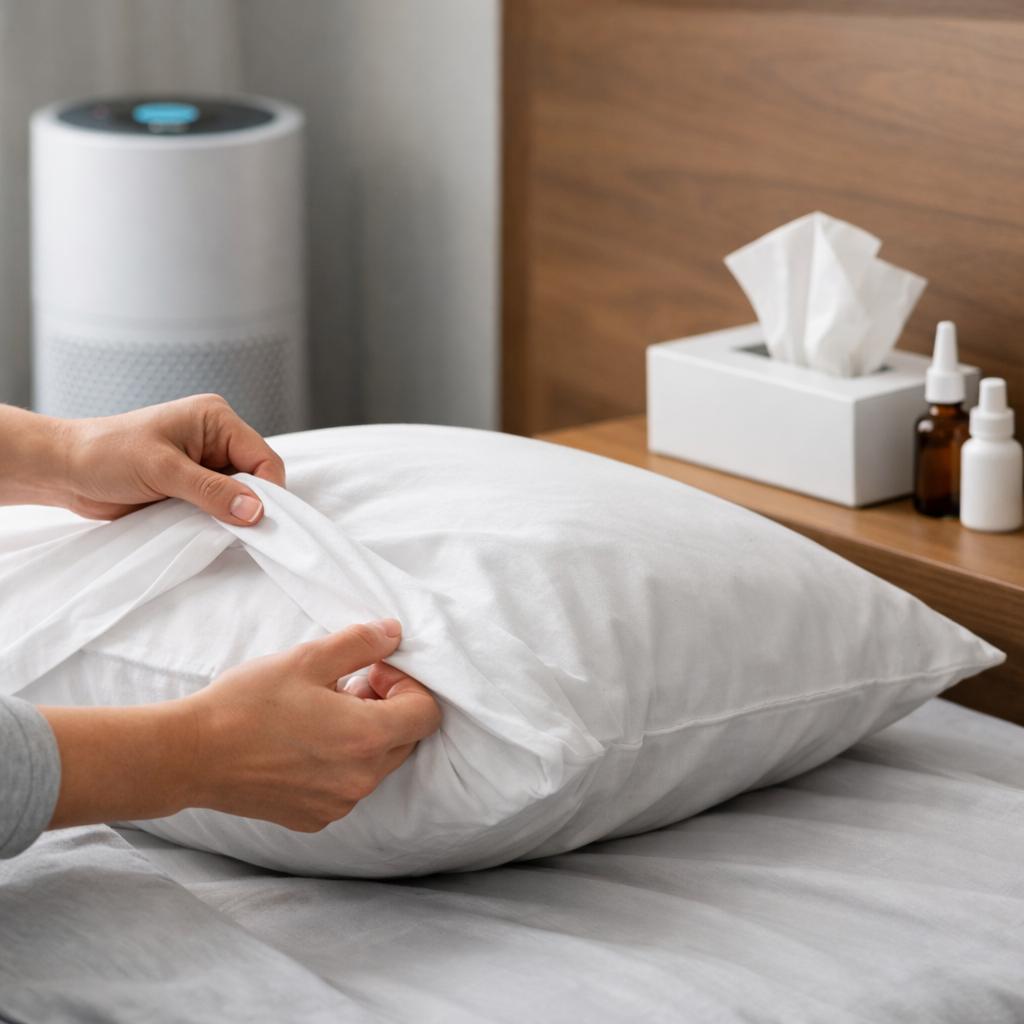
- Encase pillows and mattress.
- Hot-wash bedding weekly.
- Reduce fabric clutter; prefer smooth flooring.
- Maintain humidity ~40–50%.
- Vacuum with a HEPA-equipped machine; use washable curtains.
Pollen strategies for windows, laundry, and pets
- Close windows on high-count days; ventilate briefly when counts drop.
- Dry laundry indoors during peak seasons.
- Wipe pet coats/paws after walks; keep pets off the bed.
- Shower and change clothes after yard work.
- Use car cabin filters; wear sunglasses outdoors.
Humidity, HEPA, and cleaning rhythms that stick
- Use dehumidifiers where needed; monitor with a hygrometer.
- Size HEPA purifiers to room square footage; keep doors mostly closed for efficiency.
- Weekly dust/vacuum; monthly filter checks.
HEPA filter: A HEPA filter captures at least 99.97% of airborne particles ≥0.3 microns when properly sized and sealed, helping reduce pollen, dust mite debris, and dander.
Self-regulation habits that reduce flare-ups
Small resets steady the nervous system, improve adherence, and reduce symptom amplification. Mindfulness, deep breathing, brief changes of location, and simple affirmations can derail rumination and restore focus—especially when paired with medication routines (Harvard Health on breaking anxiety cycles).
Paced breathing and brief mindfulness resets
- 4–6 breathing (inhale 4, exhale 6) or box breathing (4–4–4–4) for 1–3 minutes.
- 5-senses check-in (name one thing you see, hear, feel, smell, taste).
- 60-second body scan before using your nasal spray.
Movement, daylight, and sleep routines
- 20–30 minutes of light-to-moderate movement most days.
- Morning daylight to anchor circadian rhythm.
- Wind-down routine: tech off, dim lights, same bedtime.
- Burnout guards: boundaries, daily micro-breaks, regular exercise, and sleep hygiene support resilience (burnout prevention and recovery).
Simple cognitive reframes that cut rumination
- Affirmations: “This feeling is temporary.” “I can do the next small step.” “Progress, not perfection.”
- Check a thought with a calm friend: “Here’s what I’m thinking—does it track?”
- Move to a “happy place” (another room, brief walk) to reset context.
Track and adjust at home
Turn set-and-forget into set-and-review. Use a simple tracker for symptoms (0–3), triggers, meds taken, side effects, sleep, and notes. Consider RPM/telehealth for timely plan tweaks during exposure spikes (home health trends). Too Allergic trackers and telehealth check-ins keep adjustments timely.
Symptom and trigger journaling
- Log daily congestion, sneeze count, eye itch, and exposures (outdoor time, cleaning, pet time).
- Weekly reflection: “Top trigger” and “Best control day”—what made it work?
Medication checklists and refill timing
- Visible checklist tied to anchors (toothbrushing).
- Two-week refill reminder on your calendar.
- After visits, confirm you understand what to take, red flags, and follow-up timing (transitions are high-risk without coordination).
Weekly mini-reviews to spot patterns early
- Spend 10 minutes scanning your tracker every week.
- Adjust within label guidance; plan exposure strategies for the coming days.
- Draft questions for your clinician portal or next telehealth check-in.
When and how to escalate care
Use telehealth check-ins and clear action plans to maintain continuity after changes in care. Schedule a follow-up within 1–2 weeks after starting or adjusting therapies; prepare photos of rashes, note peak symptom times, and bring your tracker.
Telehealth check-ins and clear action plans
Payers report that 91% see telehealth/remote tech as accelerating care-at-home adoption, reflecting a durable shift to proactive home management (home health trends). Too Allergic uses a concise, repeatable template like this. Template for visits:
- Goals (e.g., fewer night wakings, no rescue decongestant).
- Current stack and what’s working/not.
- Refill dates and side effects.
- Red flags reviewed.
- Next review date set.
Sublingual immunotherapy options to change the trajectory
Sublingual immunotherapy (SLIT) (40–50 words): SLIT uses allergen tablets or drops placed under the tongue to retrain immune responses to specific pollens or dust mites over months to years. Prescribed by clinicians, it typically starts under supervision, then continues at home. Many patients continue their OTC stack during buildup.
Ask whether pollen or dust mite SLIT fits your profile.
Red flags that need timely clinician evaluation
- Breathing trouble; facial or throat swelling.
- Severe one-sided facial pain/swelling or vision changes.
- Fever with sinus symptoms; or “double worsening” after initial improvement.
- Symptoms persisting ≥12 weeks or frequent flares despite adherence—consider ENT/allergist referral.
Too Allergic quick-start stacks
Always read labels, avoid exceeding frequency, and consult clinicians for diagnosis, pregnancy, pediatrics, and comorbidities.
Daily control stack
- Morning: intranasal corticosteroid (proper technique) + quick symptom tracker update.
- As needed: non-drowsy antihistamine for itch/sneeze; saline rinse during high-exposure weeks.
- Evening: environment reset (HEPA on, laundry/encasing check) + 1-minute mindfulness reset.
Flare-up rescue stack
- Saline rinse → intranasal corticosteroid.
- Short-course decongestant (topical ≤3 days; oral per label—watch BP/anxiety).
- Antihistamine eye drops; cold compress.
- Telehealth if not improving within 48–72 hours.
Outdoor day prep stack
- 30–60 minutes before: non-drowsy antihistamine; add eye drops if eye-dominant.
- Barriers: sunglasses/hat; mask for mowing.
- After: shower and clothes change.
- Evening: saline rinse; run HEPA on high for 1–2 hours.
Safety notes and our caregiver perspective
At Too Allergic, our approach is caregiver-led, evidence-informed, and OTC-first—with clear safety guardrails and empathy for real-life routines. Personalize your plan and make changes gradually.
Non-medical advice reminder
- This content is educational and not a substitute for professional diagnosis or treatment.
- Review your medications and plan with a licensed clinician.
Pediatric and pregnancy considerations
- Discuss all medications with a pediatrician or OB; options and dosing vary by age and trimester.
- Avoid decongestant overuse; confirm which sprays/pills are appropriate.
Drug interaction cautions
- Check for interactions (e.g., decongestants with hypertension, thyroid, or anxiety medications).
- Pharmacists and clinicians are first-line resources for medication review.
Frequently asked questions
How long until a nasal steroid spray works and should I use it every day?
Most people notice improvement in 3–7 days, with fuller benefit in 2–4 weeks. Daily use—even on “good” days—is essential, and Too Allergic helps you stick with it.
What is the best order to use spray, rinse, and drops for maximum relief?
Rinse first to clear allergens and mucus, wait 10–15 minutes, then use your nasal steroid. Add antihistamine eye drops separately as needed, and wait before inserting contact lenses; use Too Allergic reminders to keep the sequence consistent.
Are decongestant pills or sprays safe to use more than a few days?
Use the lowest effective dose for the shortest time. Topical sprays should not exceed 3 days to avoid rebound; pills may be used short-term per label, and Too Allergic flags when to pause if you have heart or blood pressure conditions.
Do air purifiers and dehumidifiers make a real difference at home?
Yes. Properly sized HEPA purifiers reduce airborne allergens, and dehumidifiers help limit dust mites and mold; combined with cleaning routines and bedding encasements, they meaningfully lower daily exposure—and Too Allergic helps you right-size devices and stick to simple rhythms.
When should I ask about allergy testing or immunotherapy?
If symptoms persist despite a consistent OTC stack—or you need meds most days of the year—ask about testing and whether pollen or dust mite sublingual immunotherapy is a fit; Too Allergic can help you decide when to escalate.