Which Leading Allergy Medicines Are Labeled Non-Sedating for Adults?
If you’re looking for non-drowsy allergy medicine that lets you drive, parent, and work safely, the leading adult options are the second-generation antihistamines fexofenadine (Allegra), loratadine (Claritin), cetirizine (Zyrtec), levocetirizine (Xyzal), and desloratadine (Clarinex). These are marketed for 24-hour allergy relief with minimal sedation compared with older drugs like diphenhydramine. This Too Allergic guide compares their sedation risk, speed, and value to help you choose what fits your day. Note: congestion-focused nasal sprays are covered separately; combinations (e.g., with decongestants or sprays) should be used with clinician guidance, per the AAAAI drug guide on allergy medications.
“Non-sedating doesn’t mean never sedating—expect a small risk of drowsiness even with modern agents.”
What non-sedating means for allergy relief
Non-sedating antihistamines are second-generation agents designed to minimally cross the blood–brain barrier, limiting drowsiness while blocking histamine to reduce sneezing, runny nose, itchy eyes, and hives. Some users still feel drowsy; for example, mild sleepiness is reported in a minority (about one in ten) with agents like cetirizine or loratadine, according to the Mayo Clinic allergy medications guide.
Second-generation antihistamines (fexofenadine, loratadine, cetirizine, levocetirizine, desloratadine) are long-acting, once-daily options that generally cause less sedation than first-generation drugs. They’re widely considered safe for daily, long-term use in adults, per Cleveland Clinic on OTC allergy medicine.
Functionally, antihistamines block histamine to relieve itch, runny nose, and sneezing. They work differently from decongestants and steroid nasal sprays, which target swollen nasal tissues and congestion.
How we compare adult non-sedating antihistamines
At Too Allergic, we compare by sedation risk, onset, duration/coverage, dosing, forms, monthly cost, and best-for scenarios. Individual response varies—short trials help you find the right fit.
- Sedation: Fexofenadine is widely considered the least sedating; cetirizine and levocetirizine carry a somewhat higher chance of mild drowsiness (Cleveland Clinic).
- Onset: Faster agents can start in ~20–60 minutes (e.g., cetirizine), while loratadine may take 1–3 hours in some users (Parents guide to OTC allergy medicine).
- Coverage: Most provide 24-hour relief with once-daily dosing, supporting consistent control across work and home routines.
Allegra fexofenadine
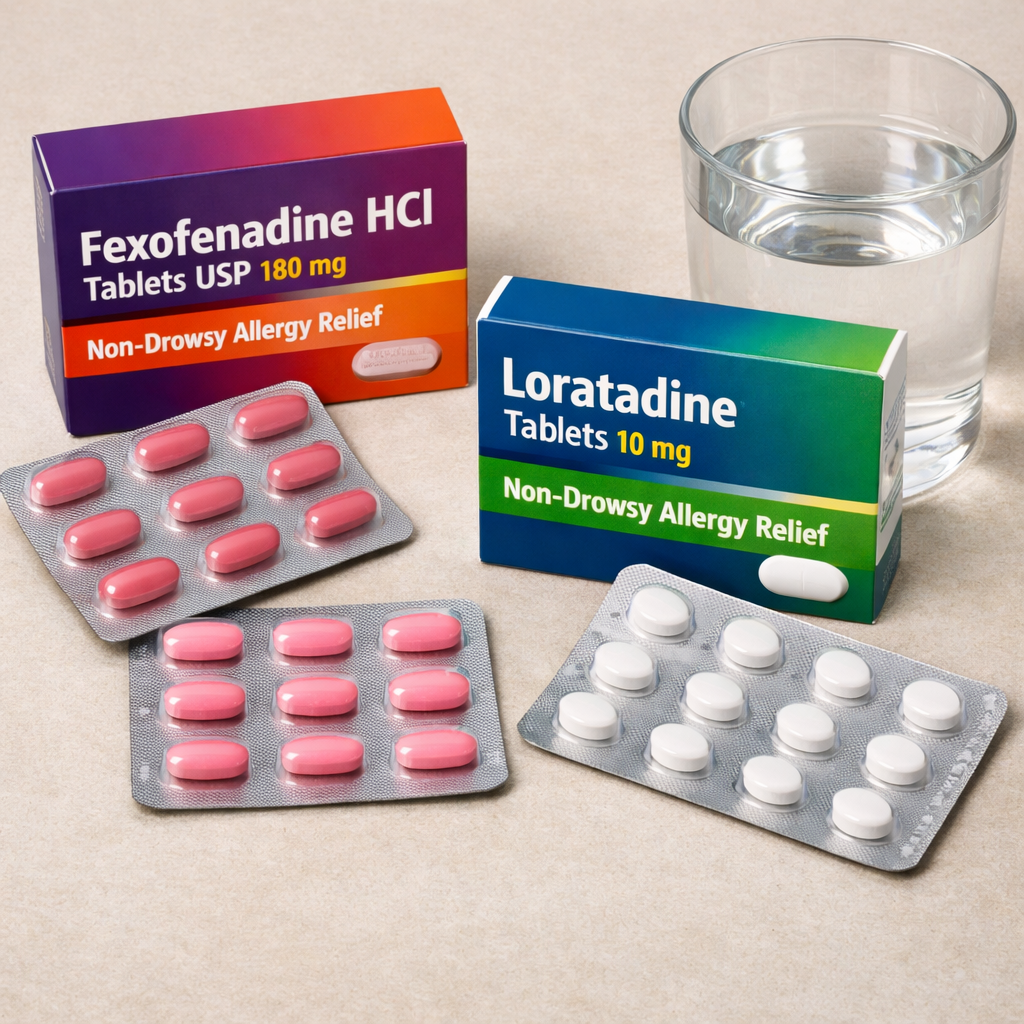
Fexofenadine is the go-to when minimizing drowsiness is critical. It’s often cited as the least sedating option and acts quickly for dependable daytime performance. Typical adult dosing is 180 mg once daily or 60 mg twice daily; avoid fruit juices (grapefruit, orange, apple) around the dose because they can reduce absorption (HeyAllergy’s non-drowsy antihistamine guide).
Pros
- Lowest sedation risk; reliable for work and driving.
- 24-hour coverage with once-daily option.
Cons
- Fruit juice interaction; take with water.
- Cost can be mid-to-high vs store brands.
“If staying alert is non-negotiable, choose fexofenadine first.”
Claritin loratadine
Loratadine is a consistently non-drowsy, gentle daily option. The usual adult dose is 10 mg once daily. Onset can be slower (1–3 hours), but tolerability is strong and its limited brain penetration is part of why it’s favored for sensitive users (Cure Allergy Clinic on non-drowsy meds).
Best for: steady daily control with minimal side effects; users who prioritize a low sedation profile and can plan dosing ahead of peak symptoms.
Zyrtec cetirizine
Cetirizine often delivers strong, broad symptom relief with a fast onset—commonly within an hour and sometimes as fast as 20 minutes—with 10 mg once daily (Parents; Cleveland Clinic). The trade-off is a slightly higher chance of mild drowsiness versus fexofenadine. Many adults who are sensitive dose it in the evening to balance relief and alertness.
Best for: high-pollen days and tougher symptoms when you want speed.
Xyzal levocetirizine
Levocetirizine is closely related to cetirizine and offers potent 24-hour control. Because its sedation risk is somewhat higher than fexofenadine, many users prefer nighttime dosing (HeyAllergy). It’s a reasonable step when you need stronger control than loratadine or fexofenadine but want to stay near a non-sedating profile.
Best for: “Xyzal vs Zyrtec” shoppers who like Zyrtec’s strength but want to test a slightly different side-effect feel.
Clarinex desloratadine
Desloratadine is a newer, once-daily, non-sedating alternative typically available by prescription in some regions. It can be useful when other second-generation agents underperform. Consider it if you want “Clarinex vs Claritin” flexibility and your clinician recommends a prescription path (AAAAI drug guide).
Head-to-head comparison by sedation risk, onset, and duration
| Medicine (generic) | Sedation risk (relative) | Onset window | Duration | Best for |
|---|---|---|---|---|
| Allegra (fexofenadine) | Lowest | ~1 hour | 24 hours | Daytime alertness, work/driving focus |
| Claritin (loratadine) | Low | 1–3 hours | 24 hours | Gentle daily control, sensitive users |
| Zyrtec (cetirizine) | Low–moderate | 20–60 minutes | 24 hours | Fast relief, tougher symptom days |
| Xyzal (levocetirizine) | Low–moderate | ~1 hour | 24 hours | Potent control, often nighttime dosing |
| Clarinex (desloratadine) | Low | ~1–3 hours | 24 hours | Once-daily Rx alternative |
Sedation risk refers to the likelihood of causing drowsiness; even “non-sedating” options can cause drowsiness in about 10% of users with some agents (Mayo Clinic).
Dosing forms, daily use, and typical monthly cost
| Medicine | Typical adult dose | Common forms | Typical monthly cost (OTC) |
|---|---|---|---|
| Allegra (fexofenadine) | 180 mg once daily or 60 mg twice daily | Tablets, gelcaps, liquid | ~$15–25 |
| Claritin (loratadine) | 10 mg once daily | Tablets, ODT, liquid | ~$15–25 |
| Zyrtec (cetirizine) | 10 mg once daily | Tablets, liquid, gelcaps | ~$15–25 |
| Xyzal (levocetirizine) | 5 mg once daily | Tablets, liquid | ~$15–25 |
| Clarinex (desloratadine) | 5 mg once daily (Rx) | Tablets, liquid | Varies (insurance) |
- Take 24-hour antihistamines at the same time each day.
- Allow 3–5 days for a fair trial on a new agent before judging effect (SingleCare guide to non-drowsy allergy medicine).
Choosing the right option for your symptoms and lifestyle
- Need maximum alertness? Start with fexofenadine.
- Want stronger perceived relief or faster onset? Try cetirizine; if mildly sedating, take in the evening.
- Prefer gentle, steady daily control? Choose loratadine.
- If those fall short, consider levocetirizine or a prescription discussion about desloratadine.
Expect individual variability; 1–2 week trials at consistent timing help you compare benefit and side effects.
When to pair with nasal sprays for congestion
Oral antihistamines underperform for nasal blockage. Daily steroid nasal sprays (e.g., fluticasone propionate) are among the most effective options for seasonal allergies, but they can take up to two weeks for full benefit; consistency matters (Good Housekeeping review of OTC allergy meds). Antihistamine nasal sprays like azelastine can also help. Pair a non-sedating oral antihistamine with a nasal corticosteroid when congestion dominates, and confirm combinations with a clinician (AAAAI drug guide).
Safety, side effects, and when to talk to a clinician
Long-acting, second-generation antihistamines are generally safe for daily, long-term use in adults (Cleveland Clinic). Mild drowsiness can still occur in some users; nasal sprays may cause taste changes, nasal irritation, or occasional nosebleeds, and montelukast (not first-line) can rarely affect mood and sleep (Mayo Clinic). Decongestant combos (Allegra-D, Zyrtec-D, Claritin-D) contain pseudoephedrine, which can raise blood pressure and cause jitteriness—avoid with hypertension unless advised (ENT doctor’s explainer on allergy medications).
Budget-friendly tips and dependence-safe choices
- Choose generics where possible; most second-generation antihistamines are non-habit-forming and dependence-safe.
- Save by buying 90-day packs, comparing store brands, and timing purchases during sales; most OTC tablet regimens can stay near ~$15–25/month.
- Favor saline and steroid nasal sprays for congestion control—no rebound effect when used as directed, and full benefit may take up to two weeks.
Considerations for metal and nickel, food, and pet allergy households
- Metal/nickel allergy: Antihistamines can reduce itch or hives after incidental contact, but strict trigger avoidance (e.g., nickel-free cookware and jewelry) is primary. Seek patch testing and dermatology guidance for persistent dermatitis.
- Food allergies: Antihistamines may ease mild hives but do not treat anaphylaxis—follow your emergency plan and use epinephrine per your clinician.
- Pet allergies: For daily dander exposure, consider once-daily non-sedating antihistamines; add a daily steroid nasal spray during high exposure and use HEPA filtration and frequent cleaning to reduce load.
Too Allergic’s take and practical recommendations
Choose fexofenadine when minimizing drowsiness is critical; reach for cetirizine or levocetirizine when you need stronger relief (monitor for mild sedation). Loratadine suits many who want non-sedating balance and tolerability. Trial one option for 1–2 weeks at a consistent time; if congestion dominates, add a daily steroid nasal spray and give it up to two weeks to work. For a deeper dive into brand picks and daily strategies, see our doctor-reviewed guide to non-drowsy allergy brands for reliable daily relief on Too Allergic.
Frequently asked questions
Which non-sedating antihistamine is least likely to cause drowsiness?
Fexofenadine is widely considered the least sedating among long-acting antihistamines, making it a strong choice when you must stay alert. Too Allergic typically recommends starting here when daytime performance matters.
How quickly do these medicines start working and how long do they last?
Most last 24 hours with once-daily dosing. Cetirizine can work in 20–60 minutes, fexofenadine around an hour, and loratadine may take longer in some users.
Can I take a non-sedating antihistamine every day?
Yes—Too Allergic and major guidelines consider second-generation antihistamines generally safe for daily use; take them at the same time each day and allow a few days for full benefit.
Is there a truly non-drowsy version of Benadryl?
No. Diphenhydramine is sedating; use a second-generation antihistamine instead (such as fexofenadine, loratadine, or cetirizine).
When should I switch, combine, or see a professional for persistent symptoms?
If relief is incomplete after 1–2 weeks, try another non-sedating antihistamine or add a daily steroid nasal spray for congestion. For ongoing or complex symptoms, see a clinician; Too Allergic’s stepwise guide can help you prepare.
Non-medical disclaimer
This guide is for educational purposes from Too Allergic, an independent, research-driven allergy-awareness site founded by a parent advocate. It does not provide medical advice, diagnosis, or treatment. Always consult a licensed clinician for personalized recommendations, especially for children, chronic conditions, or severe reactions.