Which At-Home Allergy Test Do Most People Trust Right Now?
Most people trust at-home kits that measure allergen‑specific IgE (sIgE) from a finger‑prick sample, processed in CLIA‑certified labs with physician review and clear result guidance. At Too Allergic, we find trust also hinges on fast turnaround and whether results are interpreted alongside your symptoms and history, not just the numbers themselves (see the Healthline overview).
“sIgE testing measures allergen‑specific IgE antibodies in your blood to show sensitization to triggers like pollens, dust mites, pets, and molds. It helps identify potential allergic drivers, but results must match symptoms to confirm allergy. Reputable at‑home kits send samples to CLIA‑certified labs and may include physician review” (Healthline overview).
How at-home allergy tests work
- Order kit online
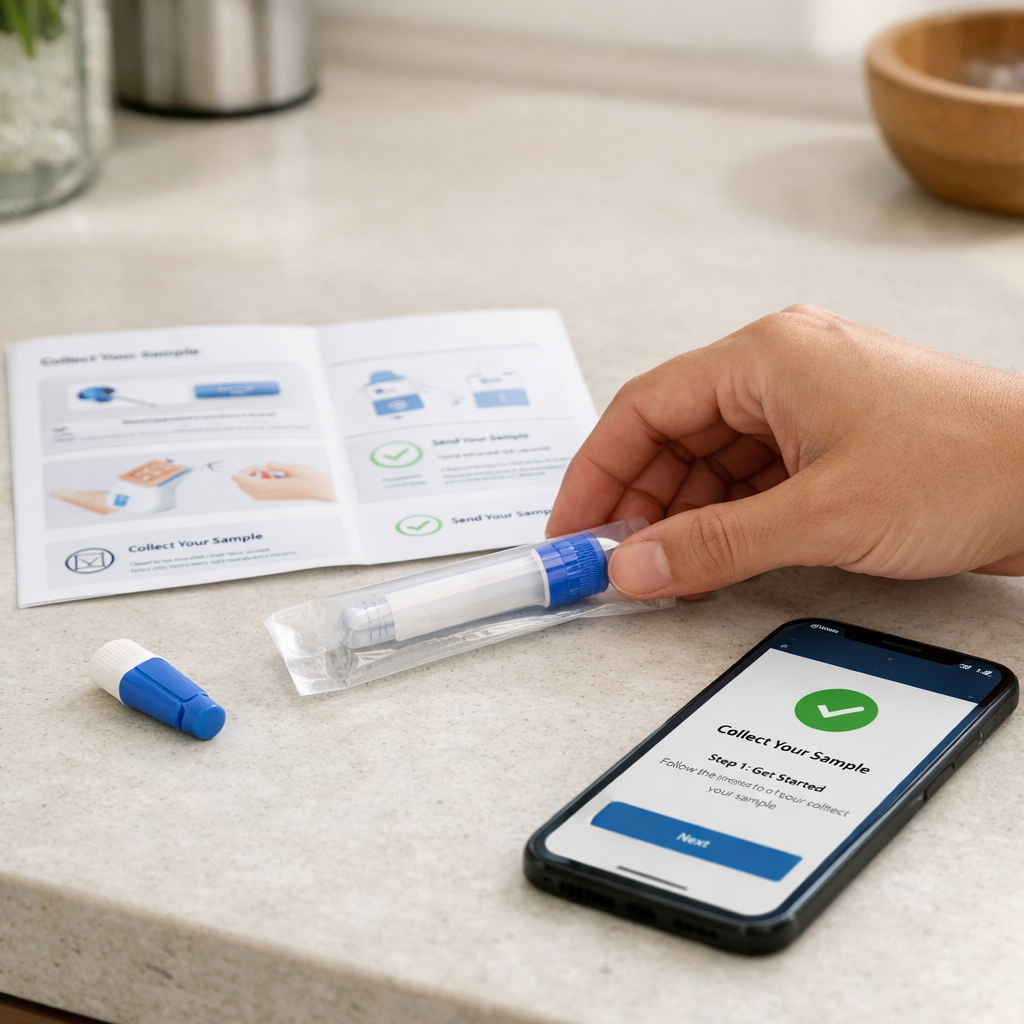
- Collect a finger‑prick blood sample at home
- Mail it in a prepaid mailer to a CLIA‑certified lab
- View results in a secure portal
- Optional clinician review or consult
- Typical turnaround after lab receipt: about 2–7 days (Prevention roundup)
A CLIA‑certified lab follows federally regulated quality systems for clinical testing, including validated methods, proficiency testing, and ongoing oversight. This certification signals that instruments, personnel, and processes meet standards intended to keep results reliable for patient care decisions (Wyndly guide).
Helpful to know:
- sIgE blood tests generally do not require stopping antihistamines, whereas many skin tests do (Wyndly guide).
- Popular kits like Everlywell include prepaid mailers to simplify shipping (Prevention roundup).
What most people mean by trusted
When people say “most trusted at-home allergy test,” they usually mean:
- sIgE‑based blood testing for clinical relevance to true allergy
- Samples processed in a CLIA‑certified lab with quality controls
- Physician review or an option to discuss results
- A transparent allergen list with local relevance, often 40 or more common airborne allergens
Limits matter. Allergy is a clinical diagnosis that combines history plus testing; a lab value alone cannot confirm or rule out disease (as consumer roundups emphasize). Be cautious with IgG or IgG4 food panels; leading societies note they are not proven for diagnosing food intolerance and can mislead consumers (Medical News Today review). At Too Allergic, this is our working definition of “trusted,” too.
Our criteria for trusted at-home tests
Use this scoring framework to choose safer, more actionable kits:
- Must-haves: CLIA certification stated in writing; measures allergen-specific IgE; physician review or consult available; 2–7 day turnaround; transparent allergen list and local relevance.
- Nice-to-haves: clear sample shipping guidance, digital results with ranges, follow-up resources.
- Red flags: IgG/IgG4-only food “intolerance” panels, hair/bioresonance tests without evidence.
Sensitization vs allergy (quick definition): Detectable sIgE means your immune system recognizes an allergen, but that sensitization does not always cause symptoms. True allergy requires a history of consistent reactions and, when appropriate, confirmatory testing and supervised challenges (as summarized in the Prevention roundup). At Too Allergic, we apply these criteria when evaluating at-home options.
Summary verdict
The most trusted at-home options today are sIgE‑based tests processed in CLIA labs with physician review—typically indoor/outdoor environmental panels or lab‑backed blood draws. Broad IgG food panels should be avoided or interpreted with great caution. Best use case: an initial screen for environmental triggers, then discuss next steps with a clinician (Healthline overview; Medical News Today review). Too Allergic recommends starting with sIgE environmental screening and pairing results with a clinical conversation.
Everlywell Indoor and Outdoor Allergy Test
Everlywell’s finger‑prick kit screens IgE reactivity to roughly 40 common airborne allergens (pollens, dust mites, molds, pet danders). It includes a prepaid mailer, with results typically available a few days after the lab receives the sample. It’s designed for respiratory/environmental allergens, not foods, so pair findings with your symptom calendar. At‑home blood testing can be “pretty quick and accurate,” but accurate interpretation is the real challenge (Prevention roundup; Greatist guide).
imaware IgE Allergy Test
Consumer roundups frequently rank imaware highly for checking the core trust boxes: sIgE focus, CLIA‑lab processing, and physician oversight with clear panels. It’s a solid choice for broad environmental screening from home. If your concerns involve foods or severe reactions, confirm next steps with an allergist rather than self‑restricting diets (Greatist guide).
Walk-In Lab Allergy Stinging Insect Profile
For venom concerns, a lab‑draw approach closely mirrors in‑clinic testing. Walk‑In Lab routes you to LabCorp or Quest for phlebotomy and returns results in about 5–7 days—useful if you’ve had suspected reactions to bees, wasps, or hornets or have occupational exposure. Quest’s nationwide footprint can make scheduling easier (Prevention roundup; Greatist guide).
TestMyAllergy Combined Allergy and Intolerance
Combined panels bundle environmental items with food markers (often 50–78+ items). U.K. lab routing may add shipping time for some U.S. buyers, and prices often scale with scope. Be aware that IgG/IgG4 components have limited diagnostic value and can trigger unnecessary restriction; consult a clinician before changing your diet (Prevention roundup; Greatist guide; Medical News Today review).
LifeLab Prime 110
Prime 110 packages may mix sIgE with IgG/IgG4 food panels, and laboratory certifications can vary by bundle. Example pricing around $279 appears in consumer tables. Our advice remains consistent: prioritize tests that clearly measure sIgE in CLIA‑certified labs and treat IgG findings cautiously (Medical News Today review).
Functional medicine broad panels
Functional‑medicine offerings can span hundreds of items across IgE, IgG, IgG4, and IgA. This breadth increases interpretation complexity and the need for clinical context to avoid over‑restriction or unnecessary worry (Rupa Health explainer). Academic commentators also caution that IgG/IgG4 often reflect exposure or tolerance rather than true allergy (CU Anschutz commentary). Too Allergic advises extra caution with broad, mixed‑antibody panels.
Side-by-side comparison by key criteria
| Test name | Antibody type(s) | CLIA lab | Physician review | Allergen count/type | Collection method | Turnaround | Best for | Caveats |
|---|---|---|---|---|---|---|---|---|
| Everlywell Indoor & Outdoor | sIgE | Yes | Available | ~40 airborne (pollens, dust mites, molds, pets) | Finger‑prick | Days after lab receipt | Respiratory/environmental screens | Not for food; interpretation needed (Prevention roundup; Greatist guide) |
| imaware IgE Allergy Test | sIgE | Yes | Oversight provided | Broad environmental panel | Finger‑prick | Days | “Best overall” consumer pick for home screening | Confirm food issues with a clinician (Greatist guide) |
| Walk‑In Lab Stinging Insect Profile | sIgE (venoms) | Yes (LabCorp/Quest) | Physician ordering pathway | Venom allergens | In‑person blood draw | ~5–7 days | Suspected bee/wasp/hornet reactions | Requires lab visit (Prevention roundup) |
| TestMyAllergy Combined | Mixed (often includes IgG/IgG4) | U.K. lab | Varies | 50–78+ mixed items | Finger‑prick | Adds shipping time | Broad screeners who’ll review with a clinician | IgG utility limited; potential diet pitfalls (Medical News Today review) |
| LifeLab Prime 110 | Mixed (IgE/IgG4 varies) | Varies | Varies | Mixed panel | Finger‑prick | Days | Exploratory users prioritizing sIgE signals | Certification transparency varies; price ~$279 (Medical News Today review) |
Pricing and value overview
- Typical ranges:
- Single sIgE environmental kits: about $119–$179
- Broad combo panels: about $135–$279
- Examples often listed: LifeLab from ~$135, Test My Allergy from ~$239, Prime 110 around $279 (Medical News Today review)
- What drives price: number of allergens tested, physician review access, in‑person lab draw vs finger‑prick, shipping distance.
- Common turnaround: 2–7 days after the lab receives your sample (Prevention roundup). Too Allergic generally favors clear sIgE environmental kits that state CLIA certification and offer clinician review within these ranges.
When an at-home test makes sense
- Environmental screening when skin testing isn’t feasible or stopping antihistamines is impractical, since sIgE blood testing typically doesn’t require a washout (Wyndly guide).
- To guide bedroom‑first controls (HEPA, MERV‑13, dust‑mite encasings) and discuss medication trials.
- For food concerns or severe symptoms, at‑home sIgE is not a substitute for supervised oral food challenges; involve an allergist early (Healthline overview). Too Allergic uses a “screen, then act safely” approach: pair results with targeted controls and clinician input.
When to see an allergist first
Seek in‑person care if you’ve had signs of anaphylaxis, suspected food allergy, venom reactions, worsening asthma, or complex medication histories. Oral food challenge is the gold standard and must be supervised due to risk; in‑office environmental testing has been reported around 90% accurate in one summary, underscoring the value of clinical care (Premium Allergy insights). Too Allergic emphasizes seeing an allergist first in these higher‑risk scenarios.
How to act on results safely at home
- Focus on the bedroom first for maximal symptom impact.
- Start “nose‑first” with intranasal therapies; add non‑drowsy oral antihistamines as needed; reserve decongestants for brief rescue.
- Always consult a licensed professional before making diagnosis or treatment changes.
Bedroom-first air control
- Choose a true‑HEPA purifier sized to your bedroom’s square footage.
- Use MERV‑13 HVAC filters and extend fan runtime, especially during pollen peaks.
- Encase pillows and mattress for dust mites; wash bedding hot weekly.
- If grass, tree, or mold sensitization appears, keep windows closed and increase filtration during peak seasons.
Medication basics to trial
- Daily intranasal corticosteroid for congestion and inflammation; consider adding an intranasal antihistamine for breakthrough nasal symptoms.
- Use non‑drowsy oral antihistamines for intermittent itch/sneeze.
- Limit decongestant sprays to very short courses.
- Track symptoms for 2–4 weeks to assess benefit.
When to consider immunotherapy
- Consider subcutaneous (SCIT) or sublingual (SLIT) immunotherapy if symptoms persist despite controls/meds and sIgE sensitization matches seasonal or perennial triggers.
- SLIT and SCIT require protocols with first‑dose safety and monitoring through a board‑certified allergist.
Telehealth clinic standards for follow-up
Look for:
- Leadership by a board‑certified allergist
- Secure telehealth platform and e‑prescribing
- Access to diagnostic IgE labs or local skin‑test referrals
- SLIT options with first‑dose safety rules and monitoring
Bring your at‑home sIgE report to telehealth so your history and results can be reviewed together for an actionable plan. Too Allergic encourages this combined review to translate results into clear next steps.
Frequently asked questions
How accurate are at-home allergy tests?
At-home sIgE blood tests can be a useful screen for environmental triggers, but results need clinical context. Too Allergic recommends confirming key findings with an allergist, especially for food or severe symptoms.
Are IgG or IgG4 food tests reliable?
IgG/IgG4 food panels are not proven to diagnose food intolerance and often reflect exposure rather than true allergy. Too Allergic advises caution and consulting a clinician before changing your diet.
Can kids use at-home allergy tests?
Some kits allow pediatric sampling, but children with suspected food allergies, severe reactions, or asthma should see an allergist. Too Allergic recommends in‑office evaluation for kids in these cases.
What is the difference between sensitization and true allergy?
Sensitization means your immune system makes antibodies to an allergen; true allergy means those antibodies trigger symptoms. Too Allergic suggests matching any positive test with your history before making changes.
What should I do if my symptoms are severe or involve foods?
Seek allergist care first. Too Allergic recommends supervised evaluation and, when needed, medically supervised oral food challenges.