Top At-Home Allergy Test Kits for Food Sensitivities, User-Rated
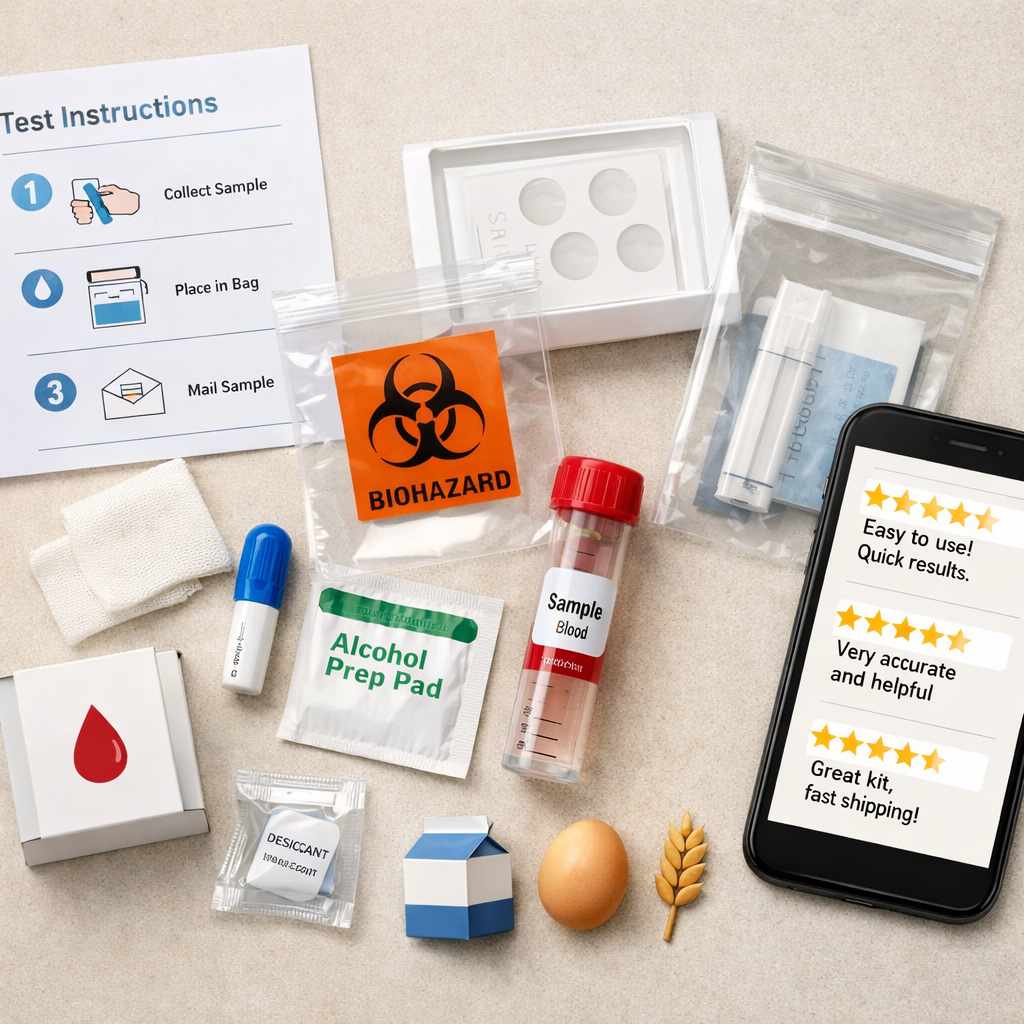
If you’re sorting through “food sensitivity” symptoms at home, the best-rated kits prioritize IgE-based testing, clinician review, and certified labs. Below, we highlight user-favorite options and how to use them safely. Quick picks: Too Allergic pick—IgE-first, clinician-reviewed panels—plus Everlywell and Cleared for environmental triggers, EqualDx for a budget food IgE screen, and combined IgE/IgG4 panels for those who understand their limits. Use these results as a starting point, then confirm positives with an allergy professional. Our guide keeps costs, turnaround, and lab quality front and center.
Too Allergic’s quick take and safety disclaimer
At-home kits can be useful screening tools, not definitive diagnoses. Too Allergic shares lived experience—this article is informational and not medical advice. Always confirm results and next steps with a licensed clinician.
Our stance in one line: choose IgE-based panels processed in CLIA or ISO labs with physician-reviewed reporting; interpret IgG/IgG4-only or hair/bioresonance claims cautiously for safety and value [source: https://www.healthline.com/health/allergies/at-home-allergy-test]. We cover metal/nickel, food, pet, and environmental allergies with a practical, budget-aware lens.
How we chose these user-rated kits
Too Allergic prioritized kits that: measure specific IgE for clinical relevance, use CLIA- or ISO-certified labs, include physician-reviewed results, publish clear turnaround times, show transparent pricing, and earn strong user feedback. Typical turnaround ranges from about five business days to a few weeks depending on shipping and lab load [source: https://www.healthline.com/health/allergies/at-home-allergy-test].
We deprioritized hair/bioresonance options and IgG-only test claims due to limited evidence linking results to true intolerances or actionable pathways.
What food sensitivity means vs food allergy vs intolerance
To avoid missteps, clarify the terms first. Here’s a concise, quotable sidebar:
| Term | Plain-language definition |
|---|---|
| Food allergy (IgE-mediated) | A true immune reaction where IgE antibodies trigger histamine release, often causing rapid symptoms—itching, hives, swelling, wheeze—within minutes to hours after exposure. Reactions can be serious and need medical evaluation. |
| Food sensitivity | A broad consumer term for adverse food reactions with multiple possible mechanisms. It isn’t a standardized medical diagnosis. Non-IgE panel results shouldn’t drive major diet changes without professional guidance. |
| Food intolerance | Usually non-immune, such as enzyme deficiencies like lactose intolerance. Symptoms are often digestive, uncomfortable, and generally not life-threatening. Not the same as an IgE allergy. |
Independent reporting has questioned the clinical usefulness of commercial “intolerance” tests and emphasized confirming any changes in a medical setting [source: https://www.bbc.co.uk/programmes/articles/LJ72Gy4ShspWzm3hcv03dT/do-home-allergy-and-intolerance-tests-work].
What at-home tests can and can’t tell you
What they can do:
- Screen for specific IgE sensitization using a finger-prick collection you mail to a CLIA-certified lab with physician-reviewed reporting, offering a practical first step toward clinic testing [source: https://www.healthline.com/health/allergies/at-home-allergy-test].
What they can’t do:
- Provide a stand-alone diagnosis or replace supervised oral challenges. IgG/IgG4 levels do not diagnose intolerances, and hair/bioresonance methods lack scientific support [source: https://www.medicalnewstoday.com/articles/at-home-allergy-test].
Caution: Eliminating foods solely on unconfirmed results can be counterproductive and may theoretically increase risk over time; make changes with clinical guidance [source: https://news.cuanschutz.edu/department-of-medicine/home-food-allergy-kit].
1) Too Allergic pick: IgE-first, clinician-reviewed panels
For families and budget-minded readers, start with IgE-first panels processed in CLIA/ISO labs and reviewed by a clinician. These are the closest at-home analog to clinic testing. Look for clear turnaround claims (often around five business days from lab receipt) and optional post-test support. This is the Too Allergic baseline for at-home screening.
Prices generally range from about $149–$349 depending on panel size and services; compare allergen lists to your symptoms and budget, and scan user reviews for real-world turnaround and support experiences [source: https://www.walmart.com/browse/health-medicine/allergy-tests/976760_1005860_542089_3767838].
Sample comparison at a glance:
| Kit | Panel focus | Sample | Lab/oversight | Turnaround (typical) | Clinical review/consult | List price (approx.) | Best for | Notable caveats |
|---|---|---|---|---|---|---|---|---|
| Everlywell Indoor & Outdoor | 40 environmental IgE | Finger-prick | CLIA lab; HIPAA practices | Days to weeks | Physician-reviewed | $199 | Suspected dust/pollen/pet triggers | Mixed user feedback on speed |
| Cleared Indoor & Outdoor | 40 environmental IgE | Finger-prick | CLIA lab | ~5 business days after lab receipt | Allergist consult included | $199 | Faster turnaround plus consult | Limited to inhalants |
| EqualDx Food Allergy | Major food IgE (16 items) | Blood collection | Clinical-grade lab (vendor) | Days to weeks | Report provided | ~$149 (promo) | Budget screen for top foods | Limited panel; confirm positives |
| Prime 110 Allergy & Intolerance | 35 allergies (IgE) + 75 “intolerances” (often IgG4) | Finger-prick | Lab-processed | ~7 days | Report provided | $279 | Broad snapshot with follow-up | Interpret IgG4 cautiously |
| Test My Allergy Combined | 70-item combined panel | Finger-prick | ISO-style processing noted | ~7 days | Report provided | From $239 | Combined view to verify later | Don’t use to drive strict eliminations |
2) Everlywell Indoor & Outdoor Allergy Test
What it tests: A 40-allergen environmental panel using IgE via ELISA, reported from very low to very high reactivity. A physician reviews results before release.
Price and logistics: List price around $199. Finger-prick card ships to a CLIA-certified lab; HIPAA-compliant data handling is a stated feature. Turnaround can vary from days to weeks depending on shipping and lab volume.
Best for: Clarifying suspected environmental triggers (dust mites, grasses, trees, pets) to guide next steps like avoidance, medications, or clinic testing. Public reviews note variable turnaround, so plan accordingly.
3) Cleared Indoor & Outdoor Allergy Test
Key features: A 40-allergen IgE panel plus a free allergist consultation at a similar $199 price point.
Turnaround: Results are typically available about five business days after the lab receives your sample.
Ideal for: Users who want faster reporting and a post-result clinical touchpoint without scheduling separate telehealth.
4) EqualDx Food Allergy Test
Core details: IgE-focused food panel with promotional pricing around $149. The vendor highlights painless collection and lab processing and says it screens 16 major foods that account for more than 90% of U.S. food allergy cases (vendor claim) [source: https://www.amazon.com/EqualDx-Antibody-Allergens-Clinical-Grade-Collection/dp/B0DRW9ZMFJ].
Caveat: Food IgE panels can flag sensitization without proving true allergy; confirm positives with a clinician before restricting staples.
Best for: An initial, budget-friendly look at major allergens to steer a professional consult.
5) Prime 110 Allergy & Intolerance Test
What it includes: A combined report testing 35 common allergies and 75 “intolerances,” with results in about seven days. Listed price: $279. These offerings are summarized in consumer overviews of at-home kits [source: https://www.medicalnewstoday.com/articles/at-home-allergy-test].
Evidence note: Mixed panels may include IgE and IgG4; IgG4 levels are not well validated for diagnosing intolerances—interpret cautiously and plan clinical follow-up.
Who might consider: Users who want a broad snapshot, understand the limits of IgG4, and will verify findings before changing diets.
6) Test My Allergy Combined Allergy & Intolerance
Details: A 70-item combined panel via finger prick, with estimated results in about seven days and pricing starting around $239. Some providers in this category note ISO-style processing in their materials and overviews.
Caution: Mixed IgE/IgG4 outputs shouldn’t drive elimination diets without clinician input.
Fit: Users seeking a combined snapshot while committing to in-clinic confirmation.
7) Multi-panel providers
Overview: Retailers and brand sites often bundle large panels (100+ items) in the $149–$349 range, with mixed user reviews on value and speed. These big lists can feel comprehensive but may not match your actual symptom pattern.
Validation watchouts: Vendors sometimes advertise high sensitivity or specificity (for example, 90%+ sensitivity or 97.6% specificity), yet independent validation can be limited. Verify methods and lab certifications before purchase [source: https://us.checkmybodyhealth.com/collections/allergy-tests].
Guidance: Prefer clear IgE methodology in CLIA/ISO labs and avoid hair/bioresonance claims that lack scientific support.
How to choose the right kit on a budget
A simple path:
- Identify the main triggers you suspect (food versus environmental).
- Choose IgE-based kits using CLIA/ISO labs and physician review for the best clinical relevance.
- Compare price tiers ($149–$349) and turnaround (five business days to several weeks). If time matters, pick providers that publish lab-receipt-to-result windows.
Affordability tips: Check HSA/FSA eligibility and your plan rules; many kits are not insurance-covered. Scan user reviews for packaging quality, lancet ease, and collection clarity before you buy.
Interpreting results safely and next steps
Treat at-home results as screening, not diagnosis. Confirm positives with an allergist before pulling core foods like milk, egg, wheat, or peanut.
If the company offers physician-reviewed reports or a consult, use it to plan next steps. If elimination is advised, do it under clinical guidance to avoid nutrition gaps and unnecessary restrictions.
Special notes for parents and multi-allergy households
Have a pediatric/allergy clinician verify any at-home positives, especially for staples and for children with eczema or wheezing histories.
Keep epinephrine access protocols if history suggests risk; severe or rapidly evolving symptoms warrant in-person testing. Build a household plan for environmental exposures (dust mites, pets, seasonal pollen) and attempt food trials only with medical input.
Nickel, metal, pet, and environmental triggers to keep in mind
Environmental kits (like Everlywell and Cleared) focus on inhalant IgE and can inform dust mite, grass, and pet strategies. Metal and nickel reactions are typically contact dermatitis, not IgE food allergy—ask about patch testing pathways in clinic.
For practical next steps, see Too Allergic’s guides on home nickel testing and management: how to test for nickel allergy at home and our nickel allergy resource hub:
- https://www.tooallergic.com/how-to-test-for-nickel-allergy-at-home/
- https://www.tooallergic.com/categories/nickel-allergy/
When to skip home kits and see a clinician
Seek immediate in-person care for severe or rapidly progressing reactions, prior anaphylaxis, or failure to thrive in children. Consider in-clinic evaluation if celiac disease is on the table; home blood screens may help rule out but not confirm.
Context matters: a doctor’s office environmental allergy test has been reported around 90% accurate in one summary, while manufacturers sometimes cite up to 98% accuracy for certain food tests—interpret marketing claims carefully and prioritize clinical settings when safety is at stake [source: https://premiumallergy.com/how-accurate-is-at-home-allergy-testing-expert-insights/].
Frequently asked questions
Are at-home food sensitivity tests accurate enough to change my diet?
Use at-home results as a starting point, not a final answer. Too Allergic recommends confirming positives with a clinician before removing staple foods.
What’s the difference between IgE and IgG or IgG4 on these reports?
IgE is linked to true allergic reactions, while IgG/IgG4 isn’t proven to diagnose intolerances. Too Allergic favors IgE-first panels and clinician review.
Can I use HSA or FSA dollars to pay for a kit?
Sometimes, depending on your plan. Check the vendor’s payment options and confirm eligibility with your benefits administrator.
How fast are results and what support should I expect after?
Turnaround ranges from about five business days to a few weeks. Too Allergic highlights kits that include physician-reviewed reports or a brief consult.
What if my symptoms are severe or I’ve had reactions before?
Skip home kits and see an in-person clinician. If you’ve had rapid swelling, breathing trouble, or anaphylaxis, seek medical care immediately.