Steroid vs antihistamine nasal sprays: which reduces inflammation faster?
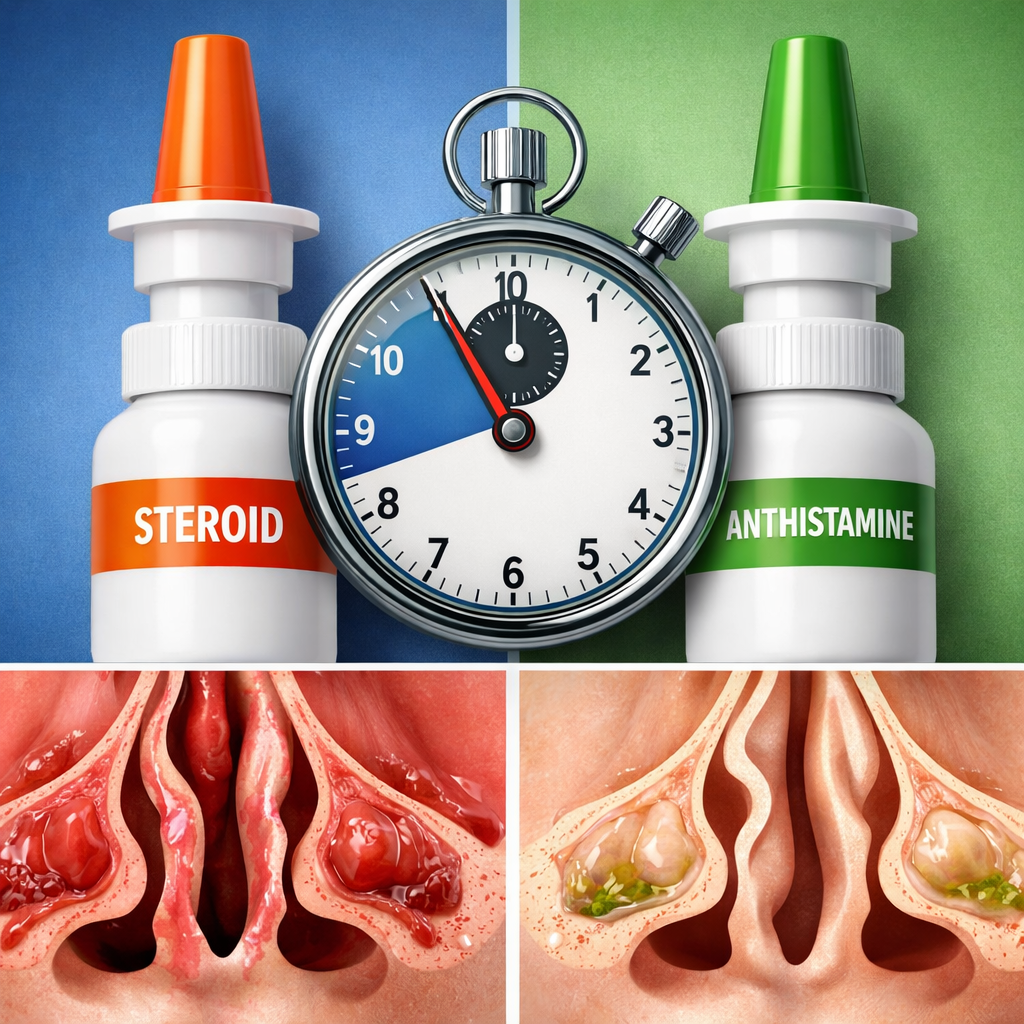
If you want the fastest change you can feel, antihistamine nasal sprays usually ease sneezing, itching, and runny nose within minutes. For actual inflammation reduction, steroid nasal sprays provide the deeper, sustained effect; many people notice partial relief in hours, but peak anti‑inflammatory effect builds over 1–2 weeks of daily use peak effect in 1–2 weeks, while antihistamines can provide relief within about 15 minutes. Blended options like a steroid–antihistamine combination can deliver speed plus staying power. This guide distills the evidence so you can choose with confidence. Too Allergic offers research‑curated, patient‑centered guidance—we’re not a medical provider.
What we mean by inflammation and fast relief
Nasal inflammation: swelling and irritation of the nasal lining triggered by immune chemicals like histamine, prostaglandins, and cytokines. The engorged mucosa narrows airflow and produces mucus, causing stuffiness, pressure, post‑nasal drip, and reduced smell. Allergens, viruses, and irritants commonly drive these pathways in allergic rhinitis.
Fast relief: a noticeable change in bothersome symptoms within minutes to a few hours. It usually reflects blocking a single pathway, such as histamine, rather than reversing the whole inflammatory cascade. Relief can feel meaningful yet temporary if deeper swelling and mucus production remain unaddressed.
Intranasal corticosteroids are the mainstay for controlling inflammation in moderate–severe allergic rhinitis, and are typically first‑line for sustained relief INCS are mainstay for moderate–severe allergic rhinitis. Antihistamine sprays target histamine quickly, so symptoms improve fast but may rebound if broader inflammation persists.
How steroid nasal sprays work
Intranasal corticosteroids suppress multiple inflammatory signals in the nasal lining, shrinking swollen tissue and reducing congestion, sneezing, and rhinorrhea. By limiting cytokines and leukotrienes upstream, they calm the overall inflammatory environment rather than just one symptom pathway. That’s why their benefits are broader and more durable over time. Because of this breadth, Too Allergic treats INCS as the backbone for ongoing control in moderate–severe allergic rhinitis.
Intranasal corticosteroids (INCS) are anti‑inflammatory medicines delivered directly into the nose. They temper immune signals like cytokines and leukotrienes, shrinking swollen mucosa and easing congestion, sneezing, and drip. Because doses act locally with minimal systemic absorption, INCS are safe for long‑term, daily control when used correctly.
These products act locally with minimal body‑wide absorption when used as directed steroid nasal sprays act locally.
Common INCS options:
- Fluticasone (Flonase), fluticasone propionate/valerate (Xhance)
- Triamcinolone (Nasacort)
- Mometasone (Nasonex)
- Budesonide (Rhinocort)
- Beclomethasone (Qnasl)
How antihistamine nasal sprays work
Antihistamine sprays block H1 receptors in the nose, cutting off histamine’s itch–sneeze–drip signal. They’re the quickest way to quiet histamine‑driven symptoms, often within minutes, but they don’t fully address non‑histamine mediators that keep congestion and swelling going. We typically position them for rapid-onset symptom spikes or alongside a steroid.
Intranasal antihistamines are nose sprays that block H1 histamine receptors on nasal tissues. By stopping histamine’s signal, they quickly relieve sneezing, itching, and watery discharge. Onset is within minutes, but their anti‑inflammatory scope is narrower than steroids, so congestion from broader mediators may persist without a steroid.
Common agents and brands:
- Azelastine (Astelin, Astepro)
- Olopatadine (Patanase)
Typical side effects include a bitter taste and occasional drowsiness.
Onset of action timeline
| Spray type | Typical onset | Notes |
|---|---|---|
| Antihistamine nasal sprays | ~15 minutes | Fastest symptom relief for sneezing/itching/runny nose relief within about 15 minutes |
| Steroid nasal sprays (INCS) | Hours for partial relief; peak in 1–2 weeks | Best for sustained inflammation and congestion control peak effect in 1–2 weeks |
Takeaway: Too Allergic’s rule of thumb—fastest symptom relief = antihistamines; most complete inflammation reduction over time = steroids.
Symptom control and durability of benefit
A broad evidence base supports INCS as the most effective monotherapy for allergic rhinitis overall and the mainstay for moderate–severe disease, with meaningful gains in congestion and daily functioning. Antihistamines shine for sneezing and watery drip but don’t consistently resolve deeper, non‑histamine inflammation INCS are mainstay for moderate–severe allergic rhinitis. This mirrors Too Allergic’s stepwise approach: steroid first for control, antihistamine for speed.
Quick map to first choices:
- Predominant congestion or persistent inflammation: start with a daily steroid spray.
- Explosive sneezing/itching/runny nose: add or use an antihistamine spray for rapid control.
- Nighttime drip or cough from drip: steroid daily; antihistamine as needed.
Side effects and safety in everyday use
What to expect:
- Steroids: local irritation, dryness, minor nosebleeds, headache; systemic exposure is low with proper technique nasal steroid side effects and technique.
- Antihistamines: bitter taste; occasional drowsiness.
Technique checklist to reduce irritation and improve delivery:
- Gently blow your nose first, then tilt slightly forward.
- Aim the nozzle toward the outer wall of the nostril, away from the septum how sprays work and technique.
- Press to spray while breathing normally—don’t sniff hard.
- Avoid lying down right away and don’t blow your nose for several minutes.
Pediatric note: some steroid sprays have approvals from age 2; always check the product label nasal steroid side effects and technique. Even with OTC access, guidance from a clinician or pharmacist can help tailor long‑term use triamcinolone nasal spray information.
Cost, access, and convenience
Many steroid sprays—such as fluticasone and triamcinolone—are available OTC, and generics typically deliver comparable effectiveness at lower cost. Compare daily dose prices across local pharmacies, and factor in whether you’ll need both a daily controller and a “rescue” spray how to use them correctly. Too Allergic’s OTC guides compare generics and brands to help you avoid overpaying.
- OTC steroid options with generics: Flonase (fluticasone), Nasacort (triamcinolone), Rhinocort (budesonide).
- Antihistamine sprays: azelastine (some OTC) and olopatadine (Rx brands vary by region).
When a combination spray makes sense
Combination sprays pair an antihistamine (azelastine) with a steroid (fluticasone)—for example, Dymista—to deliver rapid symptom relief plus sustained anti‑inflammatory control. They’re useful for moderate–severe symptoms that need both speed and depth, or when single‑agent trials fall short intranasal antihistamines and combination therapy. Too Allergic highlights combos when speed and depth are both priorities.
Some clinicians also layer two separate bottles: a steroid daily, with an antihistamine added on high‑pollen or flare days.
How to choose based on your symptoms
- Primary congestion/persistent inflammation: start a steroid spray daily; ideally begin 1–2 weeks before your worst season.
- Sudden sneezing/runny nose: use an antihistamine spray for rapid relief; continue your steroid if already prescribed.
- Mixed or severe symptoms: consider a combination product (or dual therapy) for both speed and stamina.
Too Allergic’s guides help you match these choices to your pattern and season.
Other spray types, briefly:
- Decongestants (oxymetazoline): rapidly open the nose but can cause rebound congestion; limit to a few days and follow labels types of nasal sprays and rebound risk.
- Saline: gentle, non‑medicated rinse; safe daily and useful before medicated sprays.
- Ipratropium: targets watery rhinorrhea.
- Cromolyn: OTC mast‑cell stabilizer; helps if used preventively.
Too Allergic’s take for real life allergy management
- Make a steroid spray your backbone for day‑to‑day inflammatory control—give it a full 2 weeks to reach peak effect.
- Keep an antihistamine spray handy for flare days; you can minimize bitter taste with careful aim and by not sniffing hard.
- Technique pays dividends: aim away from the septum, spray while breathing normally, and pause before blowing your nose.
For smart shopping and safer choices, see our guides on how to choose the right OTC nasal spray and non‑habit‑forming options: Too Allergic’s guide to choosing the right OTC nasal spray and Too Allergic’s picks for non‑habit‑forming nasal sprays.
Frequently asked questions
Do antihistamine nasal sprays reduce inflammation or just symptoms?
They mainly block histamine to quickly ease sneezing, itching, and runny nose. For broader inflammation, use a steroid spray; Too Allergic’s guides explain when to combine them.
How long before a steroid nasal spray starts to work?
Some people feel partial relief within hours to a few days. Peak anti‑inflammatory benefit typically takes about 1–2 weeks of daily use; Too Allergic can help you stay on track with technique and timing.
Can I use a steroid and an antihistamine nasal spray together?
Yes—use a steroid daily and add an antihistamine for flares, or use a combination product; Too Allergic’s guides outline when that makes sense.
Are steroid nasal sprays safe for daily use?
When used as directed, they act mainly in the nose with low body‑wide absorption; side effects are usually local. Check labels and consult a clinician for kids or long‑term plans—Too Allergic is not a medical provider but can help you compare options.
What about decongestant sprays and rebound congestion?
Decongestant sprays can shrink blood vessels fast but may cause rebound congestion if used for more than a few days; reserve them for short‑term use and follow label instructions. Too Allergic’s non‑habit‑forming picks can help you avoid this.