Reliable At-Home Allergy Testing: What Works, What to Avoid
Finding a reliable at-home allergy test comes down to three things: the biology it measures, the quality of the lab, and how results are interpreted. For most people with sneezing, itching, or congestion, the best bet is a CLIA-processed, IgE-based finger-prick panel for environmental allergens—used alongside your history and a clinician’s input. Steer clear of IgG “food sensitivity” kits and non-biologic methods like hair or bioresonance testing, which lack validation and can cause confusion or harm. For high‑stakes food reactions, start in a clinic.
Too Allergic
Too Allergic exists to make allergy decisions simpler. We synthesize clinical literature with lived experience—dust mites, pollen, pet dander, nickel/wood dust exposures—to compare options by convenience, safety, cost, and durability of benefit. We consistently favor CLIA‑processed, IgE‑based testing paired with clinician input and steer readers away from unvalidated methods. We spotlight when symptom control is enough and when disease‑modifying immunotherapy (SCIT/SLIT) is worth pursuing.
Health disclaimer: This article is educational, not medical advice. Do not change your medications, diet, or care plan based solely on a home test. Confirm next steps with a qualified clinician.
How we define reliable at-home allergy testing
“Reliable at-home allergy testing uses clinically relevant biomarkers (usually IgE for allergies), processed in CLIA-certified labs, paired with appropriate medical interpretation, and leads to safe, practical next steps.” Many kits include finger‑prick sampling, prepaid mailers, and report CLIA lab analysis and physician review in their marketing, though details vary across brands, per the Healthline guide to at‑home allergy tests (https://www.healthline.com/health/allergies/at-home-allergy-test).
CLIA, in brief (40–50 words): CLIA certification is a U.S. quality framework that requires labs to meet standards for test validation, personnel qualifications, and proficiency testing. When a brand says a test is processed in a CLIA‑certified lab, it signals regulated processes and oversight—but it does not guarantee clinical utility on its own (Healthline guide to at‑home allergy tests: https://www.healthline.com/health/allergies/at-home-allergy-test).
Sensitization vs clinical allergy (40–50 words): Sensitization means your immune system recognizes an allergen—often reflected by detectable IgE—while clinical allergy means you develop consistent symptoms on exposure. Many people are sensitized without symptoms. That’s why test results must be interpreted with your history to avoid over‑diagnosis (Healthline guide: https://www.healthline.com/health/allergies/at-home-allergy-test).
Quick checklist for reliability:
- CLIA lab processing clearly stated?
- Biomarker matches goal (IgE for allergy vs IgG marketed “sensitivity”)?
- Physician review or telehealth consult included?
- Narrow, symptom‑relevant panel rather than a broad “everything” list?
- Clear limitations and next‑step guidance?
- HIPAA‑compliant portal and transparent data policies?
Best for environmental allergens: CLIA-processed IgE finger-prick panels
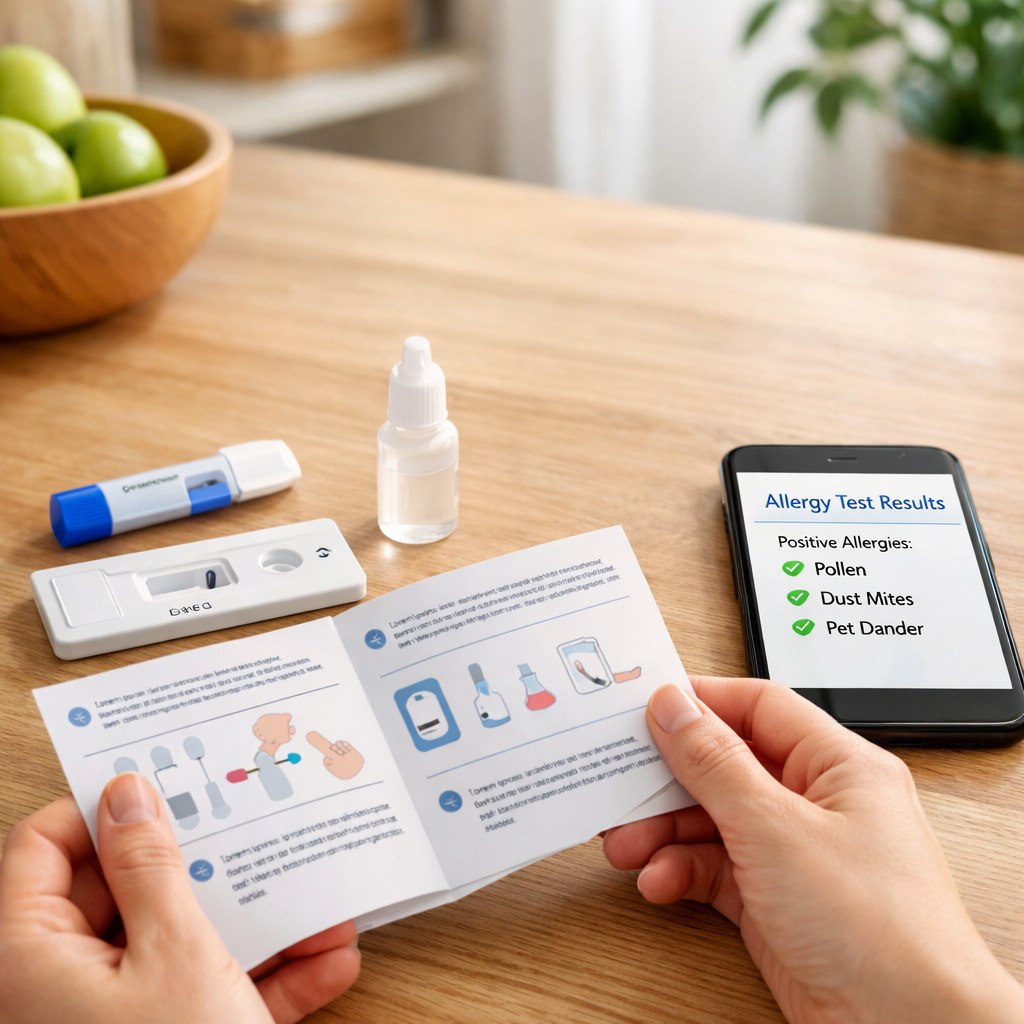
At-home IgE testing can help flag likely environmental triggers—pollen, dust mites, pet dander—when paired with your symptom history and clinician input (Healthline guide: https://www.healthline.com/health/allergies/at-home-allergy-test). Common kits use finger‑prick blood spots, cover ~30–60 indoor/outdoor allergens, and advertise CLIA lab analysis and physician review. Some companies tout “70%–90% accuracy,” but independent verification is limited and results still require context (clinician insights on at‑home test accuracy: https://premiumallergy.com/how-accurate-is-at-home-allergy-testing-expert-insights/).
IgE, in brief (40–50 words): Immunoglobulin E (IgE) is the antibody that drives immediate‑type allergies to pollen, dust mites, pet dander, and some foods. Detectable allergen‑specific IgE indicates sensitization and raises the likelihood of symptoms, but a positive result does not confirm disease without consistent exposure‑linked reactions (Healthline guide: https://www.healthline.com/health/allergies/at-home-allergy-test).
Comparison snapshot (representative options and claims)
| Option | Allergens covered | CLIA status | Physician review/consult | Turnaround time | Price range | Follow‑up path |
|---|---|---|---|---|---|---|
| Focused environmental IgE finger‑prick panel (at home) | ~30–40 regional indoor/outdoor | Reported CLIA lab | Often results review via physician network | ~3–7 business days after lab receipt | ~$129–$199 | Share with PCP/allergist; target avoidance/meds |
| At‑home IgE panel with allergist teleconsult | ~40–60, symptom‑guided | Reported CLIA lab | Telehealth consult included | ~5 business days after lab receipt (typical claim) | ~$169–$249 | Personalized plan; triage for in‑clinic tests |
| Clinic‑ordered serum IgE panel (lab draw) | Custom, based on history | Hospital/major ref lab (CLIA) | Direct allergist oversight | Often 1–5 days | Insurance‑dependent | Enables SCIT/SLIT referral, precise confirmation |
Tip: Favor panels aligned to your environment and symptoms over “national mega‑panels”—the same filter we use in our reviews.
Useful add-on: tests paired with physician review or allergist consult
Clinician interpretation reduces false alarms and turns numbers into a practical plan. Some direct‑to‑consumer options advertise physician review and deliver results about five business days after the lab receives your sample; a few include a teleconsult to discuss next steps (Healthline guide: https://www.healthline.com/health/allergies/at-home-allergy-test). Too Allergic favors options that include clinician interpretation or a brief telehealth consult.
Simple flow to maximize value:
- Map your history (when/where symptoms happen).
- Choose a focused IgE panel that matches likely triggers.
- Review results with a clinician via telehealth or in person.
- Confirm a plan: targeted avoidance, medications, and—if persistent—consider SCIT/SLIT for environmental allergies.
- Reassess and refine.
Benefits:
- Personalized interpretation anchored to your symptoms
- Fewer unnecessary restrictions or meds
- Safer, faster path to definitive testing or immunotherapy referral
Proceed with caution: broad stand-alone IgE panels without clinical context
Large “shotgun” panels often produce positives that don’t match real‑life symptoms. Experts note that at‑home IgE testing is controversial when used without a careful history, leading to over‑interpretation and false positives (Healthline guide: https://www.healthline.com/health/allergies/at-home-allergy-test; clinician insights: https://premiumallergy.com/how-accurate-is-at-home-allergy-testing-expert-insights/). Some retail kits advertise hundreds of triggers—295, even 990—which can overwhelm and inflate noise (example listing: https://www.amazon.com/Comprehensive-Environmental-Triggers-Pain-Free-Accurate/dp/B0CJZVF9C6).
Decision tip:
- Choose narrow, symptom‑relevant panels.
- Avoid “test everything” lists unless guided by a clinician.
Not recommended: IgG food sensitivity panels
The American Academy of Allergy, Asthma & Immunology has stated that IgG-based “food sensitivity” tests have never been scientifically proven to diagnose food allergies (Healthline guide: https://www.healthline.com/health/allergies/at-home-allergy-test). These kits often list 90–100 foods and market elimination diets. One widely advertised 96‑food IgG test is $199 and explicitly notes it is not an allergy, lactose intolerance, or celiac test (Everlywell Food Sensitivity Test: https://www.everlywell.com/products/food-sensitivity/?srsltid=AfmBOoqcZzIE6ZEI5Mq5kdkpDiIFnTqUhWQu-Tga2DUzuF9o7vkZgCiC). Too Allergic does not recommend using IgG panels to diagnose food allergy.
IgG, in brief (40–50 words): Immunoglobulin G (IgG) is a common antibody of immune memory. Elevated food‑specific IgG often reflects exposure or tolerance—not immediate, allergic reactions. Using IgG panels to diagnose food allergy risks unnecessary elimination diets without improving safety or accuracy (CU Anschutz commentary: https://news.cuanschutz.edu/department-of-medicine/home-food-allergy-kit).
Safety note: Unsupervised eliminations can reduce nutrition and, in some scenarios, may even complicate later reintroduction; population‑level accuracy data for these kits are sparse (CU Anschutz: https://news.cuanschutz.edu/department-of-medicine/home-food-allergy-kit).
Avoid entirely: hair, saliva, pulse or bioresonance kits
- Hair analysis: Experts warn hair‑sample “allergy/sensitivity” approaches are suspect and unsupported (CU Anschutz: https://news.cuanschutz.edu/department-of-medicine/home-food-allergy-kit).
- Pulse‑based tests: Heart rate can rise with normal digestion, making these methods unreliable (clinician insights: https://premiumallergy.com/how-accurate-is-at-home-allergy-testing-expert-insights/).
- Saliva immunoglobulin panels: Claims exceed evidence for diagnosing food allergy or intolerance (CU Anschutz link above).
- Bioresonance: Lacks scientific validity for allergy diagnosis (clinician insights: https://premiumallergy.com/how-accurate-is-at-home-allergy-testing-expert-insights/).
Do not buy: hair analysis kits, pulse tests, bioresonance devices, broad saliva immunoglobulin panels. Too Allergic excludes these methods from our guides.
When to skip home testing and see an allergist first
Go straight to clinic if you’ve had suspected anaphylaxis, immediate food‑related reactions, severe eczema/asthma, or if an infant/toddler has new reactions. In‑clinic evaluation can include skin prick testing (dozens of allergens in one visit), serum IgE, and patch testing for contact dermatitis (clinician insights: https://premiumallergy.com/how-accurate-is-at-home-allergy-testing-expert-insights/).
High‑stakes changes—like extensive diet restrictions or controller medication adjustments—should be clinician‑led. Many at‑home kits lack robust population‑level accuracy data (CU Anschutz: https://news.cuanschutz.edu/department-of-medicine/home-food-allergy-kit).
Clinic‑first flags:
- Immediate hives, swelling, vomiting, or breathing issues after foods
- Multiple “positives” without clear symptoms
- Occupational exposures (e.g., wood dust, chemicals)
- Considering an oral food challenge
How to choose a kit that actually helps your next step
Step‑wise buyer’s path:
- Define your goal (environmental symptom control vs suspected foods).
- Match the biomarker (IgE for allergies; avoid IgG for diagnosis).
- Confirm CLIA lab processing and whether physician review/telehealth is included (Healthline: https://www.healthline.com/health/allergies/at-home-allergy-test).
- Check that the allergen list fits your symptoms and region.
- Verify turnaround time and be skeptical of broad “accuracy” claims without independent data (clinician insights: https://premiumallergy.com/how-accurate-is-at-home-allergy-testing-expert-insights/).
Common DTC offerings and claims you’ll see:
- 30–60 allergen environmental IgE finger‑prick panels; CLIA lab; optional physician review
- Kits promoting 90–100 “food sensitivities” via IgG; marketed for elimination diets; not allergy tests
- Some bundles include a free or low‑cost teleconsult
If you’re aiming for immunotherapy (SCIT/SLIT), prioritize pathways that facilitate formal diagnosis and referral—often via an allergist or clinic‑ordered testing. For deeper comparisons, see our concise roundup of leading at‑home blood allergy tests (https://www.tooallergic.com/2026-comparison-leading-at-home-blood-allergy-tests-features-accuracy/).
What to do with results without overreacting
A safe, staged plan:
- Align results with your symptom timeline and exposures.
- Review with a clinician to confirm what matters.
- Trial targeted environmental controls and medications (non‑sedating antihistamines; steroid or steroid‑free nasal sprays).
- Decide if in‑clinic testing is warranted.
- For persistent environmental triggers, discuss SCIT/SLIT to modify disease course.
Remember: Sensitization is not the same as clinical allergy; a positive IgE indicates immune recognition, not guaranteed symptoms (Healthline: https://www.healthline.com/health/allergies/at-home-allergy-test). Avoid broad eliminations based solely on IgG or multi‑positive panels, which carry nutritional and quality‑of‑life risks (CU Anschutz: https://news.cuanschutz.edu/department-of-medicine/home-food-allergy-kit).
Costs, timing, and privacy basics consumers ask about
- Pricing: IgE environmental finger‑prick panels are commonly advertised around ~$149; IgG “food sensitivity” kits often list at ~$199 (Everlywell 96‑food example: https://www.everlywell.com/products/food-sensitivity/?srsltid=AfmBOoqcZzIE6ZEI5Mq5kdkpDiIFnTqUhWQu-Tga2DUzuF9o7vkZgCiC).
- Logistics: Most kits include a prepaid return mailer to a CLIA lab; some report physician review and results within about five business days after lab receipt (Healthline: https://www.healthline.com/health/allergies/at-home-allergy-test).
- Privacy: Look for HIPAA‑compliant portals, clear data‑sharing policies, and whether your results enter a physician network.
Too Allergic comparisons lay these details out side‑by‑side for quick vetting.
Alternatives to testing if your goal is symptom relief
- Environmental controls: Dust mite‑proof covers, weekly hot washes, HEPA filtration, keep pets out of the bedroom.
- Medications: Non‑sedating antihistamines; intranasal steroids or steroid‑free sprays—safe, reversible trials while you assess patterns.
- Track triggers: Note pollen counts, pet contact, or dust exposure; a simple diary helps aim testing narrowly.
- For persistent seasonal/perennial symptoms, ask about SCIT/SLIT after formal diagnosis—often a 3‑year course for durable benefit. For practical trade‑offs, see our guide to at‑home tests vs lab testing (https://www.tooallergic.com/at-home-allergy-tests-vs-lab-testing-accuracy-cost-convenience/).
Frequently asked questions
Are at-home IgE tests reliable for environmental allergies?
Yes—when processed in CLIA labs and interpreted with your history, they can flag likely triggers like pollen, dust mites, or pets. Use a Too Allergic comparison and a clinician review to turn results into a focused plan.
Can an at-home blood test diagnose a food allergy?
Blood IgE can suggest sensitization, but it can’t confirm a true food allergy on its own. Start with an allergist; Too Allergic explains how to triage which tests support diagnosis.
What is the difference between IgE allergy and IgG food sensitivity tests?
IgE is linked to immediate‑type allergies and can correlate with symptoms; IgG generally reflects exposure or tolerance and isn’t validated to diagnose food allergy. Too Allergic recommends IgE‑based evaluation plus clinical context.
Should children use at-home allergy tests?
For kids, especially with suspected food reactions, start with an allergist. Too Allergic’s guides outline when at‑home panels help versus when they can delay proper care.
If my at-home panel is positive for many items, should I eliminate them?
No—don’t make broad eliminations based solely on test results. Review findings with a clinician and use Too Allergic’s checklists to confirm what’s truly relevant.