OTC Non-Drowsy Allergy Relief 2026: What Labels Really Mean
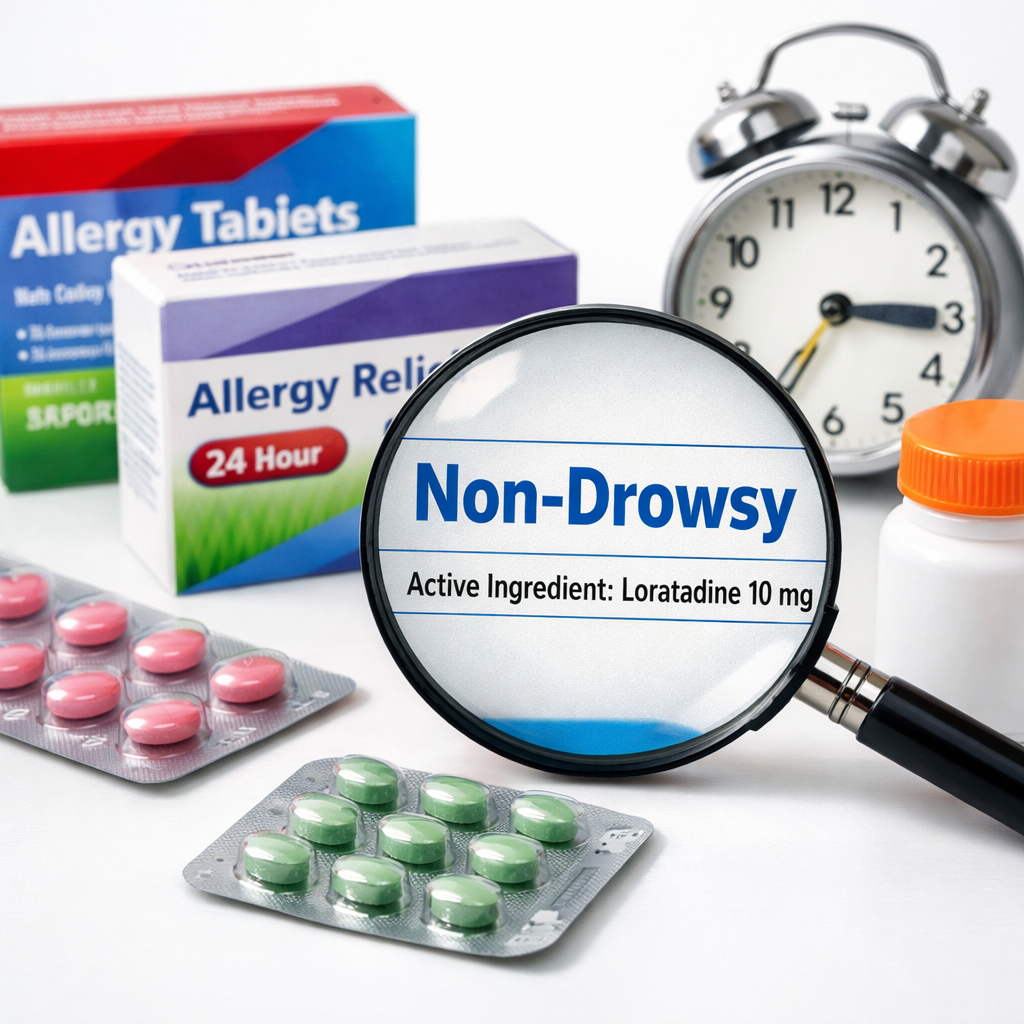
Shopping the allergy aisle in 2026 is easier when you ignore flashy fronts and go straight to the Drug Facts: active ingredient, dose, and delivery form—Too Allergic’s default starting point. Non-drowsy typically means a second-generation antihistamine that’s engineered to limit brain penetration and reduce sedation compared with older drugs. In plain terms: fexofenadine and loratadine are the lowest-risk daytime picks for most adults, while cetirizine and levocetirizine can still make some people a bit sleepy. For stuffy noses, a nasal steroid spray often outperforms pills for congestion and won’t cloud your head. The quick answer to “best non-drowsy antihistamine for adults 2026”: start with fexofenadine or loratadine, confirm 24-hour directions on the Drug Facts label, and build from there with nose-first add-ons as needed. Our quick answer stays the same: label-first, then layer.
Too Allergic guide and safety disclaimer
This Too Allergic guide translates clinician-reviewed evidence and real-world use to help adults and caregivers choose OTC options. It is not medical advice. If you’re pregnant, have chronic conditions, or take multiple medicines, consult a licensed professional. For swelling of the lips or tongue, trouble breathing, or suspected anaphylaxis, call emergency services immediately. Pharmacists can help you interpret labels, flag interactions, and suggest next steps if symptoms persist despite appropriate OTC choices; Too Allergic’s checklists can help you prep for that conversation.
What non-drowsy really means on allergy labels
Non-drowsy is shorthand, not a guarantee. It usually refers to second-generation antihistamines designed to limit crossing the blood–brain barrier, reducing sedation versus older drugs; however, some users still feel mild sleepiness. A 2026 overview highlights loratadine and fexofenadine among the least sedating, with cetirizine and levocetirizine effective but more likely to cause mild drowsiness in some adults (see this non-drowsy options summary from doctronic.ai). Consumer advocates put it plainly: “Non‑drowsy means the product contains fewer ingredients known to cause sleepiness—not that it will keep you alert,” so you should still test any new product on an off day (guidance from Consumer Reports on reading OTC labels). At Too Allergic, we treat “non-drowsy” as lower-risk, not zero-risk.
Lower-sedation group most days: loratadine, fexofenadine.
May still cause mild drowsiness for some: cetirizine, levocetirizine.
How to read the Drug Facts panel for clarity
Compare allergy medicines by what’s inside and how you take it—active ingredient, strength, directions—rather than the box’s marketing claims. Make it a habit to scan the Drug Facts every time:
Too Allergic’s quick Drug Facts checklist
- Purpose
- Active ingredient and amount per dose
- Uses
- Warnings (age limits, conditions, drug/alcohol interactions, driving cautions, pregnancy/breastfeeding)
- Directions (dose and interval: 12-hour vs 24-hour)
- Inactive ingredients (dyes, lactose, sugars, alcohol)
Family-friendly label tips from hospital educators detail what each section means and why it matters (see Nationwide Children’s guide to OTC labels). For a deeper primer on warnings, driving cautions, and safe use across categories, see the National Consumers League’s Drug Facts label explainer.
Non-sedating antihistamines to know by active ingredient
- Loratadine: very low sedation risk; usually once daily, steady daytime relief.
- Fexofenadine: rapid onset; least sedating reputation among common OTCs; good for drivers and shift workers.
- Cetirizine: strong symptom control; ~1-hour onset; slightly higher chance of drowsiness.
- Levocetirizine: a refined form of cetirizine; similar benefits with a still-present, but sometimes lower, sedation risk.
Second-generation antihistamines are modern H1 blockers engineered to minimally cross the blood–brain barrier, reducing sneezing, runny nose, and itchy eyes with less sedation than first-generation drugs like diphenhydramine; many provide once-daily, 24-hour relief when used as directed (overview from Cure Allergy Clinic). For practical pros/cons and who tends to tolerate what best, see clinician guidance on non-drowsy picks from CLS Health.
Which adult products are labeled non-sedating
Below are common adult OTC options marketed as “non-drowsy” or “non-sedating.” Always confirm the exact active ingredient and dose on the Drug Facts label; store-brand generics with the same ingredient and dose work the same for most people.
| Active ingredient | Example brand(s) | Typical adult dose | Sedation notes |
|---|---|---|---|
| Loratadine 10 mg | Claritin; store brand loratadine | 10 mg once daily | Very low sedation risk; 24-hour symptom coverage for many |
| Fexofenadine 60 mg or 180 mg | Allegra; store brand fexofenadine | 180 mg once daily or 60 mg twice daily | Among the least sedating; rapid onset |
| Cetirizine 10 mg | Zyrtec; store brand cetirizine | 10 mg once daily | Strong relief; mild drowsiness in some users |
| Levocetirizine 5 mg | Xyzal; store brand levocetirizine | 5 mg once daily (evening common) | Similar to cetirizine; some report less grogginess |
Note: Many non-drowsy antihistamines claim up to 24-hour relief from a single dose—verify directions and do not exceed label limits.
What 24 hour, PM, extra strength and maximum strength signal
- “24 hour” typically means once-daily dosing and sustained effect. Still, confirm the labeled interval; some products are 12-hour.
- “Long-acting” is a general claim—check the Drug Facts to see whether it’s truly 12 or 24 hours.
- “PM” almost always adds a sedating antihistamine (e.g., diphenhydramine or doxylamine) and is not non-drowsy.
- “Extra strength” or “Maximum strength” usually means the highest nonprescription dose in that brand line—not necessarily better outcomes for you. Always follow the labeled maximum.
When non-drowsy includes a decongestant
Some “non-drowsy” combos add a decongestant that can affect alertness, blood pressure, and sleep—especially relevant for night-shift workers or people with hypertension. Decongestants such as pseudoephedrine constrict nasal blood vessels to relieve stuffiness, but they can cause restlessness, elevated blood pressure, and insomnia; in many states, pseudoephedrine is sold behind the counter and requires ID (see expert OTC insights from FDB Health). Example: loratadine + pseudoephedrine (often sold as “-D”) improves congestion but may raise blood pressure and disrupt sleep. Read the ingredients closely and time doses with your schedule.
Nasal sprays and eye drops with minimal sedation risk
Nose-first and eye-first strategies target symptoms locally and avoid systemic drowsiness: This aligns with Too Allergic’s aim to preserve daytime clarity.
- Intranasal corticosteroid sprays (e.g., fluticasone) reduce inflammation and congestion without causing sedation; they’re often better for stuffy noses than pills for day-long control.
- Antihistamine eye drops calm itch and redness with minimal systemic absorption.
How to layer:
- Mostly nasal (congestion, drip): start with a nasal steroid spray; add a non-drowsy oral antihistamine if needed.
- Mostly eyes (itch, redness): start with antihistamine eye drops; add a non-drowsy oral if needed.
Store brands versus name brands
If the active ingredient and dose match, the relief should be equivalent—often at a lower cost. Too Allergic’s stance: match the active ingredient and dose, then pick the best value that fits your household and sensitivities. Most shoppers agree: 72% believe store-brand and name-brand OTCs offer the same quality; 60% take allergy meds daily in peak months, and nasal symptoms are the most treated (84%), according to consumer trend data from Numerator. Where people shop still skews in-store: about two-thirds mostly or exclusively buy in store; 64% shop Walmart, 42% CVS, 42% Walgreens, and 28% Amazon, per YouGov’s allergy-aisle snapshot. Compare Drug Facts panels and watch inactive ingredients (dyes, lactose) if you have sensitivities.
When to switch, combine or seek help
- If daytime sleepiness occurs on cetirizine or levocetirizine, try loratadine or fexofenadine, which are typically less sedating.
- Combine smartly: an oral non-drowsy antihistamine plus a nasal steroid spray or antihistamine eye drops often outperforms doubling pills. Avoid duplicate antihistamines or multiple decongestants unless a clinician advises it.
- Seek help if symptoms persist despite correct OTC use, or if you take multiple medicines and need interaction checks—your pharmacist is a great first stop.
- Safety reminders: some OTCs caution against driving or machinery use; alcohol can amplify sleepiness or confusion. Follow label warnings.
Too Allergic’s label-first guides can help you choose a next step or prep questions for your pharmacist.
Frequently asked questions
Which leading allergy products are labeled as non-sedating for adults
Look for loratadine, fexofenadine, cetirizine, or levocetirizine; fexofenadine and loratadine have the lowest drowsiness risk, while cetirizine/levocetirizine may still cause mild sleepiness. Too Allergic’s label-first guides compare these 24-hour options side by side.
Are generics equivalent to brands for non-drowsy relief
Yes—if the active ingredient and dose match, generics provide equivalent relief to brands. Too Allergic compares Drug Facts, not logos, to help you pick the best value.
Can I take a non-drowsy antihistamine with a nasal spray or eye drops
Yes; pairing an oral non-drowsy antihistamine with a nasal steroid spray or antihistamine eye drops is common—just avoid duplicating actives or adding a decongestant without checking warnings. Too Allergic offers guidance on label‑aligned combinations.
Why do some non-drowsy pills still make me sleepy
Bodies vary, and options like cetirizine or levocetirizine can still cause mild drowsiness for some adults. Too Allergic suggests trying loratadine or fexofenadine and, if appropriate, taking your dose at night.
What should drivers or night-shift workers choose for minimal sedation
Consider fexofenadine or loratadine and avoid “PM” or decongestant combo products near your shift. Too Allergic recommends testing on an off day, following driving warnings, and skipping alcohol.