Non-Drowsy vs Sedating Kids’ Antihistamines: Safety, Ages, Dosing
Antihistamines block histamine H1 receptors, easing sneezing, itching, hives, and runny nose; they’re less helpful for nasal congestion. For most children with seasonal allergies, second-generation “non-drowsy” antihistamines are preferred because they cause far less sedation and generally last 24 hours. In practice, many families start with fexofenadine or loratadine for school-day safety and try cetirizine when faster or stronger itch relief is needed. Always verify labels, match the medicine to symptoms, and check with a pediatric clinician—this Too Allergic guide is educational, not individual medical advice. Evidence-backed pediatric guidance on approvals and spray choices supports these preferences and reminds caregivers that nasal steroids often work better for stuffy noses than pills alone (see a pediatrician’s overview of best kids’ options for context).
Quick answer for caregivers
- Start with non-drowsy antihistamines. For daytime school control, Too Allergic recommends fexofenadine or loratadine as the safest OTC choices with minimal sedation; try cetirizine for faster or stronger itch relief but test the first dose at home for drowsiness.
- Quantified facts:
- Fexofenadine shows under 1% brain H1 receptor occupancy and produces no meaningful drowsiness vs placebo in driving/pilot studies, marking it the least sedating option per clinical reviews (Allergy & Asthma Network’s fexofenadine overview).
- Cetirizine somnolence is dose-related: about 14% at 10 mg vs 6% with placebo in comparative summaries from a pharmacy review.
- Safety flag: Many pediatric sources echo FDA cautions—do not give decongestants or antihistamines to children under 2 years (Norton Children’s guidance). Always confirm your specific product’s age labeling.
How antihistamines work in kids
Antihistamines block histamine binding at H1 receptors, reducing sneezing, runny nose, itchy eyes/skin, and hives. They do not reliably open stuffy noses; intranasal steroid sprays often work better for congestion and can even help eye symptoms (pediatrician-led guidance).
First-generation antihistamines (like diphenhydramine and chlorpheniramine) cross the blood–brain barrier and commonly cause drowsiness and cognitive slowing. Second-generation agents (cetirizine, loratadine, fexofenadine; plus levocetirizine) were developed to limit central sedation while maintaining allergy control (review of first-generation adverse effects).
Definition: non-drowsy antihistamines
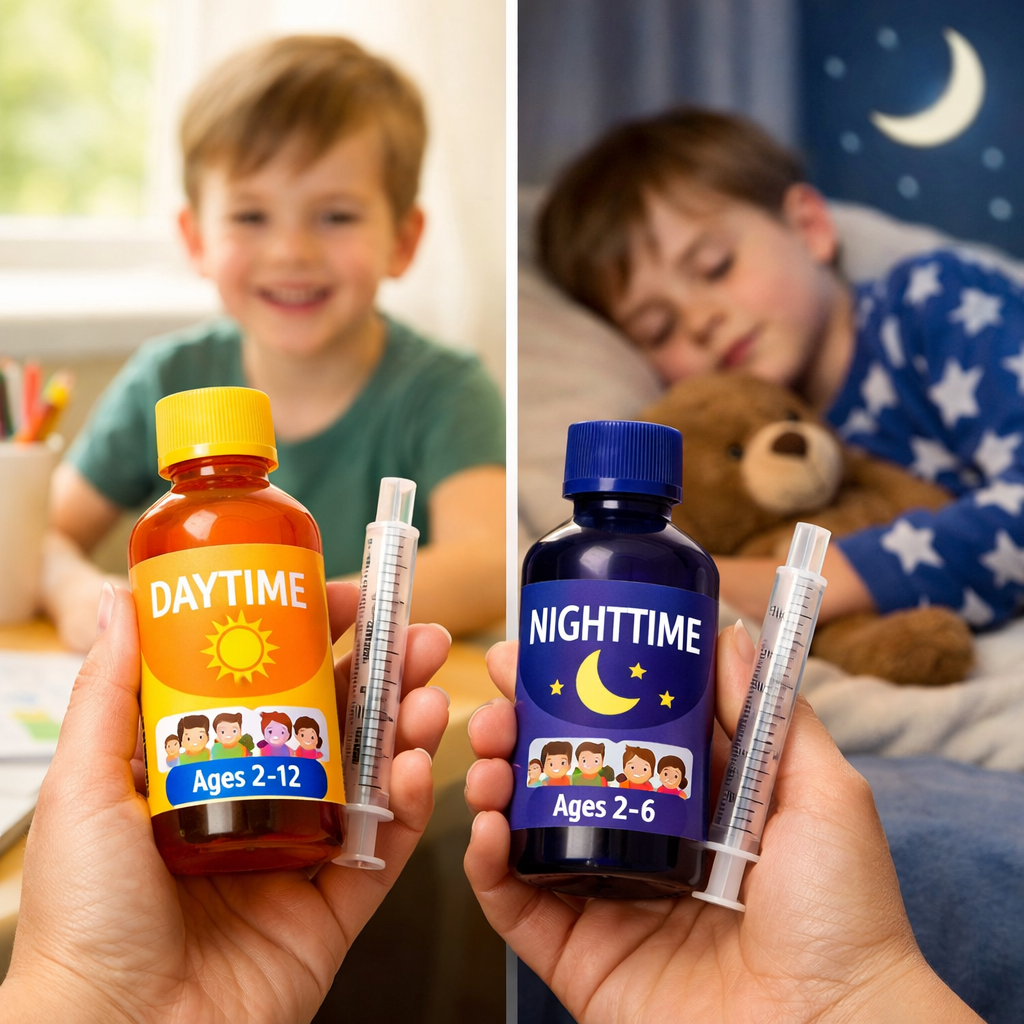
The term usually refers to second-generation agents (fexofenadine, loratadine, cetirizine, levocetirizine). They’re far less sedating than first-generation drugs, but “non-drowsy” doesn’t mean “never drowsy.” Give the first dose at home—ideally in the evening—to see how your child responds (pharmacy sedation comparisons).
Non-drowsy antihistamines for children
Second-generation choices are first-line for most kids with allergic rhinitis or itch. For sneezing/itch/runny nose, oral antihistamines work well; for congestion-first symptoms, consider adding or switching to a nasal corticosteroid. Generics are as effective as brands, and once-daily dosing improves adherence (verify your product’s label and pediatric dosing).
Quick compare (verify labels; do not use as medical advice). Pediatric dosing ranges summarized from a clinical quick reference (FPNotebook):
| Medicine (generic) | Typical onset | Duration | Sedation notes | Common pediatric dosing ranges |
|---|---|---|---|---|
| Fexofenadine | ~1–2 hours | ~24 hours | Least sedating; avoid fruit juices around dosing | 6–11 yrs: 30 mg twice daily; ≥12 yrs: 60 mg twice daily or 180 mg once daily |
| Loratadine | ~3 hours | ~24 hours | Very low sedation; mild/steady control | 2–5 yrs: 5 mg once daily; ≥6 yrs: 10 mg once daily |
| Cetirizine | ~1 hour | ~24 hours | Low-to-moderate drowsiness in some; test first | 2–5 yrs: 2.5 mg once daily (up to twice daily); ≥6 yrs: 5–10 mg once daily |
| Levocetirizine | ~1 hour | ~24 hours | Similar to cetirizine; taste/formulation may differ | Age approvals vary by product; follow label dosing |
Fexofenadine
Why it’s the least sedating: Brain imaging shows under 1% H1 receptor occupancy, and controlled studies report no meaningful drowsiness vs placebo in performance tests (Allergy & Asthma Network’s fexofenadine overview). For fexofenadine for kids, give tablets or liquid with water, not fruit juice—apple, orange, and grapefruit juices can reduce absorption (pharmacy aisle decoder). Dosing pointers many labels use: 6–11 years: 30 mg twice daily; older children/adolescents: 60 mg twice daily or 180 mg once daily—always verify your exact product.
Loratadine
Loratadine for kids is a gentle, once-daily option with very low sedation but a slower onset (about three hours). It’s approved for many children 2 years and older. Typical dosing: 2–5 years: 5 mg daily; 6+ years: 10 mg daily. Manage expectations if you need rapid relief; cetirizine may act faster.
Cetirizine
Cetirizine for kids often feels “stronger” for itch and hives and tends to work within about an hour. It’s approved for use down to 6 months in many formulations. Somnolence is dose-related: about 14% at 10 mg vs 6% with placebo; test the first dose at home (pharmacy sedation comparisons). Common dosing: ages 2–5 years: 2.5 mg daily (up to twice daily); older kids: 5–10 mg daily.
Levocetirizine
Levocetirizine is the active isomer of cetirizine with a similar effect profile. Families often choose based on taste or formulation; many can “save your money” by using cetirizine generics when efficacy is equivalent (pediatrician blog perspective). Confirm age approvals and dosing on your specific label.
Sedating antihistamines for children
First-generation agents (diphenhydramine, chlorpheniramine) cross the blood–brain barrier and commonly cause drowsiness, impaired psychomotor performance, and cognitive slowing. Because of safety and overdose concerns, Benadryl (diphenhydramine) is not recommended as first-line therapy for seasonal allergies in children; second-generation options are safer for daytime use. Older agents may be cheaper per dose, but they can degrade school performance and coordination (clinical review of first-gen adverse effects).
Diphenhydramine
Why parents reach for it: familiarity and availability. Why to be cautious: it’s sedating, can impair cognition and coordination, and carries overdose risk—so it isn’t recommended for routine daytime allergy control in kids. Its role is generally limited (for example, clinician-directed treatment of acute hives). Follow labels exactly and consult your pediatric clinician.
Chlorpheniramine
A first-generation option that can cause moderate drowsiness. Despite sometimes milder sedation than diphenhydramine, it’s still not preferred for school-day allergies. Choose non-drowsy antihistamines for most pediatric allergic rhinitis scenarios.
Safety and side effects
- Non-drowsy does not mean never drowsy. Try the first dose at home in the evening and record how your child feels the next morning.
- Common effects: mild drowsiness (more likely with cetirizine/levocetirizine), dry mouth, and occasional headache or stomach upset.
- First-generation antihistamines can impair thinking, memory, and reaction time and are more likely to cause anticholinergic effects (dry mouth, constipation, urinary retention).
- Household awareness: keep sedating medicines away from curious toddlers and warn older caregivers (e.g., grandparents) about sedation risks.
- This article is educational, not medical advice. Verify labels and consult a licensed clinician for individualized guidance.
Age approvals and pediatric dosing basics
- Approvals to know: Cetirizine can be used as young as 6 months in many products; loratadine and fexofenadine are generally approved for children 2+ depending on formulation (pediatrician overview).
- Practical dosing ranges (verify your product label):
- Fexofenadine: 6–11 years 30 mg twice daily; ≥12 years 60 mg twice daily or 180 mg once daily (clinical quick reference).
- Loratadine: 2–5 years 5 mg daily; ≥6 years 10 mg daily (clinical quick reference).
- Cetirizine: 2–5 years 2.5 mg daily (up to twice daily); ≥6 years 5–10 mg daily (clinical quick reference).
- Safety line: Many pediatric sources echo FDA cautions—avoid giving decongestants or antihistamines to children under age 2 (Norton Children’s guidance).
Onset, duration, and when to choose each option
- Onset guidance: Cetirizine ≈1 hour; loratadine ≈3 hours; fexofenadine typically acts within 1–2 hours with minimal sedation (pediatrician overview).
- Decision cues:
- Need fast relief or stronger itch control: choose cetirizine and test for drowsiness first.
- Need lowest sedation for school: choose fexofenadine or loratadine.
- Congestion-first symptoms: consider a nasal steroid as a first-line adjunct.
Quick timing table:
| Drug | Typical onset | Typical duration | Sedation notes |
|---|---|---|---|
| Cetirizine | ~1 hour | ~24 hours | Some kids get sleepy; test first |
| Loratadine | ~3 hours | ~24 hours | Very low sedation |
| Fexofenadine | ~1–2 hours | ~24 hours | Least sedating; avoid fruit juice |
Practical dosing tips parents actually use
- Trial first dose at home in the evening; note any drowsiness before school.
- Match formulation to your child: liquids for precise pediatric dosing; chewables or tablets for older kids.
- Consider generics; ask a pharmacist if a tablet can be split or crushed safely for your child’s needs.
- Build a morning routine; use reminders for once-daily dosing.
- Give fexofenadine with water and separate from fruit juice by several hours to avoid reduced absorption (pharmacy aisle decoder).
What to avoid and when to pause
- Avoid combination “-D” products (with pseudoephedrine or phenylephrine) in children with heart rate or blood pressure concerns; these decongestants can raise both (community pharmacy guidance).
- Avoid fruit juice around fexofenadine dosing; use water.
- Pause and call a clinician for severe drowsiness, paradoxical agitation, breathing difficulty, facial swelling, or persistent symptoms despite proper dosing and technique.
When to use sprays, decongestants, or SLIT instead
- Pills aren’t great for congestion. Intranasal corticosteroids often work better for stuffy noses and can also help eye symptoms (pediatrician overview).
- Technique tips: tilt head slightly forward; aim the nozzle outward (toward the ear), using the opposite hand for each nostril.
- OTC nasal steroid sprays and common age approvals:
- Nasacort (triamcinolone): scent-/alcohol-free; typically 2+.
- Flonase Sensimist: scent-/alcohol-free; typically 2+.
- Flonase Allergy Relief (fluticasone): typically 4+; available generic.
- Rhinocort (budesonide): scent-/alcohol-free; typically 6+.
- Decongestants in children: Use cautiously; many pediatric sources echo FDA cautions against use under age 2 (Norton Children’s guidance).
- SLIT for allergies: Prescription sublingual tablets/drops via an allergist are long-term options when specific allergen sensitivities are confirmed.
For step-by-step technique and product picks, see Too Allergic’s practical guide to OTC nasal sprays for families.
Cost, generics, and formulation choices
- Generics deliver the same active ingredient—prioritize them for value. Levocetirizine vs cetirizine often differs more in price than effect; many families do well with cetirizine generics (pediatrician blog perspective).
- Although first-generation antihistamines can be cheaper per dose, their sedation and cognitive impacts can cost more in school performance and safety (first-gen adverse-effects review).
- Choose forms your child will reliably take: liquid for accurate pediatric dosing; chewables or meltaways for convenience; tablets for teens. Ask a pharmacist before splitting or crushing any tablet.
Too Allergic’s takeaways for school days and sleep
- School days: pick fexofenadine or loratadine for minimal sedation; dose consistently in the morning; avoid fruit juices with fexofenadine.
- Need rapid, stronger itch relief: try cetirizine, but test tolerance at home due to higher drowsiness rates.
- Congestion-first kids: pivot to or add a nasal steroid with correct technique; add allergy eye drops if eye symptoms persist.
- Always verify the label, use the lowest effective dose, and check with a pediatric clinician if symptoms persist or if you’re unsure.
Frequently asked questions
What is the safest OTC allergy medicine for kids?
Too Allergic typically steers parents to non-drowsy second-generation options like fexofenadine or loratadine for daytime alertness; cetirizine works fast but can make a minority of children sleepy.
What age can children start non-drowsy antihistamines?
Many kids can start loratadine or fexofenadine at age 2 and cetirizine as early as 6 months depending on the specific product. Too Allergic always recommends verifying your label and checking with a pediatric clinician.
Is Benadryl safe for daytime allergies in kids?
This first-generation antihistamine isn’t recommended for routine daytime seasonal allergies because it’s sedating and can impair thinking and coordination; second-generation options are safer for school.
Should I pick a pill, liquid, chewable, or meltaway?
Too Allergic suggests choosing the form your child will reliably take and that fits the label’s age guidance; liquids allow precise pediatric dosing, while older kids often prefer once-daily tablets or chewables.
When should we try a nasal steroid or see an allergist?
If congestion leads or antihistamines aren’t enough, Too Allergic suggests trying an OTC nasal steroid with proper technique; see an allergist for persistent symptoms, unclear triggers, or to discuss SLIT and long-term options.