Non-Drowsy vs Sedating Antihistamines: Which Is Safest Long-Term?
Seasonal sneezing and itchy eyes shouldn’t cost you your focus at work or on the road. For most people, second- and third-generation “non-drowsy” antihistamines are the safest long-term choice because they control histamine-driven symptoms with far less sedation and anticholinergic burden than older drugs. If congestion dominates, intranasal corticosteroids often outperform pills for daily nasal control. Decongestants should be kept for short stints, and allergy immunotherapy (SLIT) is worth considering when you need a durable, medication-sparing plan. Below, Too Allergic compares options, highlights who benefits from which approach, and shares a simple step-up strategy you can confirm with your clinician.
What “non-drowsy” and “sedating” antihistamines mean
Antihistamines block H1 receptors to reduce sneezing, itching, runny nose, and watery eyes, easing classic allergy symptoms while histamine is active in the tissues, not curing the allergy itself (see the antihistamine comparison chart for context).
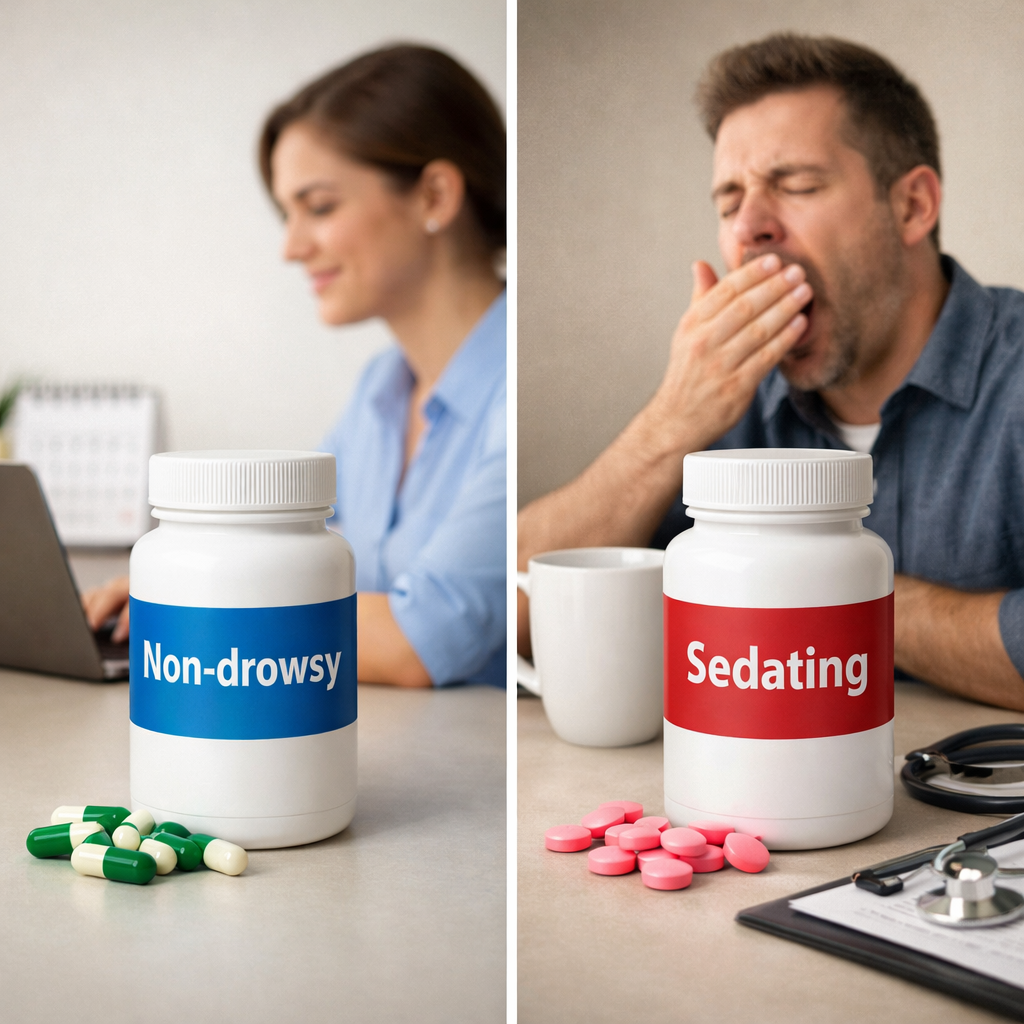
Non-drowsy antihistamines: These second- and third-generation H1 blockers act mainly outside the brain, so they relieve allergy symptoms with minimal central sedation. Designed for once-daily control, they have lower anticholinergic effects than older drugs and are widely available OTC. Common examples include cetirizine, loratadine, fexofenadine, and desloratadine.
Sedating antihistamines: First-generation H1 blockers cross the blood–brain barrier easily, frequently causing drowsiness, slowed reaction time, dry mouth, and other anticholinergic effects. They can help briefly at night or for acute reactions but impair daytime function and carry more interactions. Examples include diphenhydramine, chlorpheniramine, hydroxyzine, and promethazine.
Safety note: “Non-drowsy” doesn’t mean zero sedation—people vary. Test your personal response before driving or doing safety‑critical tasks, and be extra cautious the first few doses (see pharmacist advice on “non-drowsy”).
Safety criteria for long-term allergy use
- Alertness and psychomotor performance: Prioritize agents with minimal effects on reaction time, concentration, and driving.
- Anticholinergic burden and falls: Older adults are especially sensitive; first-generation drugs increase confusion, urinary retention, dry mouth, and fall risk.
- Dosing simplicity and duration: Once-daily dosing supports adherence; broad OTC access helps continuity of care.
- Bottom line: Second-generation antihistamines generally balance effectiveness with fewer side effects for chronic use—and it’s the default starting point we use at Too Allergic.
Non-drowsy antihistamines
Second- and third-generation agents are preferred for daily control because they cause less sedation and have better overall tolerability than older drugs.
Effectiveness and side effects
Onset benchmarks are practical for planning relief: fexofenadine (Allegra) often helps within ~1 hour, cetirizine (Zyrtec) in 1–2 hours, and loratadine (Claritin) in 1–3 hours (see non-drowsy best practices for timing).
- Cetirizine: Potent 24-hour relief; a minority report mild next-day drowsiness.
- Loratadine: Gentle side-effect profile; suited for daytime use and once-daily dosing.
- Fexofenadine: Lowest sedation risk; avoid fruit juice at dosing to preserve absorption.
Comparison at a glance (once-daily OTC antihistamines)
| Drug (generic) | Typical onset | Duration | Sedation likelihood | Notable cautions |
|---|---|---|---|---|
| Fexofenadine | ~1 hour | ~24 hours | Minimal | Avoid fruit juice around dosing |
| Cetirizine | 1–2 hours | ~24 hours | Low–moderate (some) | May cause mild fatigue in sensitive users |
| Loratadine | 1–3 hours | ~24 hours | Low | Watch for interactions if significant liver disease |
Driving, cognition, and daily function
Fexofenadine shows <1% brain H1 receptor occupancy on PET, no significant drowsiness versus placebo, and driving-simulator performance equivalent to placebo, supporting its use when alertness matters (see fexofenadine evidence).
Practical safety checklist:
- Take your first dose in the evening and gauge next‑day alertness.
- If using fexofenadine, skip fruit juice 2–4 hours around the dose.
- Space ~24 hours when switching antihistamines to avoid overlap.
- If drowsy, step down to a lower-sedation option or switch molecules.
Cost, dosing, and OTC vs prescription context
Newer agents cost more per dose than diphenhydramine, but they preserve alertness. A representative analysis found diphenhydramine around $0.37 per dose versus a roughly $0.52–$2.39 higher per‑dose cost for newer antihistamines, with similar efficacy but markedly less sedation (sedation and performance review).
Common OTC options
| Product (generic/brand) | OTC/Rx | Typical adult dose | Duration | Notable cautions |
|---|---|---|---|---|
| Cetirizine (Zyrtec) | OTC | 10 mg once daily | ~24 h | May cause mild drowsiness in some |
| Loratadine (Claritin) | OTC | 10 mg once daily | ~24 h | Lower sedation; check interactions if liver disease |
| Fexofenadine (Allegra) | OTC | 180 mg once daily (or 60 mg twice daily) | ~24 h | Avoid fruit juice near dosing |
Sedating antihistamines
First-generation agents can help briefly but carry meaningful safety trade-offs for daytime function and chronic use.
When short-term use may be reasonable
- Acute allergic reactions when a fast-onset agent is needed.
- Nighttime itching that disrupts sleep.
- Specific clinician-directed scenarios (e.g., pre-procedure). Diphenhydramine typically starts working in ~30 minutes, lasts 4–6 hours, and has a high drowsiness risk—useful for acute symptoms, less fit for daytime routines. Modern reviews conclude first-generation agents have little role in routine allergy care because of adverse effects (see H1‑antihistamines review).
Anticholinergic burden and fall risk
First-generation drugs more readily enter the brain and produce stronger anticholinergic effects and interactions than non-sedating options, increasing risks like confusion and urinary retention. Older adults are particularly vulnerable and should avoid these when possible. Examples: diphenhydramine, chlorpheniramine, hydroxyzine, promethazine (ResourcePharm overview).
Daytime impairment and safety warnings
Compared with newer antihistamines, first-generation drugs impair reaction time and cognition and are linked with greater daytime accidents; several expert groups have urged restricting their routine use, and promethazine carries a boxed warning in children under two. Avoid driving or using machinery after taking them.
Head-to-head: long-term safety comparison
| Factor | Non-drowsy (2nd/3rd gen) | Sedating (1st gen) |
|---|---|---|
| Sedation and cognitive impact | Little to no measurable impairment; fexofenadine shows placebo-like simulator performance and negligible brain H1 occupancy | Notable sedation and psychomotor impairment; avoid daytime use |
| Anticholinergic effects and tolerability | Lower anticholinergic load; better fit for older adults and polypharmacy | Higher dry mouth, urinary retention, confusion, and interactions; fall risk in older adults |
| Duration, adherence, quality of life | Typically once daily; steadier control supports work/school function | Shorter duration; more side effects reduce adherence and QoL |
Picking a daily antihistamine by symptom profile
Itchy eyes and sneezing
Start with cetirizine for stronger itch/sneeze relief or loratadine for the gentlest daytime profile; both are once-daily. Add targeted antihistamine eye drops if eyes dominate to minimize systemic effects. For more comparisons by alertness profile, see our stay‑alert guide to non‑drowsy medicines.
Nasal congestion and postnasal drip
Oral antihistamines help itch and sneeze more than blockage. If congestion or drip lead the list, plan on a daily intranasal corticosteroid and layer a non-drowsy antihistamine on high‑pollen days. Keep decongestants for brief rescue only.
Sensitive to drowsiness or safety-critical work
Prefer fexofenadine for the lowest sedation risk and documented placebo-like driving performance. Loratadine is a close, low-sedation alternative. Always test your response before daytime driving or shift work.
Where intranasal corticosteroids fit
Daily control for nasal symptoms
Intranasal corticosteroids are anti-inflammatory nasal sprays that reduce swelling inside the nose and cut mucus production, improving congestion, drip, sneezing, and itch. When used correctly, systemic absorption is minimal, making them suitable for long-term nasal control with little effect on alertness (see non-drowsy medicine explainer). Use daily for several weeks in peak season; add a non-drowsy antihistamine for eyes and itch.
Onset, technique, and safety notes
- Expect several days to notice relief; best effect builds over 1–2 weeks.
- Technique: slight head tilt, aim away from the septum, gentle sniff—no deep inhale.
- With typical OTC use, sprays are safe and avoid systemic drowsiness. For device and product nuances, see our guide to safe allergy sprays.
Decongestants as rescue, not daily therapy
Oral vs nasal decongestants
- Oral decongestants act systemically and can raise heart rate and blood pressure.
- Topical nasal decongestant sprays work locally and rapidly for short stints. Use cases: flight days, important events, or severe head-cold overlays. Avoid nightly or routine use to limit side effects and rebound.
Blood pressure and rebound considerations
If you have hypertension, talk with a pharmacist or clinician before oral decongestants. Limit topical nasal decongestants to a few days to prevent rebound congestion; for ongoing blockage, favor intranasal corticosteroids.
When to consider SLIT tablets or drops
Disease modification and who qualifies
Sublingual immunotherapy (SLIT) delivers tiny, controlled doses of specific allergens under the tongue to retrain immune tolerance over time. For selected allergens (e.g., pollens, dust mites), SLIT can reduce long-term symptoms and medication needs, offering a disease‑modifying path beyond “chasing” flares with daily drugs.
Timeline, safety, and clinician confirmation
Expect months to notice benefits and multi‑year courses for lasting change. Eligibility, dosing, and monitoring require clinician oversight. Too Allergic provides independent information—confirm your plan with a licensed professional.
Practical routine: building a safer long-term plan
Step-up and step-down strategy
- Step 1: Start a non-drowsy, once-daily antihistamine during trigger seasons; test your first dose when alertness demands are low.
- Step 2: Add an intranasal corticosteroid if congestion persists; reserve decongestants for brief, high-need moments.
- Step 3: If daily meds extend for months or control lags, discuss testing and SLIT with your clinician.
Monitoring side effects and switching agents
Track daytime alertness, driving confidence, dry mouth, and sleep. If drowsiness or side effects persist, switch molecules. Leave about 24 hours between stopping one antihistamine and starting another to avoid overlap.
When to consult a clinician
Get advice if symptoms last more than 2–3 months yearly, affect work or school, if you’re pregnant, older, take multiple meds, or have cardiovascular disease, glaucoma, urinary retention, or need sedating antihistamines regularly.
Frequently asked questions
What is the safest allergy medicine for regular use?
For most people, a second- or third-generation non-drowsy antihistamine (cetirizine, loratadine, or fexofenadine) is safest due to strong control with less sedation. Too Allergic can help you compare options to confirm the right choice with your clinician.
Are non-drowsy antihistamines as effective as sedating ones?
Yes—modern non-drowsy antihistamines provide similar relief with far less drowsiness. Too Allergic typically recommends them for daytime and long‑term use.
Which non-drowsy antihistamine is least likely to cause drowsiness?
Fexofenadine is typically the least sedating and a strong pick for people who drive or do safety-critical work; loratadine is another low-sedation option, while cetirizine is potent but slightly more likely to cause mild fatigue. Too Allergic helps you choose based on your alertness needs.
Is it safe to take sedating antihistamines during the day?
Generally no; first-generation antihistamines can impair reaction time and focus, increasing accident risk. Too Allergic advises reserving them for short-term or bedtime use if a clinician recommends it.
How long should I try an antihistamine before switching?
Give a non-drowsy antihistamine several days to judge benefit and side effects, then leave about 24 hours before switching or ask about adding a nasal steroid. Too Allergic offers simple step‑up guidance you can review with your clinician.