How to Choose the Right OTC Nasal Spray for You
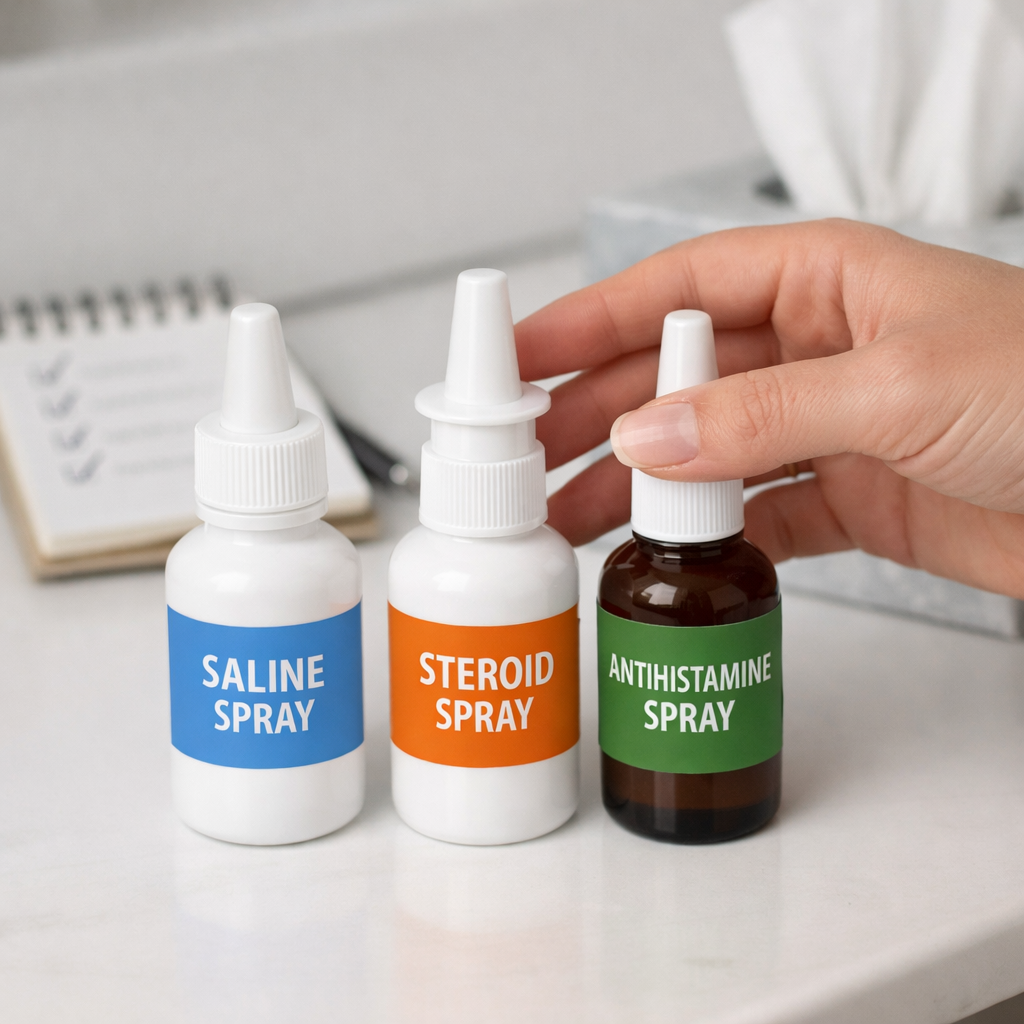
Picking an over-the-counter nasal spray gets easier when you match your dominant symptom—congestion, runny nose, sneezing, or dryness—to the right class. If you’re asking, “What’s the most effective OTC nasal spray for allergies?” the evidence points to intranasal steroids as the best all-around choice for ongoing congestion, sneezing, and itch. Saline is a smart baseline for comfort and hygiene. For fast but short bursts of severe stuffiness, decongestants help—just for a few days. Below, use the symptom-by-symptom guide, comparison table, and technique tips to get results safely. Too Allergic keeps the path simple for sensitive noses: start with saline, layer in the right medicated class, and use precise technique.
Definition: OTC nasal sprays are nonprescription products delivered into the nostrils to relieve nasal symptoms. They include medicated options—steroid, antihistamine, decongestant, cromolyn, anticholinergic—and nonmedicated saline rinses. Each class targets different problems, like inflammation, runny nose, or severe stuffiness, with distinct benefits and safety limits.
Start with your main symptom and likely cause
Choose by cause to avoid trial and error. Allergies often need a steroid; a cold or sinus infection may favor decongestant support for a short stretch. When you can, start with the lowest practical strength and step up only if needed, rather than beginning at maximum dosing (Healthline overview of OTC nasal sprays).
Quick matches:
- Allergy-related congestion, sneezing, and itch: intranasal steroid is first-line.
- Severe, short-term stuffiness: decongestant (oxymetazoline or phenylephrine) with a hard 3-day limit (WebMD on nasal sprays).
- Runny or watery nose: antihistamine spray for quick symptom control or anticholinergic (ipratropium, typically prescription) to reduce mucus.
- Prevention before allergy season: cromolyn started 1–2 weeks ahead works best (WebMD on nasal sprays).
Comparison at a glance:
| Class | Key OTC ingredients/examples | Best for | Onset | Duration | Major cautions |
|---|---|---|---|---|---|
| Saline (isotonic/hypertonic) | Drug-free saline; some buffered with baking soda | Dryness, daily rinse, prep before medicated sprays | Immediate soothing | Hours | Use sterile/filtered water for irrigation; avoid contaminated water |
| Intranasal steroid | Fluticasone, budesonide, triamcinolone | Persistent allergy congestion, sneezing, itch | Some relief in 1–2 days; peak in 1–2 weeks | 24 hours (once daily) | Possible dryness, crusting, nosebleeds; rare eye-pressure concerns with long-term use (ENT guide to nasal spray types) |
| Antihistamine | Azelastine, olopatadine (varies by region) | Fast relief of sneezing/runny nose | Minutes to hours | 12–24 hours | Bitter taste; drowsiness in some |
| Cromolyn sodium | Cromolyn spray | Prevention before allergy season | Benefits build over 1–2 weeks | Requires regular dosing | Works best when started early; less helpful for acute flares |
| Decongestant | Oxymetazoline, phenylephrine | Rapid relief of severe stuffiness | Minutes | Up to 12 hours | Limit to ≤3 days to avoid rebound congestion (rhinitis medicamentosa) |
| Anticholinergic (Rx in many regions) | Ipratropium | Watery nose without congestion | Within hours | 6–12 hours | Dry mouth, bad taste; does not relieve blockage |
Saline first for rinse and moisture
Saline sets the stage for comfort and better medication delivery.
Saline nasal spray, a drug-free saltwater solution, hydrates dry nasal passages, loosens mucus, and gently flushes irritants like pollen and pollution. It’s suitable for daily hygiene, can be used alongside medicated sprays, and is safe across age groups (Everyday Health saline spray guide). It’s a low-risk first step for sensitive noses.
Tips:
- Pair saline with medicated sprays. A brief saline rinse can improve contact time for steroids or antihistamines. Some formulations are buffered with baking soda to further loosen thick mucus (Healthline overview of OTC nasal sprays).
- When to use: dry indoor air, pollution/smoke exposure, chronic sinusitis support, and as a pre-spray rinse.
Safety:
- For rinses/irrigation (neti pot, squeeze bottle), only use sterile, distilled, or properly filtered water—never tap or well water (AAOA spraying technique and safety).
Intranasal steroids for persistent allergy control
Intranasal corticosteroids are anti-inflammatory sprays that calm swollen nasal tissues and reduce congestion, sneezing, and itching. They’re recommended for seasonal and perennial allergies and can help chronic sinusitis symptoms when used consistently (Healthline overview of OTC nasal sprays).
Common OTC actives:
- Fluticasone (e.g., Flonase)
- Budesonide (e.g., Rhinocort)
- Triamcinolone (e.g., Nasacort)
Typical dosing: Many products are once daily; for example, the Flonase Allergy Relief label directs two sprays in each nostril daily for adults initially, then step down as controlled (Flonase Allergy Relief dosing).
What to expect:
- Some relief in the first day or two; best control builds over 1–2 weeks of daily use.
- Safe for long-term use when taken as directed. Side effects can include nasal dryness, crusting, sore throat, or nosebleeds; very rare concerns include elevated eye pressure with prolonged use—consider periodic eye checks if you’re a long-term, high-dose user (ENT guide to nasal spray types).
Safety snapshot:
- Use the lowest effective dose.
- If nosebleeds occur, review technique and moisture care; overuse increases irritation. Too Allergic emphasizes technique and moisture care to minimize irritation and keep dosing consistent.
Antihistamine or cromolyn for runny nose and sneezing
Antihistamine nasal spray blocks histamine in the nose to quickly cut sneezing and runny discharge. Common actives include azelastine or olopatadine. A bitter taste is common; keeping your head level or slightly forward during use can reduce drip to the throat (ENT guide to nasal spray types).
Cromolyn sodium is a mast-cell stabilizer that prevents histamine release. It works best as prevention when started 1–2 weeks before your allergy season and continued regularly, rather than as a rescue spray (WebMD on nasal sprays).
Quick picks:
- Want prevention for an upcoming pollen surge: cromolyn.
- Need rapid sneeze/runny control today: an antihistamine nasal spray.
- Eyes also itch: consider pairing with an oral antihistamine. Combination steroid+antihistamine sprays exist but are prescription-only in the U.S.
Decongestants for short bursts of severe stuffiness
Decongestant nasal sprays constrict nasal blood vessels to quickly shrink swelling and open airflow. The most common actives are oxymetazoline and phenylephrine (Healthline overview of OTC nasal sprays).
Golden rule:
- Do not use decongestant sprays longer than 3 consecutive days to avoid rhinitis medicamentosa—rebound congestion that can lead to dependence and worse blockage (WebMD on nasal sprays).
Use cases:
- Night-before-event or travel relief: reasonable for ≤3 days.
- Ongoing allergy congestion: choose a steroid instead; avoid daily decongestant use.
- If you have hypertension or glaucoma, talk with a clinician before use.
Special cases by age, pregnancy, and medical conditions
Before using medicated sprays, consider:
- Age: follow product age minimums; children often need lower dosing.
- Pregnancy/breastfeeding: review with your obstetric or primary clinician.
- Glaucoma or cataracts: long-term steroid use warrants eye-pressure awareness.
- Hypertension, prostate enlargement, or urinary retention: decongestants and some antihistamines may not be ideal.
- Polyps or prior sinus surgery: some specialized delivery systems (e.g., exhalation devices) are prescription-only, not typical OTC paths (ENT guide to nasal spray types).
Watery nose only?
- Ipratropium (an anticholinergic) reduces nasal mucus but doesn’t relieve blockage; it may cause dry mouth or bad taste and is commonly prescription-only in the U.S. (AAOA spraying technique and safety; WebMD on nasal sprays).
How to use a nasal spray correctly
Good technique = better relief, fewer side effects.
Steps:
- Gently blow your nose. If very clogged, use a brief saline rinse first (AAOA spraying technique and safety).
- Shake and prime the bottle (first use or after cleaning) per label.
- Tilt your head level or slightly forward. Insert the tip just inside the nostril.
- Aim away from the nasal septum toward the outer wall/inner eye corner at about 45°. The cross-hand method (right hand for left nostril, left for right) helps protect the septum (ENT guide to nasal spray types).
- Spray while breathing gently in through the nose—don’t sniff hard.
- Wipe the tip. Clean regularly: remove, rinse with warm water, air-dry, and re-prime before the next use (Flonase Allergy Relief dosing).
Do/Don’t quick table:
| Do | Don’t |
|---|---|
| Use saline first if congested | Aim at the septum |
| Keep head level/forward | Sniff forcefully |
| Cross-hand aim at outer wall | Share your spray device |
| Check expiration dates | Overuse decongestants |
When to escalate care or consider immunotherapy
Reach out to a clinician if:
- Symptoms persist or worsen after 2–4 weeks of correct, consistent use.
- You have frequent nosebleeds, severe dryness, or crusting.
- You suspect a bacterial sinus infection (fever, facial pain, foul discharge).
- You’re pregnant, breastfeeding, or managing complex conditions and are unsure about safety.
Long-term control:
- Allergen immunotherapy (shots or sublingual tablets) can retrain the immune system and reduce medication needs over time—especially with dust mite, pet dander, and grass or ragweed pollen triggers. If multiple triggers cluster (e.g., pet dander plus nickel/metal dermatitis or certain food sensitivities), an allergy referral can map a personalized plan and testing strategy.
Getting help:
- Start with Too Allergic’s guide to safe allergy sprays for sensitive noses for clear step-up options (Too Allergic guide to safe allergy sprays).
- Consider telehealth for a quick medication plan, or see an allergist for testing and to discuss immunotherapy. If you’re comparing options, our guide to safe allergy sprays for sensitive noses covers step-up strategies in detail (Too Allergic’s authoritative guide to safe allergy sprays).
Safety notes and Too Allergic’s non-medical disclaimer
Key safety reminders:
- Decongestant limit: 3 days or fewer to avoid rebound congestion (WebMD on nasal sprays).
- Intranasal steroids: safe for long-term use when taken as directed; watch for dryness, crusting, or nosebleeds, and consider eye-pressure checks if used long-term (ENT guide to nasal spray types).
- Saline rinses: use only sterile, distilled, or properly filtered water (AAOA spraying technique and safety).
Too Allergic disclaimer: We share research-informed, patient-friendly education from a family perspective. This is not medical advice. Always consult your clinician for individualized care, especially for children, pregnancy, glaucoma, hypertension, or complex medication lists.
Frequently asked questions
What is the most effective OTC nasal spray for allergies?
For ongoing allergy symptoms, intranasal steroid sprays are typically the most effective OTC option for congestion, sneezing, and itch. Too Allergic’s quick guide can help you choose and use one correctly.
How long can I use each type of spray safely?
Saline is safe daily. Steroid sprays can be used long-term as directed; antihistamine sprays are generally fine for regular use; limit decongestant sprays to ≤3 days to avoid rebound congestion. Too Allergic outlines these limits in simple checklists.
Can I combine saline with steroid or antihistamine sprays?
Yes—use saline first, then the medicated spray; Too Allergic teaches this sequence to improve comfort and delivery.
How quickly should I expect relief from a steroid spray?
Some relief can appear within the first day or two, but full benefits often take 1–2 weeks of consistent daily use, sometimes longer for heavy pollen seasons. Too Allergic’s step-up guide can help if relief lags.
How do I avoid rebound congestion from decongestants?
Use decongestant sprays only for short bursts—no more than 3 consecutive days. For ongoing congestion, switch to an intranasal steroid and, if symptoms persist, talk to a clinician or follow Too Allergic’s step-up plan.
Looking for fast-match picks by symptom? See Too Allergic’s quick guide to OTC nasal sprays and sneezing relief for side-by-side choices (Relieve sneezing fast with the best OTC nasal spray today).