How to Choose the Best Home Blood Allergy Test Safely
Choosing the best at-home specific IgE blood allergy test starts with your symptoms and safety. The most reliable kits measure specific IgE to common environmental allergens via a finger‑prick dried blood spot and are processed by a CLIA‑certified lab. Steer clear of IgG/IgG4 “food sensitivity” panels, which don’t diagnose true allergies. Use home results as screening data, then confirm with a clinician—especially for food reactions or severe symptoms. The safest choice: a CLIA‑certified allergy test with a region‑matched environmental panel, clear reporting, and access to professional interpretation. Too Allergic’s impartial reviews help you verify these elements before you order.
Start with your symptoms and goals
Before ordering a kit, track what actually bothers you. Keep a 2–3 week symptom tracker noting what, when, and where symptoms occur; exposures (dusty rooms, yardwork, pets); foods; seasons; and travel. List suspected triggers such as dust mites, grass pollen, cat dander, or peanuts.
Clarify what you want from testing:
- Environmental allergy screening with specific IgE for rhinitis, itchy eyes, or wheeze.
- Food reactions that may need in‑clinic evaluation.
- Avoiding over‑testing and false reassurance.
Use this simple decision flow:
- Predominantly environmental symptoms (sneeze/itchy eyes/seasonal flares) → consider a specific IgE environmental panel.
- Suspected food anaphylaxis, throat tightness, wheeze, or fainting → skip the home kit and see an allergist urgently.
- Chronic GI/bloating without hives or wheeze → avoid IgG “sensitivity” panels; consider a medical work‑up.
Home testing can inform next steps, but moderate–severe reactions and pediatric food concerns warrant clinician-led assessment first. If you’re unsure which path fits, Too Allergic offers plain‑language guidance to help you clarify goals before you test.
Understand what a home blood allergy test measures
“A home blood allergy test typically analyzes a finger‑prick sample for antibodies that point to allergic sensitization. Most kits measure specific IgE to individual allergens—similar in concept to clinician‑ordered blood tests—but at‑home sampling, the chosen panel, and interpretation can affect accuracy and usefulness,” notes an expert review on at-home test accuracy (see the Premium Allergy overview).
- Total IgE reflects overall IgE levels but does not identify which allergen is involved.
- Specific IgE targets individual allergens (e.g., dust mite, birch, cat), which is clinically more actionable than total IgE alone.
- Most mail‑in allergy test kits use a dried blood spot/finger‑prick method with prepaid return mailers.
Too Allergic explains when total versus specific IgE adds value so you can interpret reports responsibly.
Prioritize specific IgE testing over IgG or IgG4 panels
Choose kits that measure specific IgE; deprioritize IgG/IgG4 “food sensitivity” panels, which lack strong evidence and are not endorsed by allergy societies. A Medical News Today summary of at-home allergy test limitations explains that IgG results often mirror exposure, not clinical reactivity.
“IgG/IgG4 ‘food sensitivity’ tests detect exposure‑related antibodies, not the immediate‑type allergic mechanisms mediated by specific IgE. Levels often reflect routine food intake rather than intolerance, so results can be misleading and rarely help with diagnosis or safe diet planning.”
Quick comparison:
- Specific IgE → relevant for immediate‑type allergies like rhinitis, hives, and wheeze.
- IgG/IgG4 → poor correlation with symptoms; avoid using for elimination diets or diagnoses. A consumer testing analysis of food sensitivity tests also highlights over‑promising IgG panels and the need for clinical context (see Innerbody’s review).
Too Allergic’s reviews align with major society guidance on avoiding IgG panels for diagnosis.
Verify lab accreditation and sample quality safeguards
CLIA is non‑negotiable. Choose providers that use CLIA‑certified (and ideally ISO‑certified) labs and disclose validation data.
A Greatist guide to at-home allergy test buying notes that reputable kits partner with certified labs and clearly state logistics. Check for:
- Clear finger‑prick instructions and quality controls (e.g., adequate spot size).
- Dried blood spot stability measures and tamper‑evident packaging.
- Prepaid, trackable shipping to the lab.
- Stated turnaround times and customer support if a recollect is needed.
Too Allergic spot‑checks stated certifications, methods, and turnaround times in our side‑by‑side comparisons.
Match the allergen panel to your region and symptom pattern
Right‑size your panel to what you actually encounter to limit false positives:
- Indoor: dust mite, cat/dog dander, cockroach, indoor molds.
- Outdoor: grass, tree, weed pollens—mapped to local seasons.
- Occupational: wood dust, latex, flour.
Example guide for outdoor pollens:
| U.S. region | Peak seasons | Likely outdoor pollens |
|---|---|---|
| Northeast/Mid‑Atlantic | Spring (trees), late spring–summer (grasses), late summer–fall (ragweed) | Birch/oak/maple, Timothy/Kentucky bluegrass, ragweed |
| Southeast | Spring–fall (long season) | Oak/pine, Bermuda/Bahia grasses, ragweed |
| Midwest | Spring (trees), summer (grasses), late summer–fall (ragweed) | Oak/elm, Timothy/orchard, ragweed |
| Mountain/Interior West | Spring–early summer (trees/grasses) | Juniper/cottonwood, grasses |
| Southwest | Late winter–spring (trees), variable grass seasons | Juniper/cedar, Bermuda grass |
| West Coast | Early spring (trees), late spring–summer (grasses) | Alder/birch, ryegrass |
Larger panels can broaden detection but may raise false positives—correlate any positives with your history and symptom timing. Too Allergic’s regional overviews can help you right‑size a panel without over‑testing.
Review kit logistics, instructions, and privacy protections
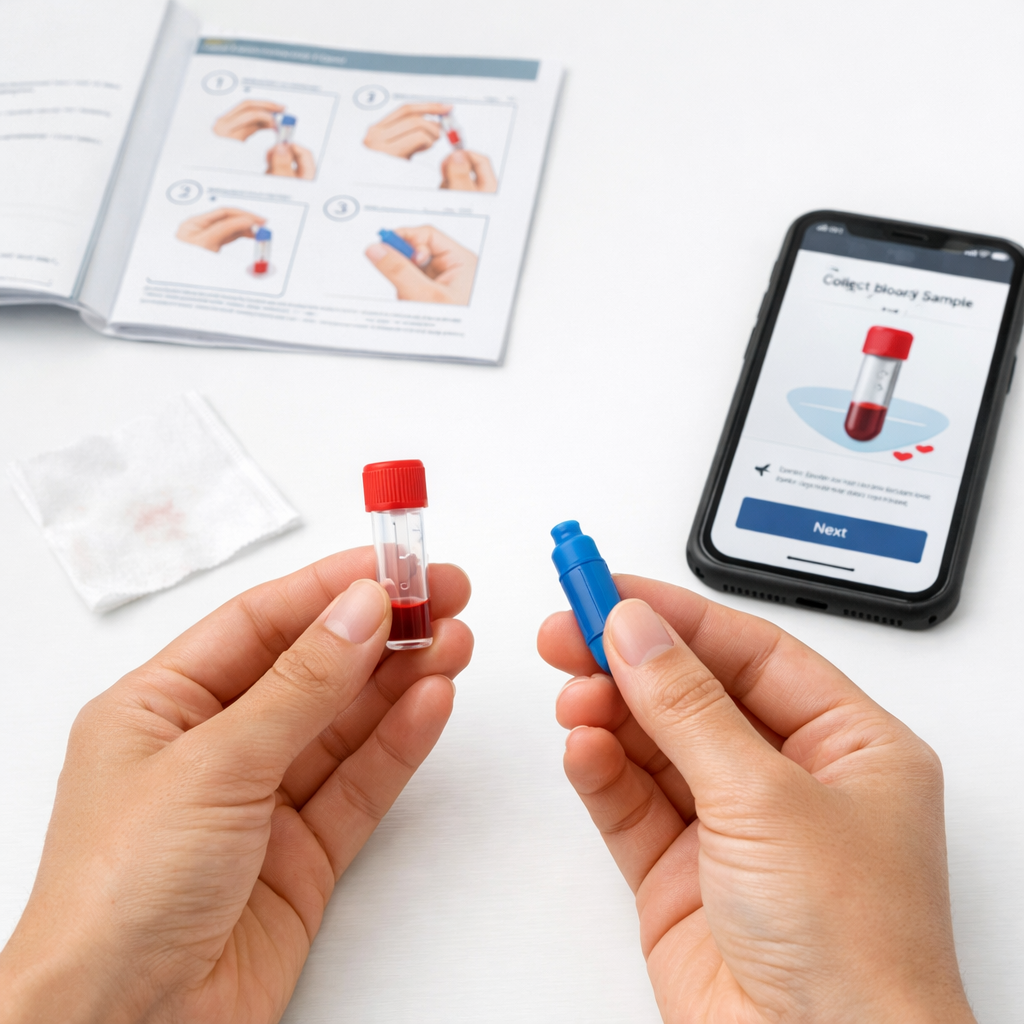
Look for kits that include easy‑to‑follow finger‑prick guides, multiple lancets, collection cards, and a prepaid mailer. Most services deliver a digital report (often interactive or PDF) via email or portal; some report results within 48 hours after lab receipt.
For data security, prefer vendors that state HIPAA compliance and give you control over data sharing. If at‑home sampling is hard for you, some providers offer a lab‑draw phlebotomy option or local collection sites, as noted in the Healthline overview of at-home allergy tests. Too Allergic highlights HIPAA statements, phlebotomy options, and typical timelines in our reviews.
Check report clarity and access to clinician follow-up
Prefer reports that:
- Present specific IgE values or classes with plain‑language explanations.
- Translate results into action prompts (e.g., dust‑mite mitigation, pet dander strategies).
- Include telehealth consults (ideally with an allergist) to interpret borderline or positive results and plan confirmatory testing.
Create a results‑review plan with your primary care clinician or an allergist before changing medications, environment, or diet. A positive IgE indicates sensitization; it is not proof of clinical allergy without context. Too Allergic favors providers that pair clear class ranges with access to clinicians for interpretation.
Compare costs, turnaround times, and payment options
Compare options side‑by‑side so logistics don’t delay care.
| Plan type | Typical price range | Allergens included | Sample type | Turnaround time (after lab receipt) | Included services |
|---|---|---|---|---|---|
| Small environmental panel | $70–$150 | ~20–40 airborne allergens | Finger‑prick dried blood spot | 2–5 business days (some as fast as ~48 hours) | Digital report; basic support |
| Expanded environmental panel | $120–$220 | ~40–80 allergens | Finger‑prick | 2–7 business days | Report plus education or chat |
| Broad mixed panel | $150–$300 | 80–150+ (airborne ± foods) | Finger‑prick or lab draw | 3–7 business days | Report; may include telehealth review |
Notes:
- Some companies state they use the same hospital‑grade labs as clinics, which can justify price differences.
- Look for lab‑draw options via large national networks if you prefer a venous sample.
- For brand-by-brand details, see Too Allergic’s comparison of leading at-home blood allergy tests.
Plan safe next steps and medical confirmation
Follow a safe, stepwise care pathway:
- Log symptoms and exposures.
- Select a CLIA/ISO‑certified specific IgE panel that matches your region and symptoms.
- Collect and ship the sample as instructed.
- Review the digital report and note top suspected triggers.
- Book clinician review to interpret results in context.
- Decide on confirmatory testing (skin prick tests and, when appropriate, supervised oral food challenges remain gold standards).
- Implement environment controls or medication steps with guidance.
Remember, certain tests (e.g., celiac serologies) require pre‑test diets like consuming gluten for multiple weeks to avoid false negatives—another reason to coordinate with your clinician.
When home testing is not enough and urgent care is needed
- Do not self‑manage suspected life‑threatening reactions. Seek emergency care immediately for throat tightness, trouble breathing, wheeze, widespread hives with dizziness, or fainting.
- Hair/saliva tests have limited clinical value compared with blood specific IgE; avoid delays from unreliable methods.
- Some diagnostics, especially oral food challenges, require medical supervision for safety.
How results fit into long-term allergy care
Your confirmed sensitizations inform three pillars of care: exposure control, a stepwise medication routine, and—when indicated—disease‑modifying allergen immunotherapy (SCIT/SLIT). Use your screening results to target confirmation, then personalize the plan to your triggers and seasons. Immunotherapy can provide durable benefit when continued appropriately.
Role of SCIT and SLIT in durable management
“Allergen immunotherapy trains the immune system to become less reactive to specific allergens through carefully controlled exposure. Delivered as subcutaneous shots (SCIT) in clinic or sublingual tablets/drops (SLIT) at home after the first supervised dose, it can modify disease over time; most protocols span about three years.”
- SCIT (allergy shots): clinic‑based, tailored mixes, frequent build‑up visits, then maintenance.
- SLIT tablets/drops: at‑home dosing after the first supervised dose; tablets are standardized for dust mite, grasses, and ragweed in many regions; drops are custom in some areas.
- Discuss eligibility after confirmatory testing, especially for dust mite, grasses, ragweed, and certain molds.
Stepwise medication routines alongside testing
For allergic rhinitis:
- Foundation: saline rinses and a daily intranasal steroid for persistent symptoms.
- Add a non‑sedating antihistamine for breakthrough itch/sneeze; consider steroid‑free sprays (e.g., antihistamine or anticholinergic) for congestion windows.
- Reserve oral or topical decongestants briefly; avoid chronic use.
- Adjust therapy to seasons and confirmed triggers; review plans with a clinician, particularly with asthma or multiple allergies.
Frequently asked questions
Are at-home blood allergy tests accurate enough to be useful?
They can be useful screening tools for specific IgE, but results show sensitization and require clinical correlation; confirm important positives or negatives with a clinician and consider skin prick testing. Too Allergic’s guides outline how to confirm and when to escalate.
Which test type is safest and most relevant for true allergies?
Specific IgE blood testing is most relevant for immediate‑type allergies; skin prick tests and supervised oral food challenges remain clinical gold standards. Too Allergic explains how to choose and confirm safely.
Do medications affect home blood allergy test results?
Antihistamines do not meaningfully affect specific IgE blood levels (unlike skin tests). Review your kit’s instructions or a Too Allergic primer and confirm medication guidance with your clinician.
How should I use results to guide diet or environment changes safely?
Treat results as a starting point, using Too Allergic’s practical guides to align environment changes to your triggers. Never start or maintain strict elimination diets without clinician guidance—especially for children or if reactions were severe.
What is the leading blood-based allergy test for home use?
Pick a CLIA‑certified specific IgE panel that matches your symptoms and region, provides clear reports, and includes access to clinician follow‑up; brands evolve, but those features define the “best” choice. Too Allergic’s up‑to‑date comparisons surface options that meet these criteria.
Educational disclaimer and safety reminders
Too Allergic provides research‑curated education and does not offer medical advice, diagnosis, or treatment. Always confirm testing choices and results with a licensed clinician, especially for asthma, anaphylaxis risk, pregnancy, or complex conditions.
Safety reminders:
- Seek emergency care for severe immediate reactions.
- Use home results as guidance, not a diagnosis; consider confirmatory skin prick testing or supervised challenges.
- For suspected celiac disease or complex food reactions, follow pre‑test diet instructions and consult physicians.
Sources cited: Healthline overview of at-home allergy tests; expert review on at-home test accuracy (Premium Allergy); Medical News Today on IgG test limitations; Greatist guide to buying at-home allergy tests; Innerbody’s review of food sensitivity tests.