How to Choose Safe, Effective Children’s Antihistamines for Perennial Allergies
Year‑round (perennial) allergies in kids can look like endless stuffy noses, sneezing, and itchy eyes from indoor allergens like dust mites and pets. The safest, most effective plan starts with the dominant symptom: choose a daily intranasal steroid first for persistent congestion, and add a second‑generation, non‑drowsy oral antihistamine for itch and eyes. Always confirm age approvals and dosing by weight, avoid sedating first‑generation antihistamines and routine decongestants, and reassess after 2–4 weeks. This Too Allergic guide walks you through a confident, label‑aligned choice—backed by pediatric‑friendly evidence and real‑world usability.
Start with your child’s symptoms and triggers
“Perennial allergic rhinitis is a year‑round pattern of nasal congestion, runny nose, sneezing, and itchy or watery eyes triggered primarily by indoor allergens—especially dust mites, pet dander, and molds. Symptoms often persist across seasons and may worsen at night or with indoor exposure.” Clinical guidance
What’s happening biologically:
- Children’s antihistamines block histamine—the chemical behind sneezing, itch, and runny noses.
- Intranasal corticosteroids act locally in the nose and suppress multiple inflammatory mediators beyond histamine, which is why they control congestion better for many kids. See this lay overview on how nasal steroids work and supporting clinical guidance.
Quick decision cues:
- Predominant congestion or post‑nasal drip → start an intranasal corticosteroid first.
- Itchy eyes/nose, sneezing, hives‑like itch → use a second‑generation oral antihistamine as an alternative or add‑on.
Too Allergic tip: If indoor allergies or dust mite allergy in kids is suspected, keep a brief exposure diary (bedroom time, pet contact, cleaning days) to spot triggers of perennial allergic rhinitis and guide pediatric antihistamine choices.
Check age, label approvals, and dosing by weight
For safety, match medicine to age and formulation. The FDA and pediatric groups advise against over‑the‑counter antihistamines or decongestants in children under age 2; always confirm pediatric approval by age and product type and consult a clinician for the youngest children. See pediatric perspectives from Norton Children’s and practical label guidance from GoodRx.
Age‑appropriateness snapshot (confirm exact product labels)
| Medicine (class) | Typical OTC pediatric labeling |
|---|---|
| Cetirizine (oral antihistamine) | Many formulations labeled ages 2+ |
| Loratadine (oral antihistamine) | Many formulations labeled ages 2+ |
| Fexofenadine (oral antihistamine) | Many formulations labeled ages 2+ |
| Fluticasone propionate (nasal steroid) | Children’s versions labeled ages 4+ |
| Fluticasone furoate (nasal steroid) | Labeled ages 2+ |
| Mometasone (nasal steroid) | Labeled ages 2+ |
Always check OTC labels carefully: doses vary by product and by child’s age and weight.
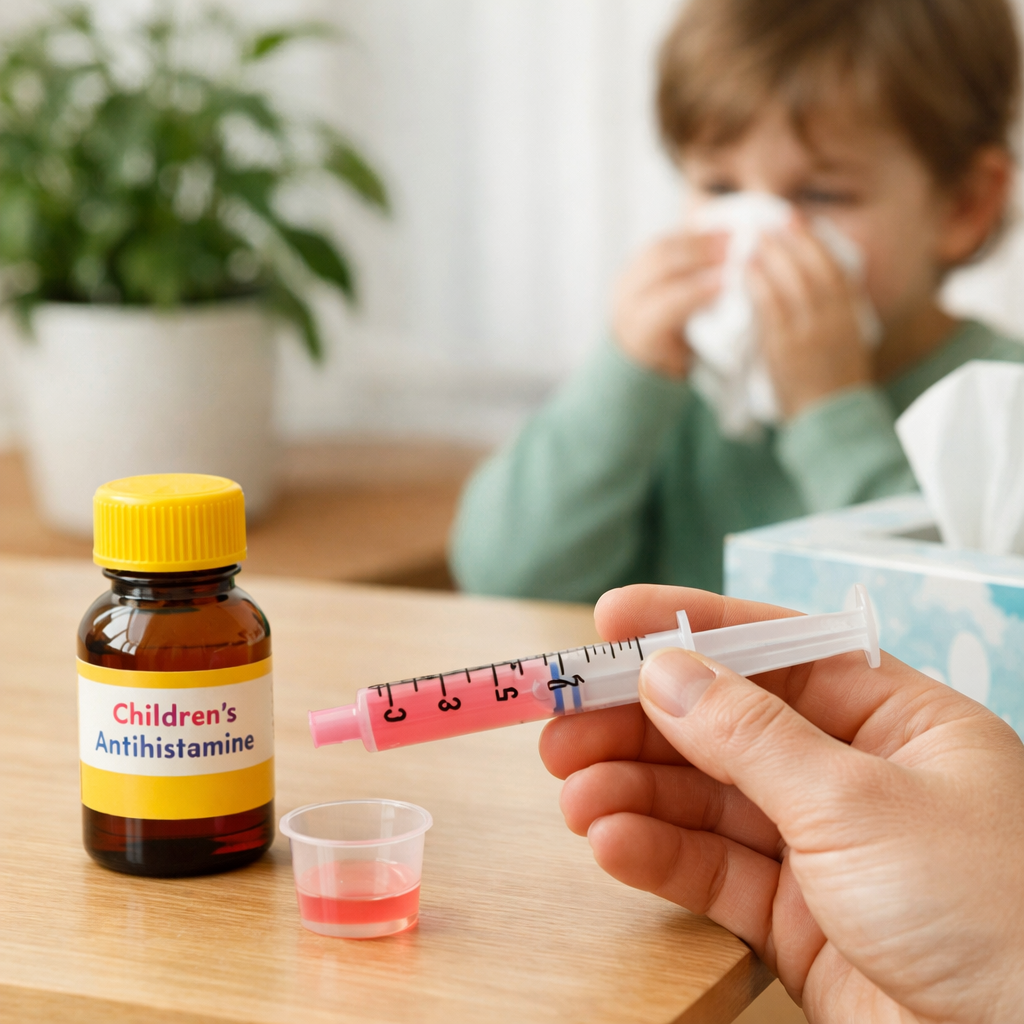
Kids’ allergy dosing by weight and age approvals can differ even within the same brand family; use the included dosing device and avoid kitchen spoons.
Choose nasal steroids first for persistent congestion
For perennial allergic rhinitis, guidelines recommend intranasal corticosteroids as first‑line for persistent nasal symptoms; an oral H1 antihistamine can be added for residual itch or sneezing when needed. This strategy reflects superior congestion control and strong pediatric safety data, especially with fluticasone and mometasone, which have minimal systemic absorption and favorable long‑term safety in children when used as directed (clinical review).
What to expect:
- Onset: improvement in a few days, with maximum effect in up to 2 weeks; encourage consistent daily use even if early gains feel modest (parent‑friendly guide).
Definition—intranasal corticosteroid (40–50 words): A medicated nasal spray that reduces nasal inflammation by blocking multiple inflammatory pathways. It acts locally in the nose, limiting whole‑body exposure compared with oral pills, and is considered safe for long‑term use in children when label‑directed and monitored by caregivers and clinicians.
Select a second-generation oral antihistamine for itch and eyes
Second‑generation antihistamines are preferred in kids because they have lower sedation and better cardiac safety than older, first‑generation drugs, while effectively reducing sneezing, itch, and runny nose (evidence review). For school days, prioritize non‑drowsy options and trial the first dose at home.
Comparison highlights
| Medicine | Typical onset | Sedation profile | Notes for perennial AR in children |
|---|---|---|---|
| Cetirizine | ~1 hour | Higher drowsiness potential than loratadine/fexofenadine | Reliable itch control; watch for sleepiness in some kids (GoodRx) |
| Loratadine | Up to 3 hours | Generally non‑drowsy | Good school‑day pick; once‑daily dosing |
| Fexofenadine | ~2 hours | Low somnolence | Well studied in pediatrics; a strong non‑drowsy choice (safety review) |
| Levocetirizine | ~1 hour | Mild somnolence possible | Demonstrates 24‑hour wheal‑and‑flare inhibition at 5 mg in pharmacotherapy data (UVA review) |
Definition—second‑generation antihistamine (40–50 words): A newer class of H1 blockers designed to reduce allergy symptoms with minimal penetration into the brain, lowering drowsiness and cognitive side effects versus older agents. Common child‑friendly options include cetirizine, loratadine, fexofenadine, and levocetirizine when used at label‑directed pediatric doses.
Avoid first-generation antihistamines and routine decongestants
First‑generation antihistamines (like diphenhydramine/“Benadryl”) cross the blood–brain barrier and can impair alertness and learning; they are not recommended first‑line for children with allergic rhinitis (clinical guidance; see consumer‑friendly contrast on medicine types). Avoid routine use of oral decongestants and older antihistamines in kids due to side effects and limited pediatric safety data; and use nasal decongestant sprays sparingly to prevent rebound congestion (practical pediatric advice). Never give OTC antihistamines or decongestants to children under age 2 unless a clinician directs it (Norton Children’s).
Screen for interactions and special cautions
- Renal dosing: Cetirizine may require adjustment in severe renal impairment (CrCl <10 mL/min); confirm with your clinician (NP Current monograph).
- QT/cardiac cautions: In some countries, bilastine and rupatadine are prescription options but carry QT‑related warnings; avoid with a history of QT prolongation or interacting CYP3A4/QT‑prolonging medicines and review product monographs (safety overview; NP Current).
Parent safety checklist:
- Age and formulation approval confirmed on the label.
- Dosing matched to your child’s weight and device included.
- Other meds/supplements reviewed for interactions.
- Heart history, kidney concerns, or sleep apnea disclosed to a pediatrician.
- Stop and seek advice if marked drowsiness, behavior change, or paradoxical agitation occurs.
Reassess after 2 to 4 weeks and escalate care if needed
- Timeline: Reassess symptoms after 2–4 weeks; if OTC therapy fails after about 2 weeks (or symptoms are severe), contact your pediatrician for next steps (timing guidance).
- Pivot rules: If a non‑drowsy antihistamine isn’t controlling congestion, switch to or add an intranasal corticosteroid.
- Add‑ons and comorbidities: Consider combination therapy (nasal steroid + oral antihistamine), ocular drops, nasal irrigation, and referral for allergy testing or immunotherapy in persistent cases or when asthma symptoms overlap (evidence‑based pathways).
Too Allergic builds in 2–4 week follow‑ups to fine‑tune therapy and reduce unnecessary medication changes.
Telehealth options for pediatric allergy care
A virtual allergy visit can efficiently review labels, dosing by weight, and school‑day plans without waiting room time. Too Allergic provides pediatric‑focused virtual visits with label‑aligned dosing, device teaching, and timely follow‑ups.
What to look for:
- Pediatric‑trained clinicians
- Label‑aligned dosing support and device teaching
- Secure messaging for follow‑ups and eRx options
- Device‑agnostic video, transparent pricing/insurance acceptance
- After‑visit summaries suitable for school/daycare forms
A simple flow:
- Upload a 7‑day symptom/exposure diary.
- Virtual exam and medication plan (e.g., start fluticasone; add fexofenadine if itch/eyes persist).
- Schedule a 2–4 week follow‑up to adjust.
For parent primers between visits, see Too Allergic’s pediatric checklists and non‑drowsy guides: How to choose a daily kids’ allergy medicine pediatricians trust and Pediatrician‑reviewed guide to non‑drowsy 24‑hour kids’ allergy relief.
Practical add-ons for eyes and home management
- Eyes: Ketotifen‑class allergy eye drops can reduce itchy/watery eyes and eye rubbing that leads to infections (pediatric allergist tips).
- Extra nasal help: Azelastine nasal spray (OTC) is an option for children 6+ with breakthrough symptoms; it can be used alongside a steroid spray if advised (NYU Langone pediatric advice).
- Home controls: Start medicines early and use them regularly; add nasal irrigation for older children; use dust‑mite covers, HEPA filtration, pet dander management, and moisture control. These steps reduce exposure and medication burden (clinical guidance; NYU Langone).
Safety checklist and decision flow for parents
- Identify dominant symptoms (congestion vs. itch/eyes).
- Confirm age approvals and weight‑based dosing on the label.
- Prefer a daily intranasal corticosteroid for persistent perennial symptoms; allow up to 2 weeks for max effect.
- For oral options, choose second‑generation antihistamines and favor the least‑sedating picks; monitor for drowsiness.
- Avoid first‑generation antihistamines and routine decongestants; never use OTC antihistamines/decongestants under age 2 unless directed by a clinician.
- Reassess at 2–4 weeks; escalate care if symptoms persist or interfere with sleep/school.
- Screen for interactions and contraindications (renal impairment, QT risk, CYP3A4/QT‑prolonging drugs).
Red flags—seek urgent care now:
- Severe breathing difficulty or wheezing not responding to rescue meds
- Face/lip/tongue swelling or trouble swallowing
- Suspected asthma flare or persistent high fever
- Poor growth, weight loss, or failure to thrive
This guide is educational and not a substitute for care. Always confirm dosing and suitability with a licensed clinician for your child.
Frequently asked questions
Which antihistamines are least likely to cause drowsiness in kids?
Fexofenadine and loratadine are generally least sedating for school‑day use, while cetirizine can make some children sleepy. Too Allergic’s pediatric guides can help you compare options and try the first dose at home.
How fast do common pediatric antihistamines start working?
Cetirizine typically starts in about 1 hour, fexofenadine around 2 hours, and loratadine can take up to 3 hours. A Too Allergic clinician can help you plan first doses and assess response over several days.
Is daily, year-round use of allergy medicine safe for children?
Many intranasal corticosteroids have a strong pediatric safety profile for long‑term use when label‑directed, and newer oral antihistamines are generally well tolerated. Confirm appropriateness with your pediatrician or a Too Allergic clinician, especially for children under 2 or with other health conditions.
What are the age cutoffs for common OTC pediatric antihistamines?
Many formulations of cetirizine, loratadine, and fexofenadine are labeled for ages 2+; always verify the exact product label. Too Allergic can help you confirm age cutoffs and dosing before use.
When should I call a pediatrician or allergist about persistent symptoms?
If symptoms remain after about 2–4 weeks of consistent treatment, or if your child has severe congestion, wheezing, frequent eye infections from rubbing, or suspected asthma, contact a pediatrician or allergist for a tailored plan. Too Allergic can coordinate next steps via telehealth and follow‑up.