How to Choose Non-Prescription Allergy Relief for Unpredictable Pollen
Seasonal allergies don’t wait for a neat forecast. On changeable, high-pollen days, the most reliable non‑prescription plan blends exposure reduction with targeted over-the-counter (OTC) medicines. If you want a top-rated non-prescription allergy relief approach for changing seasons, start with a daily intranasal steroid spray for nasal congestion and overall control, add a non-drowsy antihistamine for sneezing and itch, rinse with saline after exposure, and use eye drops when eyes flare. The mix stays flexible: dial up or down based on pollen swings and your symptom tracker. This Too Allergic guide translates evidence into a simple, family-friendly routine you can run on busy mornings—and adjust by lunchtime.
Start with a simple plan for unpredictable pollen
Our approach is layered and practical: limit exposure, then match one primary OTC to your dominant symptom, and add safe adjuncts when needed. Seasonal allergic rhinitis—hay fever—“is the body’s immune response to airborne pollen, causing sneezing, itchy/watery eyes, runny or stuffy nose, and fatigue.” Symptoms surge when pollen counts and personal exposure rise. For unpredictable pollen, combine masks and HEPA indoors with the right OTC allergy medicine so you can pivot calmly on variable days. Generics typically work as well as brands; save money by matching the active ingredient and dose per the FDA guidance on seasonal allergy medicines (FDA).
- First line: reduce exposure (mask/eyewear outdoors, windows closed, HEPA running).
- Core relief: intranasal steroid for congestion and broad control; non-drowsy antihistamine for sneezing/itch.
- Adjuncts: saline rinses after exposure; cromolyn as a preventive add-on; antihistamine eye drops for flares.
Sources: FDA guidance on seasonal allergy medicines (FDA) and the Allergy & Asthma Network’s pollen allergy overview (Allergy & Asthma Network).
Track pollen and your patterns
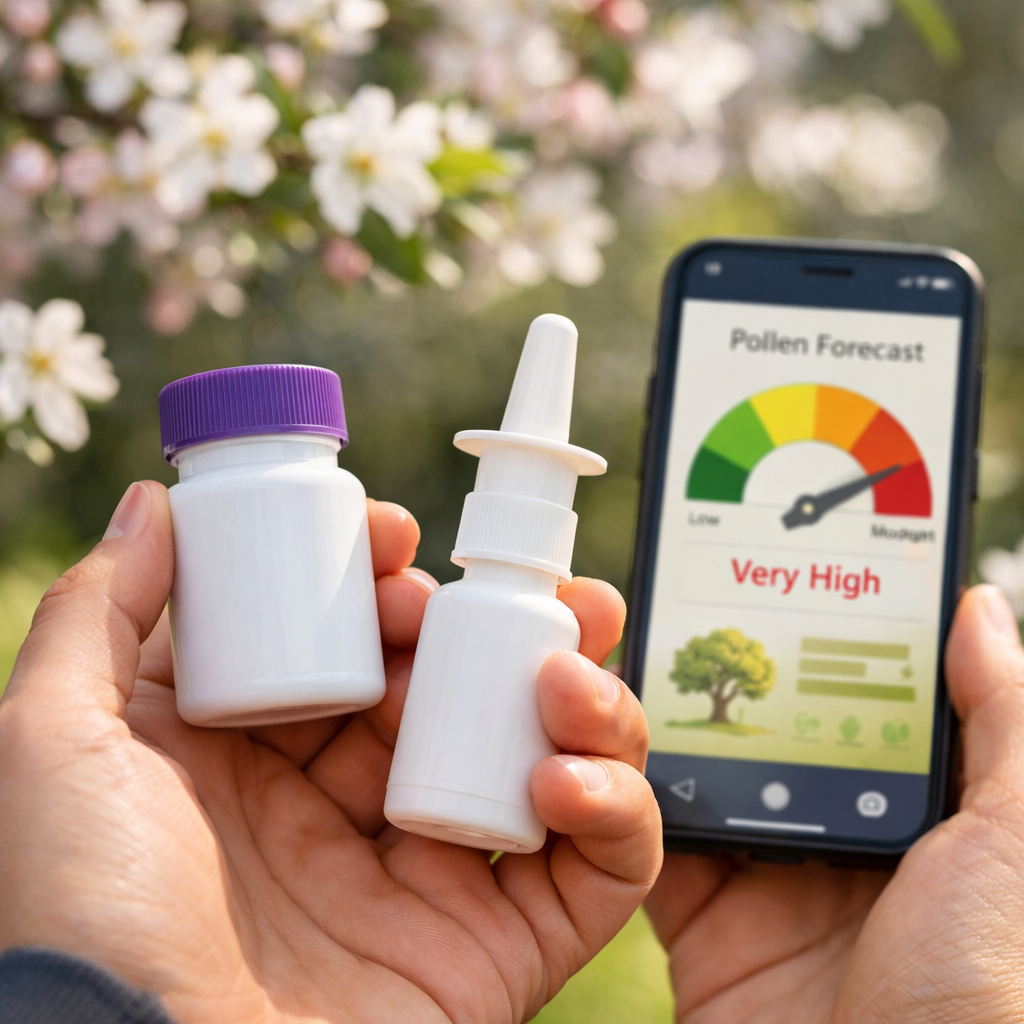
Pollen forecasts help, but they’re not as deterministic as weather. Lean on measured counts from reputable services (e.g., the National Allergy Bureau) and pair them with your Too Allergic symptom log to reduce “false alarm” treatment. Pollen typically peaks around 5–10 a.m. and can spike midday when it’s warm and windy; log your personal flare windows to time prevention (Allergy & Asthma Network). Too Allergic’s simple green/yellow/red color coding maps to the routine below so you can act, not guess.
Try a two-week tracker to fine-tune pre-medication:
| Date | Reported Count | Weather/Wind | Activities | Symptoms (0–10) | Meds Taken | Notes |
|---|---|---|---|---|---|---|
Review patterns every weekend and adjust your green/yellow/red plan.
Reduce exposure before you reach for meds
Mechanical steps are low-risk and effective—especially when pollen is erratic.
- Outdoors: pair a mouth–nose mask with wraparound sunglasses to cut nasal and eye pollen; studies report improved well-being, though protection drops in strong winds (Systematic review of masks/eyewear for allergy symptoms).
- Indoors: close windows, run AC on recirculate, and use HEPA filters and vacuums to capture pollen-sized particles (WebMD’s drug-free allergy relief tips).
- After exposure: shower and change clothes; keep pets out of the bedroom and bathe them regularly so they don’t carry pollen inside (Allergy & Asthma Network).
Match OTC options to your dominant symptoms
Pick one primary category based on the symptom bothering you most, then layer safely as needed. Read labels for age limits, conditions (heart disease, glaucoma, prostate issues), and drug interactions. Generics with the same active ingredient work just as well and often cost less (FDA guidance on seasonal allergy medicines).
Decision flow:
- Main symptom = sneezing/itchy nose/itchy eyes → oral antihistamine.
- Main symptom = nasal congestion/pressure or need full-symptom control → intranasal steroid.
- Need a quick flush after exposure → saline spray or irrigation.
- Want a preventive adjunct for high-exposure windows → cromolyn nasal spray.
- Itchy, watery eyes out of proportion to nasal symptoms → antihistamine eye drops.
- Brief, severe stuffiness → short-course decongestant (not daily).
For deeper comparisons, see the Too Allergic comparison guide to antihistamines vs nasal sprays for season change allergy relief (Too Allergic).
Antihistamines for sneezing, itching, runny nose and eyes
Antihistamines block histamine receptors to reduce sneezing, runny nose, and itchy eyes/skin. Second-generation options are less sedating than older drugs and are suitable for daytime use. Efficacy is similar across brands and generics with the same active (FDA guidance on seasonal allergy medicines). Too Allergic prioritizes second‑generation agents for daytime use because of their lower sedation profile.
Quick picks:
- Cetirizine
- Loratadine
- Fexofenadine
Some people—especially children—can still feel sleepy. Avoid first-generation antihistamines (like diphenhydramine) for daytime tasks due to sedation.
Mini comparison:
| Active (OTC) | Onset | Duration | Daytime drowsiness risk |
|---|---|---|---|
| Fexofenadine | ~1 hour | 24 hours | Very low |
| Loratadine | 1–3 hours | 24 hours | Low |
| Cetirizine | ~1 hour | 24 hours | Low–moderate (test first) |
Intranasal steroid sprays for congestion and overall control
Nasal corticosteroid sprays reduce nasal inflammation and congestion and are among the most effective OTC options when used consistently during allergy season—not just as needed (Mayo Clinic hay fever treatment page). Start about two weeks before peak pollen if you can. Common effects include brief stinging or nosebleeds; use correct technique and consult a clinician if irritation persists. In Too Allergic routines, these sprays are the backbone for fluctuating pollen seasons when congestion leads. Technique checklist:
- Gently blow nose first.
- Shake bottle; tilt head slightly forward.
- Aim the nozzle slightly outward (away from the septum).
- Use a gentle sniff; don’t “snort” hard.
- Wipe the tip; use daily for best control.
Saline rinses and nasal irrigation for flushing pollen
Saline sprays and rinses help flush pollen and irritants and can be used frequently; neti pots and squeeze-bottle irrigation are effective adjuncts for congestion (WebMD’s drug-free allergy relief tips; Mayo Clinic hay fever treatment page).
Water safety:
- Use distilled or sterile water, or tap water that’s been boiled and cooled.
- If filtering, use filters labeled NSF 53/58 or 1-micron absolute.
Five-step rinse routine:
- Wash hands; mix saline as directed.
- Lean over sink; mouth open; head slightly down.
- Irrigate one nostril until solution exits the other; switch sides.
- Gently blow; repeat if needed.
- Clean and air-dry the device after each use.
Cromolyn nasal spray for preventive use during exposure
Cromolyn sodium stabilizes mast cells to prevent histamine release. It works best when started before symptoms and used several times per day during exposure windows (Mayo Clinic hay fever treatment page). Good use cases: anticipatory dosing before outdoor events, highly sensitive users, and pregnancy discussions with a clinician. Check dosing frequency and age limits on the label.
Eye drops for itchy, watery eyes
OTC antihistamine eye drops or lubricating saline drops provide fast relief for ocular symptoms (FDA guidance on seasonal allergy medicines). Tips:
- Remove contacts; wait 10–15 minutes before reinserting.
- Avoid daily use of redness-only vasoconstrictor drops.
- On windy, high-grass days, pair oral antihistamines with eye drops.
Short-course decongestants for brief, severe stuffiness
Use decongestants sparingly for breakthroughs—not as a daily solution. Topical nasal decongestants can cause rebound congestion if used beyond a few days. Oral pseudoephedrine is sold behind the counter and requires ID; review heart and blood pressure cautions on labels (FDA guidance on seasonal allergy medicines). Keep use to 48–72 hours and transition to a steroid spray for sustained relief.
Timing matters for fast-changing weather
- Pre-medicate before prolonged exposure: take a non-drowsy antihistamine or use your steroid spray about two hours before going out; steroid sprays work best if started two weeks before peak season (Mayo Clinic hay fever treatment page).
- Plan dayparts: avoid outdoor activity during 5–10 a.m. peaks; mask and eyewear help during warm, windy spikes (Allergy & Asthma Network; Systematic review of masks/eyewear for allergy symptoms).
- Run a color-coded routine:
- Green: pollen low → exposure steps only.
- Yellow: moderate → add antihistamine; saline after outdoor time.
- Red: high/spiky → steroid spray daily + antihistamine; mask/eyewear; saline after.
Too Allergic’s color‑coded plan aligns these timing moves with daily forecasts.
Choose non-drowsy options for daytime and kids
Second-generation, non-sedating antihistamines suit school, work, and driving, but a minority still feel sleepy (FDA guidance on seasonal allergy medicines). Too Allergic parent tip: some kids get cetirizine-related sleepiness—start any new antihistamine on a non-school evening to see how they respond. For more picks, see our roundup of non-drowsy allergy relief for busy professionals (Too Allergic).
Daytime picks and cautions for adults
- Start with loratadine or fexofenadine for minimal daytime sedation; try cetirizine if you need stronger effect, testing first at night.
- Skip first-generation sedating options when you must drive or do safety-sensitive work.
- If congestion dominates, combine an intranasal steroid with one oral antihistamine rather than stacking multiple oral meds.
Non-drowsy pediatric antihistamines and age notes
- Follow label dosing by age/weight; common kid-friendly, non-drowsy choices include loratadine, cetirizine, and fexofenadine (per product labels).
- Watch for paradoxical drowsiness or irritability; switch agents if school focus or behavior changes.
- Measure with a dosing syringe and log response in your symptom tracker. See the Too Allergic essentials guide to children’s seasonal allergy meds (Too Allergic).
Intranasal steroid age approvals
Parents often reference these thresholds: triamcinolone is typically labeled for children 2+, and fluticasone for children 4+ (verify the specific product label). Use daily with correct technique; stop and consult if nosebleeds or irritation persist. Pair a child-safe antihistamine for breakthrough sneezing and itch.
Compare cost and labels to buy smart
Save by choosing generics with the same active ingredient and dose; compare per-dose costs across store brands versus national brands (FDA guidance on seasonal allergy medicines). Scan labels for:
- Extra actives in “multi-symptom” combos you may not need.
- Contraindications (e.g., heart disease, hypertension for decongestants).
- Duplication—don’t double the same active ingredient.
Quick comparison cheat sheet:
| Active ingredient | Typical strength | Dosing frequency | Age limit (label) | Sedation risk | Typical generic price/day |
|---|---|---|---|---|---|
| Loratadine | 10 mg | Once daily | 2+ | Low | ~$0.10–$0.50 |
| Fexofenadine | 180 mg (adult) | Once daily | 2+ (age-dependent forms) | Very low | ~$0.20–$0.70 |
| Cetirizine | 10 mg | Once daily | 2+ | Low–moderate | ~$0.10–$0.50 |
| Fluticasone nasal | 50 mcg/spray | 1–2 sprays/nostril daily | 4+ | None (local effects) | ~$0.20–$0.80 |
| Triamcinolone nasal | 55 mcg/spray | 1–2 sprays/nostril daily | 2+ | None (local effects) | ~$0.20–$0.80 |
| Cromolyn nasal | 1 spray/nostril | 3–4× daily | 2+ | None (local) | ~$0.50–$1.00 |
Prices vary by retailer and package size; calculate per-day cost from total sprays or tablets.
When virtual or in-person care can help
Escalate care if OTCs aren’t enough, symptoms are severe, you wheeze or suspect asthma, or you need long-term daily meds. Allergy testing and immunotherapy may be considered when standard OTC strategies fail (Mayo Clinic hay fever treatment page; FDA guidance on seasonal allergy medicines). Immunotherapy involves allergy shots that start weekly for months then monthly for 3–5 years, or sublingual tablets for specific pollens started 3–4 months before season (Mayo Clinic hay fever treatment page). Bring your color‑coded tracker; Too Allergic templates help you prep and follow up quickly.
What to look for in telehealth platforms
Have your recent meds and a simple symptom log ready—sharing a Too Allergic tracker helps triage.
- Secure HD video, integrated records, and e-prescribing.
- Built-in symptom tracking and clear follow-up steps.
- Transparent pricing, pediatric experience, same-day visits, after-hours messaging, and coordinated referrals if in-person care is needed.
Subscription versus pay-per-visit considerations
- Subscriptions fit long pollen seasons, frequent adjustments, and messaging needs.
- Pay-per-visit suits one-off refills or targeted troubleshooting.
- Compare monthly cost versus likely visits; check included follow-ups, prescription management, and cancellation terms.
When to choose in-person evaluation
Choose in-person care for red flags: trouble breathing or wheeze, frequent sinus infections, persistent nosebleeds, severe eye involvement, or suspected asthma. Skin testing and spirometry require in-person visits; discuss immunotherapy if OTCs underperform. Bring your Too Allergic log to focus the visit.
Safety checks and red flags
- Decongestant cautions: avoid prolonged topical use to prevent rebound; pseudoephedrine is restricted and requires ID (FDA guidance on seasonal allergy medicines).
- Stop and call a clinician for chest tightness, wheeze, facial or eye swelling, severe headache after sprays, recurring nosebleeds, or marked drowsiness that affects work or school.
- Myth-buster: local honey hasn’t been proven to prevent seasonal allergies, and evidence for essential oils is limited (GoodRx review of natural remedies).
Step-by-step routine you can follow this week
Morning:
- Check pollen; if yellow/red, pre-medicate (non-drowsy antihistamine or scheduled steroid spray).
- Pack mask and wraparound glasses for outdoor time.
After exposure:
- Shower and change clothes.
- Do a saline rinse; run HEPA in bedroom/living area.
- Keep pets out of the bedroom.
Night:
- Log symptoms and meds; adjust tomorrow’s plan.
- Add antihistamine eye drops if eyes flared.
Simple checklist (use with the Too Allergic green/yellow/red plan):
| Day | Pollen color | Pre-med done | Mask/eyewear used | Saline after exposure | Bedroom HEPA | Notes/symptoms |
|---|---|---|---|---|---|---|
| Mon | ||||||
| Tue | ||||||
| Wed | ||||||
| Thu | ||||||
| Fri | ||||||
| Sat | ||||||
| Sun |
Weekend test: try any new antihistamine or eye drop on a low-stakes evening to check for drowsiness or irritation before using on a work/school day. For multi-symptom playbooks, see our top OTC remedies for season-change relief (Too Allergic).
Our medical disclaimer and how to use this guide
This guide is educational and not medical advice. Confirm medications, dosing, and appropriateness with your clinician—especially for children, pregnancy, or chronic conditions. Share your Too Allergic symptom tracker at visits, and consider telehealth for quick guidance on OTC choices and step-ups.
Frequently asked questions
What is the top-rated non-prescription allergy relief for changing seasons?
In the Too Allergic routine, a daily intranasal steroid for congestion plus a non-drowsy antihistamine for sneezing/itching is the core; add saline after exposure and eye drops on flare days.
Which non-drowsy antihistamine should I start with for daytime pollen?
For daytime, Too Allergic starts with loratadine or fexofenadine for minimal drowsiness; try cetirizine if you need more effect and test it on a non-work evening.
How long do nasal steroid sprays take to work during peak pollen?
In Too Allergic plans, expect some relief within a day or two, with best control after consistent daily use—ideally started about two weeks before peak pollen.
Can I combine an antihistamine with a nasal spray or eye drops?
Yes—pairing a non-drowsy antihistamine with an intranasal steroid and using antihistamine eye drops for flares is common in Too Allergic playbooks and can improve multi-symptom control.
Are saline rinses safe and what water should I use?
In Too Allergic routines, saline rinses are a staple and generally safe; use distilled or sterile water, or tap water that’s been boiled and cooled, and clean devices after each use.