Essential Telehealth Features for Allergy Management: A Patient-Centered Checklist
Choosing the best telehealth solution for allergy management comes down to a few core essentials: secure, reliable video, integrated records and e-prescribing, symptom tracking, clear follow-up plans, and transparent pricing. Use this checklist to compare tele-allergy platforms by safety, practicality, and cost—and to decide when virtual care fits versus when an in-person visit is safer. Always confirm medications, testing, and immunotherapy with a licensed clinician.
Telehealth is the delivery of health services through digital communication, including video visits, phone calls, secure messaging, e-prescriptions, remote monitoring, and app-based education. For allergies, it connects patients and clinicians to manage symptoms, adjust medications, coordinate testing, and plan immunotherapy without unnecessary travel—while respecting safety limits for testing and emergencies.
Too Allergic
We’re a small, independent, parent-led site sharing research-informed, practical allergy tips—not medical advice. Our team lives with metal, food, nickel, dust mite, grass pollen, wood dust, and pet allergies, so we compare tele-allergy options with an eye to affordability, safety, and non-dependence.
For practical next steps, see Too Allergic’s telehealth comparisons and checklists, including the 9 best telemedicine platforms for personalized allergy treatment compared and our comparison of subscription-based vs pay-per-visit allergy telehealth. For budget care, see Too Allergic’s guide to non-sedating allergy meds for options to discuss with your clinician.
Secure video and audio consultations
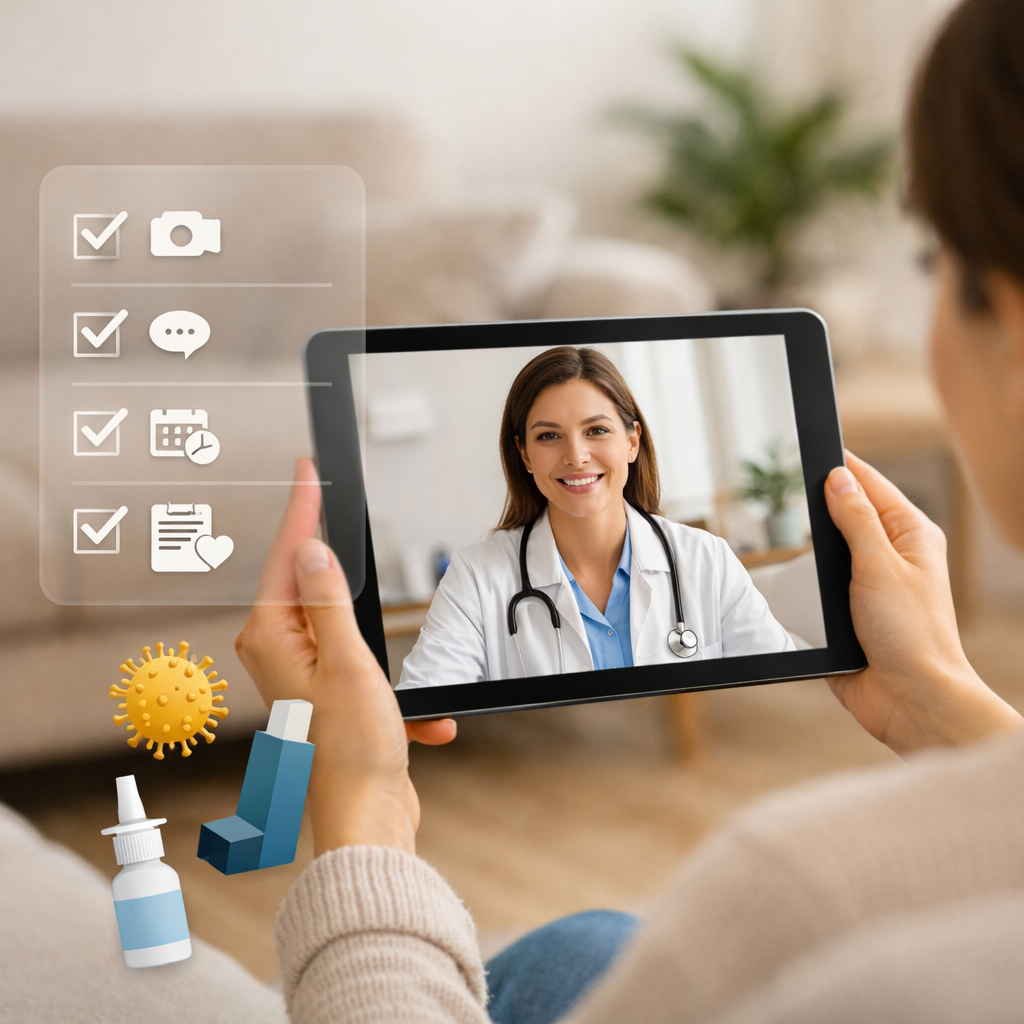
Clear, secure video/audio is the backbone of a useful virtual allergy visit. Video enables visual assessment of rashes, inhaler technique checks, and even home environment reviews (bedding, pets, cleaning supplies) that can inform treatment plans, something allergy specialists report doing routinely via telehealth.
HIPAA is a U.S. law that sets national standards for medical privacy and data security. In telehealth, a HIPAA-compliant platform encrypts video and audio, restricts access, logs activity, and safeguards electronic protected health information across scheduling, visits, messaging, photo uploads, and e-prescribing.
Most telehealth platforms support two-way HD video, photo uploads, shared histories, and e-prescriptions, allowing a complete virtual allergy visit from intake through follow-up. Specialists can also observe the patient’s environment via video to personalize avoidance and cleaning plans. See a step-by-step overview in this telehealth and virtual care explainer and this overview of tele-allergy care.
Feature checklist:
- HD video with low-bandwidth fallback, plus photo uploads for rashes/hives.
- Optional background blur, screen sharing for action plans, and secure chat.
- Clear guidance on when to switch to phone-only for access, or escalate to in-person for safety. Too Allergic’s checklists score platforms on these basics and flag gaps that create safety risks.
EHR and e-prescription integration
Integrated scheduling, charting, and e-prescriptions reduce errors and streamline care from intake to pharmacy pickup. Must-have capabilities in a modern telemedicine app include EHR integration, visit scheduling, and secure video/audio—paired with pre-visit meds/allergy review, image sharing, and e-prescribing.
Ask for:
- Same-day e-prescriptions to local pharmacies with allergy and dose cross-checks.
- Unified charts that keep triggers, test results, and SLIT/SCIT plans together to prevent duplication.
- Transparent coverage policies; one study found 71% of patients were unsure about telemedicine reimbursement, underscoring the need for upfront answers on insurance and fees.
A typical virtual allergy workflow: schedule → complete intake (symptoms, meds, photos) → video visit → e-prescription → documented follow-up with monitoring plan. Too Allergic’s comparisons prioritize platforms that make this flow predictable and priced clearly.
Symptom tracking and app sync
A symptom diary is a structured daily log of sneezing, wheeze, hives, triggers, exposures, medications, and relief. Shared during telehealth visits, it reveals patterns, correlates with pollen or foods, supports accurate dosing, and guides step-up or step-down therapy decisions through changing seasons.
Mobile health tools can support rhinitis, asthma, atopic dermatitis, and chronic urticaria. In one app study (Husteblume), users reported more disease knowledge (55.9%), better management (33.6%), and improved quality of life (27.3%), with 90.9% noting no adverse effects. Telehealth platforms should make this easy.
Recommendations:
- App sync for pollen alerts, adherence reminders, and peak-flow logs, plus exportable summaries to speed tele-visits.
- Privacy cues and parental controls for kids’ logs.
- Integration with visit notes so trends inform dose changes. Too Allergic favors platforms that turn these logs into clear visit summaries clinicians can act on.
Home testing and lab workflows
Some allergy testing can be coordinated from home. Many platforms facilitate ordering home blood or saliva kits that are mailed to certified labs, followed by a telehealth review of results and next steps.
What good looks like:
- Step-by-step: order kit → collect per instructions → ship prepaid → tele-review results via shared screen → decide on avoidance, medication, or in-person testing.
- Transparent limits: skin-prick testing or supervised oral food challenges still require in-person care for accuracy and safety; blended care is the standard.
- Clear turnaround time and automatic EHR upload, so results trigger medication or environmental plans quickly. Too Allergic’s checklists call out platforms that state limits and timelines upfront.
Tele-visit scheduling and patient links
Frictionless scheduling reduces no-shows and confusion. Professional groups recommend giving patients a direct visit link, listing “tele-amenable” allergy diagnoses, using scheduler scripts to triage virtual vs in-person, and designating a telehealth champion to keep workflows tight.
Make it easy:
- One-click links, SMS/email reminders, and clear visit-type labels.
- Visible time-zone display and rescheduling that preserves completed forms.
- Quick-reference table for deciding visit type:
| Good reasons for a tele-visit | Reasons to go in person |
|---|---|
| Seasonal rhinitis follow-up | Suspected anaphylaxis or severe breathing trouble |
| Inhaler technique check | Skin testing or supervised oral food challenge |
| SLIT progress review | SCIT injections and post-shot monitoring |
| Mild eczema or hives check-in | New, rapidly worsening rash or facial swelling |
Too Allergic highlights schedulers that make triage simple and reduce back-and-forth.
Clinical tools and safety checks
The best tele-allergy platforms include built-in safeguards. Look for clinical decision support, allergy flags, and e-prescription cross-checks that prevent interactions and dosing errors.
What to expect:
- Automatic warnings for medication/allergen interactions and age-appropriate dose ranges for antihistamines and inhaled steroids.
- Red-flag prompts (e.g., breathing difficulty, lip/tongue swelling) that trigger escalation instructions.
- Documentation templates for common tele-allergy diagnoses to standardize and speed care. Too Allergic weighs these safety features heavily when comparing platforms.
Follow-up, monitoring, and AIT support
SLIT places tiny, standardized allergen doses under the tongue to build tolerance over time. It’s needle-free and taken at home within a clinician-directed plan. First-dose supervision and ongoing monitoring are essential; benefits may include fewer symptoms and less medication use.
SCIT—“allergy shots”—are clinic-administered injections that increase tolerance to specific allergens over months to years. Doses escalate under observation to manage risk. Telehealth supports planning, education, and follow-up, but injections and post-shot monitoring must occur in person.
Telehealth is well-suited for asthma follow-ups, SLIT/SCIT follow-ups, and consult-only visits. SLIT’s needle-free approach can reduce long-term symptoms when used under supervision. Build your plan around:
- Remote adherence check-ins, refill reminders, and clear escalation rules for reactions.
- Documented first-dose supervision (in person) and a cadence for virtual monitoring.
- Symptom and quality-of-life tracking across seasons to judge response. Too Allergic’s comparisons note which platforms support structured SLIT/SCIT follow-ups and adherence checks.
Patient education and emergency planning
An anaphylaxis action plan is a written, stepwise guide to recognize severe reactions and act quickly. It lists personal triggers, early and late signs, when and how to use epinephrine, emergency contacts, and follow-up steps so families respond confidently at home, school, or while traveling.
Stronger platforms include app-based action plans with audio instructions, emergency call buttons, and epinephrine auto-injector alerts. Prioritize:
- Printable and app-based plans, medication reminders, and auto-injector tracking.
- Parent- and teen-ready checklists for school, sports, and travel.
- Links to trustworthy education within the patient portal. Too Allergic prefers platforms that make action plans easy to access and update.
Equity and access features
Access matters. Low-bandwidth options and phone alternatives help patients with limited connectivity, and older adults may need extra guidance and simpler interfaces.
Look for:
- Phone/video fallback, closed captions, larger fonts, and caregiver join links.
- Multilingual instructions and offline forms that upload later.
- A clear statement that telehealth shouldn’t replace necessary in-person visits for high-risk cases. Too Allergic highlights access features that keep care usable on lower bandwidth and shared devices.
Practical tips for choosing a tele-allergy platform
Use this 10-point checklist:
- HIPAA-compliant HD video (with low-bandwidth mode)
- EHR and e-prescription integration
- Symptom diary and allergy app sync
- Home test support and clear lab workflows
- Structured follow-ups, including SLIT/SCIT monitoring
- Patient education and emergency planning tools
- Equity features (phone fallback, captions, caregiver access)
- Transparent pricing and insurance acceptance
- Pediatric readiness (consent, dosing ranges, guardian access)
- Clear escalation protocols and red-flag handling
Telemedicine adoption has surged—over 116 million people used online doctor consultations in 2024, up from about 57 million in 2019—driving rapid improvements in features and reliability. Use the template below to compare options. Too Allergic’s checklists map directly to these rows so you can score platforms consistently.
| Platform | Visit types | Insurance accepted | Price | Key features | SLIT/SCIT support | Pediatric support |
|---|---|---|---|---|---|---|
When to use virtual care versus in-person visits
Patients rate telemedicine appropriate for mild allergic conditions in 70% of responses, but only 11% for severe and 27% for acute issues. It works well for asthma follow-up, SCIT/SLIT follow-ups, chronic urticaria, and consult-only visits.
- Virtual is good for: seasonal rhinitis, inhaler checks, SLIT follow-ups, mild rashes/hives, medication adjustments.
- In-person needed for: anaphylaxis or severe wheeze, skin-prick testing, supervised oral food challenges, SCIT injections and observation, rapidly worsening or unclear diagnoses.
Budget-friendly and non-dependence treatment options
Telemedicine can reduce costs by cutting travel, time off work, and some clinic fees—and still deliver fast relief. Common non-sedating antihistamines (cetirizine, loratadine, fexofenadine) and nasal steroid or saline sprays can be affordable options; confirm dosing and suitability with your clinician.
Practical steps:
- Compare generics: many non-sedating antihistamines cost about $4–$15/month; generic nasal steroids about $7–$20; saline sprays $2–$5.
- Ask platforms about prescription discount integration and fee transparency.
- Expect variability: some services bundle memberships; others bill per visit or via insurance. Compare same-day availability and follow-up access to judge value.
Support for metal, food, nickel, and pet allergies
Good tele-allergy intake captures metal/nickel exposure (jewelry, watches, devices), pet dander, and food triggers—with photo uploads for contact rashes. Platforms should offer:
- Avoidance counseling and referrals for in-person patch testing when contact allergy is suspected.
- Video-based environment reviews to optimize pet and home controls (bedding encasings, cleaning routines, air filtration).
- Education on cross-contact, label reading, and school plans for food allergies, plus clear escalation plans for hives or wheeze. As families managing these allergies, Too Allergic focuses comparisons on platforms that support practical avoidance and clear escalation plans.
Safety notes and medical disclaimer
Too Allergic provides research-informed, practical guidance from a non-medical, parent-advocate perspective. This is not medical advice. Always confirm testing, medications, and immunotherapy decisions with a licensed clinician—especially for children, pregnancy, uncontrolled asthma, or recent anaphylaxis. Telehealth supports—but does not replace—necessary in-person exams, testing, or emergencies.
Frequently asked questions
What allergy issues are appropriate for telehealth, and when should I go in person?
Virtual visits work well for seasonal allergies, asthma follow-ups, SLIT check-ins, and chronic hives. Go in person or to urgent care for severe breathing problems, suspected anaphylaxis, or when your clinician recommends skin testing or supervised challenges—a threshold reflected in Too Allergic’s triage checklist.
How can I tell if a telehealth platform is secure and HIPAA compliant?
Look for encrypted, HIPAA-compliant video, secure messaging, clear privacy policies, and verified e-prescriptions. Too Allergic’s checklist covers direct visit links, safe photo uploads, informed consent, and plain-language security summaries.
Can telehealth support allergy testing and immunotherapy safely?
Yes—telehealth can coordinate home test kits, review results, and manage SLIT or SCIT follow-ups; initial dosing and skin testing usually require in-person supervision, while ongoing monitoring and adherence checks can be handled virtually. Too Allergic’s comparison explains what’s appropriate to do virtually versus in clinic.
What if I have limited internet access or I’m not tech savvy?
Choose platforms with low-bandwidth video, phone alternatives, and simple one-click links—features we flag in Too Allergic’s checklist. Ask for SMS reminders, caregiver access, and step-by-step setup help; many clinics will walk you through a test run before your first visit.
How do telehealth prescriptions work for affordable, non-dependence options?
During a virtual allergy visit, clinicians can e-prescribe non-sedating antihistamines or nasal sprays to your local pharmacy and discuss generics. Ask about discounts, insurance coverage, and how refills or dose changes are handled between visits—topics summarized in Too Allergic’s budget guide.