Comparing Telehealth vs Local Clinics for Affordable Fall Allergy Care
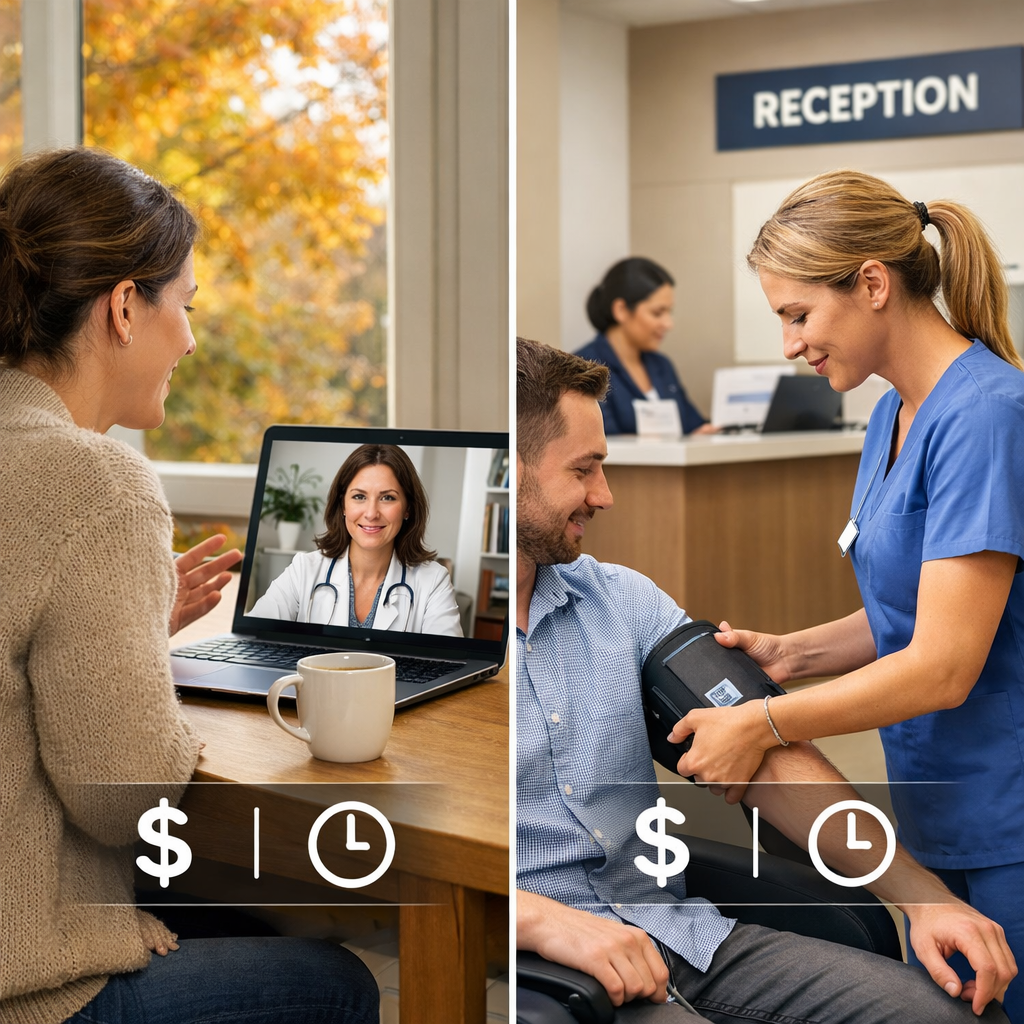
Fall allergy season peaks with ragweed and mold, and the best affordable care often blends fast virtual support with targeted in‑person services. This Too Allergic guide compares telehealth vs local clinics on access, testing, medications, and cost—then outlines a hybrid pathway that starts low-cost online, orders only-when-needed diagnostics, and escalates safely to in‑clinic care if symptoms persist. Evidence shows telehealth reduces travel burden and some emergency visits while maintaining continuity, especially when integrated with local labs and clinics [source: https://www.providertech.com/the-pros-and-cons-of-telehealth/; https://pmc.ncbi.nlm.nih.gov/articles/PMC9013222/]. Below, we translate that into practical steps for ragweed season, with clear safety caveats and pricing context you can use today.
What affordable fall allergy care means
Affordable allergy care means minimizing total out‑of‑pocket costs across visits, medications, and only-when-needed diagnostics—without compromising access, accuracy, or safety. The goal is quick symptom relief at home, selective use of labs or skin testing, and timely escalation for procedures or first‑dose supervision. Too Allergic frames affordability as total cost of care over the whole episode, not just the visit price.
Telehealth can cut travel time and reduce unnecessary emergency department use, lowering indirect and direct costs when integrated with primary and specialty care [source: https://www.providertech.com/the-pros-and-cons-of-telehealth/].
Because ragweed and molds surge in autumn, a hybrid approach—start virtually, add targeted testing, escalate in‑person for procedures—often minimizes costs while preserving clinical quality [source: https://pmc.ncbi.nlm.nih.gov/articles/PMC9013222/].
How telehealth handles fall allergy care
Virtual visits excel at rapid triage, refills, and starting or adjusting allergy medications. Many platforms offer same-day or on-demand scheduling, which reduces travel and waiting while improving continuity for chronic symptoms [source: https://pmc.ncbi.nlm.nih.gov/articles/PMC8590973/]. Large consumer platforms list fast access options as a differentiator [source: https://www.webdoctors.com/blog/telehealth/top-10-online-doctor-consultation-and-telehealth-services-in-the-usa]. Clinicians can send e‑prescriptions to local pharmacies for speed and convenience [source: https://pmc.ncbi.nlm.nih.gov/articles/PMC8590973/].
Limits: virtual care cannot perform physical exams, collect blood or cheek swabs, or administer procedures; some platforms require apps, cameras, or peripherals, which may add friction or cost [source: https://www.providertech.com/the-pros-and-cons-of-telehealth/].
How local clinics handle fall allergy care
In-person clinics provide hands‑on evaluation and procedures telehealth can’t: targeted physical exams, skin‑prick testing, venous blood draws for serum‑specific IgE, and administration of allergy shots under observation. Pricing varies by clinic type and insurance. Retail or urgent care clinics may offer flat visit fees, but external labs and specialist referrals can add costs. For complex cases, clinics enable continuity, escalation, and supervised interventions that improve safety.
Cost comparison and typical price ranges
Telehealth often posts transparent starting prices. In-person costs vary by market, plan design, and facility/lab fees. Expect separate charges for testing and procedures in clinic settings. Telehealth can also save on indirect costs by reducing travel and waiting [source: https://pmc.ncbi.nlm.nih.gov/articles/PMC8590973/]. State rules on parity and reimbursement affect final out‑of‑pocket amounts [source: https://www.ruralhealthinfo.org/topics/telehealth-health-it/].
| Care option | Typical starting price | What’s included | Notes/Sources |
|---|---|---|---|
| GoodRx Care (telehealth) | Under $20 per visit | Virtual consult; prescriptions as needed | Pricing compiled in telehealth price comparisons [source: https://www.nugenmedicine.com/best-telehealth-for-primary-care] |
| K Health (telehealth) | From $29 | Virtual primary care; allergy support | See telehealth price comparisons [source: https://www.nugenmedicine.com/best-telehealth-for-primary-care] |
| Sesame (telehealth) | ~ $34 | Pay‑per‑visit virtual care | Transparent pricing; consumer guide [source: https://www.everydayhealth.com/services/best-telehealth-services/] |
| PlushCare (telehealth) | Membership ~$99/yr or $20/mo; first visit ~$129 w/o insurance | Primary/urgent virtual care | Pricing in service roundup [source: https://www.cnet.com/health/medical/best-telemedicine-services/] |
| Local clinic (primary care/allergy) | Varies widely | Physical exam; can order/perform tests | Facility/lab fees and insurance contracts drive costs; verify before testing |
| Retail/urgent care clinic | Flat visit fees common | Acute symptom care; limited testing | External labs and specialist referrals may add costs |
Diagnostic capabilities and limits
Serum‑specific IgE blood testing measures allergen‑specific antibodies to suggest sensitization patterns; results guide treatment but must be interpreted with symptoms and history. Skin‑prick testing applies small amounts of allergens to the skin to assess immediate reactions, offering rapid, in‑office insights for targeted management.
Virtual visits cannot conduct physical exams or collect samples; if labs are ordered, patients go to local draw sites [source: https://www.providertech.com/the-pros-and-cons-of-telehealth/].
- Telehealth: can order IgE blood tests; patient completes the draw locally. No skin tests, injections, or supervised challenges.
- Local clinics: can perform skin‑prick tests, blood draws, supervised immunotherapy, and procedure‑level evaluations.
Medications managed in each setting
Telehealth can initiate or optimize over‑the‑counter and prescription regimens, then e‑prescribe to a nearby pharmacy for same‑day pickup [source: https://pmc.ncbi.nlm.nih.gov/articles/PMC8590973/]. In‑person clinics are required for first‑dose observation of certain therapies and for escalation to allergy shots.
Common agents include cetirizine, loratadine, fexofenadine, and levocetirizine; intranasal corticosteroids for congestion; and intranasal antihistamines for itch and drip.
OTC antihistamines for fall allergies
- Cetirizine and levocetirizine: strong symptom control; may cause drowsiness in some.
- Fexofenadine and loratadine: typically non‑drowsy, good daytime choices.
See Too Allergic’s guide to fast‑acting non‑drowsy options for more detail: https://www.tooallergic.com/best-fast-acting-non-drowsy-otc-allergy-medications-of-2026-ranked/
Always review interactions and pediatric dosing. If pregnant, breastfeeding, or managing comorbidities, consult a clinician.
Intranasal therapies for congestion and itch
Intranasal corticosteroids reduce nasal inflammation, congestion, and sneezing by blocking multiple inflammatory mediators. Intranasal antihistamines act quickly on itch, sneeze, and runny nose by blocking histamine in nasal tissues. Combination therapy can help moderate‑to‑severe symptoms, especially during heavy ragweed exposure.
Telehealth can prescribe these and route to your pharmacy the same day [source: https://pmc.ncbi.nlm.nih.gov/articles/PMC8590973/]. Antihistamine sprays act within minutes; steroid sprays peak over several days. Technique tips: aim the nozzle slightly outward (away from the septum), use a gentle sniff, and avoid over‑spraying.
SLIT tablets vs drops and first dose safety
Sublingual immunotherapy (SLIT) delivers small allergen doses under the tongue to retrain immune responses over time. FDA‑approved tablets exist for specific pollens (including ragweed); SLIT drops are commonly prescribed off‑label in the U.S. Suitability depends on confirmed sensitization, history, and long‑term adherence.
First‑dose observation may be required for certain SLIT starts; in‑person oversight improves safety. Allergy shots must be administered in clinic and cannot be delivered via telehealth [source: https://www.providertech.com/the-pros-and-cons-of-telehealth/].
Pros/cons at a glance:
- SLIT tablets: FDA‑approved for select allergens; coverage more likely; standardized dosing; daily at‑home after first dose; limited to approved allergens.
- SLIT drops: Customizable mixes; broader allergen coverage; often not insurance‑covered; off‑label in the U.S.; variable formulations and costs.
When telehealth is the better first step
Start virtually for symptom triage, quick refills, initiating OTC/intranasal regimens, and after‑hours questions. This approach can reduce unnecessary ED use and travel burden while offering same‑day access on many platforms [source: https://www.providertech.com/the-pros-and-cons-of-telehealth/; https://pmc.ncbi.nlm.nih.gov/articles/PMC8590973/; https://www.webdoctors.com/blog/telehealth/top-10-online-doctor-consultation-and-telehealth-services-in-the-usa]. If testing is needed, clinicians can order labs and you complete the draw locally. The sequence below aligns with Too Allergic’s hybrid, cost‑first approach.
When an in-person clinic is the safer choice
Choose in‑person care for severe or atypical symptoms, need for physical exam, suspected asthma flares, history of anaphylaxis, or when skin testing or immunotherapy is indicated. Remember: virtual care cannot perform skin tests, blood draws, or supervised shots [source: https://www.providertech.com/the-pros-and-cons-of-telehealth/]. Bring telehealth notes and your medication list to avoid duplicative costs.
A hybrid pathway for cost-effective fall allergy care
- Step 1: Begin with low‑cost telehealth for history, triage, and initial medication plan.
- Step 2: Add targeted testing only if results will change management.
- Step 3: Escalate in‑person for immunotherapy or first‑dose observation if symptoms persist—an approach that balances cost, access, and safety [source: https://pmc.ncbi.nlm.nih.gov/articles/PMC9013222/; https://www.providertech.com/the-pros-and-cons-of-telehealth/].
Step 1 telehealth triage and initial prescriptions
Actions: review history and triggers, align on OTC antihistamines and intranasal therapies, and send e‑prescriptions.
Benefits: minimized travel/wait times and potential reductions in non‑urgent ED use [source: https://pmc.ncbi.nlm.nih.gov/articles/PMC8590973/; https://www.providertech.com/the-pros-and-cons-of-telehealth/].
Red flags for in‑person escalation:
- Wheezing, chest tightness, or resting shortness of breath
- Facial, tongue, or throat swelling
- Fainting, severe dizziness, or bluish lips
- Suspicion of sinus or ear infection with high fever
Step 2 targeted IgE blood testing or skin testing
Telehealth can order serum‑specific IgE tests, but you’ll visit a local lab for the draw; virtual visits cannot collect samples [source: https://www.providertech.com/the-pros-and-cons-of-telehealth/]. Prefer skin‑prick testing for complex polysensitization or need‑it‑today results; prefer blood tests when on antihistamines, with skin conditions, or anticoagulant use. Discuss costs and insurance beforehand; targeted panels avoid low‑value, broad screens.
Step 3 escalation to immunotherapy when indicated
Escalate when symptoms remain moderate‑to‑severe despite optimized meds, sensitization is confirmed, and you prefer disease‑modifying therapy. Allergy shots and supervised first doses must occur in person; virtual care cannot deliver injections [source: https://www.providertech.com/the-pros-and-cons-of-telehealth/]. SLIT requires adherence and safety planning; confirm first‑dose observation requirements.
Pediatric and adult eligibility considerations
- Pediatrics: dose antihistamines by age/weight; ensure caregiver support; coordinate school/daycare allergy plans.
- Adults: review comorbid asthma/COPD, pregnancy/lactation cautions, and occupational exposures.
- For immunotherapy, clinician input is essential on suitability, contraindications, and first‑dose observation.
Access, insurance, and state availability
State parity laws and payer policies determine whether telehealth is covered similarly to in‑person; Medicare and rural clinic rules can differ [source: https://www.ruralhealthinfo.org/topics/telehealth-health-it/]. Platform examples: Sesame lists transparent pricing from about $34 [source: https://www.everydayhealth.com/services/best-telehealth-services/]; K Health from $29 and GoodRx Care under $20 [source: https://www.nugenmedicine.com/best-telehealth-for-primary-care]; PlushCare uses memberships with first visits around $129 without insurance [source: https://www.cnet.com/health/medical/best-telemedicine-services/]. Tech barriers (apps, cameras, connectivity) can affect access and total cost [source: https://www.providertech.com/the-pros-and-cons-of-telehealth/]. As an education resource, Too Allergic encourages verifying coverage, lab fees, and first‑dose supervision requirements before booking.
Safety notes and scope of information
Too Allergic is education‑only—never a substitute for professional care. Always consult licensed clinicians for diagnosis, prescriptions, and immunotherapy decisions. Physical exams, blood draws, and supervised injections are not possible via telehealth; seek in‑person care when safety demands it [source: https://www.providertech.com/the-pros-and-cons-of-telehealth/]. For severe breathing difficulty, facial/tongue swelling, or signs of anaphylaxis, call emergency services immediately.
Frequently asked questions
How much do telehealth allergy visits cost compared to in-person visits
Many telehealth visits start around $20–$34 and up, often saving travel time and facility fees. In‑person clinic prices vary widely and may add lab or facility charges; Too Allergic focuses on total cost (visit, testing, and time).
Can telehealth order IgE blood tests and where do I get them done
Yes—clinicians can order serum‑specific IgE tests during a virtual visit, and you complete the blood draw at a local lab; results are interpreted with your symptoms and history. Too Allergic outlines this hybrid flow throughout the guide.
Which OTC allergy medicines work best for fall ragweed symptoms
Non‑drowsy options like fexofenadine or loratadine suit daytime use, while cetirizine or levocetirizine can be stronger but may cause drowsiness in some. Pairing an intranasal steroid with an antihistamine spray can help; see Too Allergic’s linked guide for comparisons.
Are SLIT tablets or drops covered and who needs first dose observation
FDA‑approved SLIT tablets are more likely to be covered than off‑label SLIT drops in the U.S.; first doses and immunotherapy monitoring typically require an in‑person clinic, and Too Allergic explains the safety steps.
What are signs I should switch from telehealth to an in-person allergist
If symptoms stay moderate‑to‑severe despite optimized meds, you need skin testing or immunotherapy, or you develop red‑flag symptoms (wheezing, severe swelling, fainting), schedule an in‑person allergy evaluation promptly. Too Allergic emphasizes acting on red flags without delay.