Comparing At-Home Allergy Care vs Clinic: Outcomes, Adherence, Satisfaction
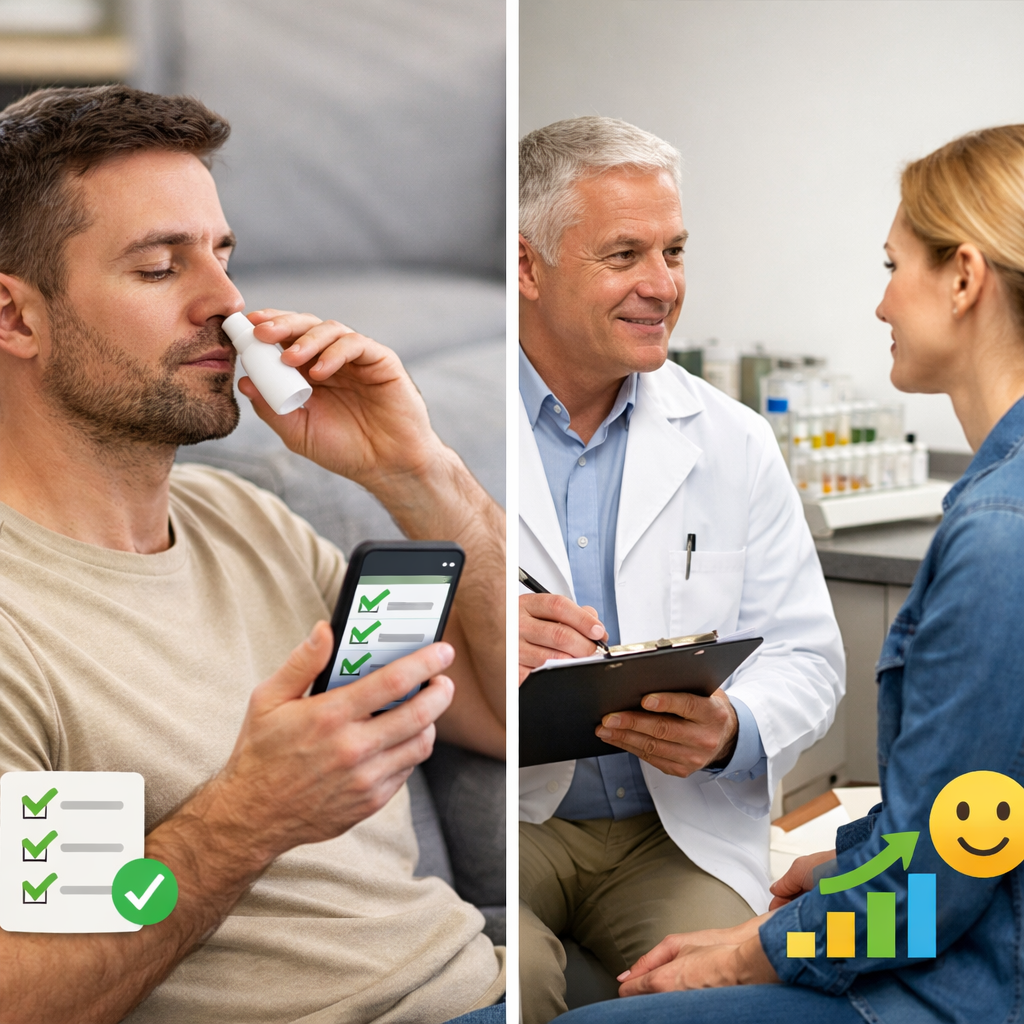
Allergy care is shifting: patients now choose between at-home convenience (self-testing, telemedicine, and home-based therapies) and traditional in-clinic evaluation and treatment. The best path depends on what you value—accuracy, oversight, convenience, cost, or speed—and your risk profile. In short: clinic-based testing still leads for diagnostic accuracy and safety oversight; at-home programs win on access, adherence, and time savings; and hybrid models blend both to improve long-term outcomes. Below, we compare outcomes, adherence, satisfaction, safety, and cost—then map when to choose at-home, clinic, or a hybrid approach.
Overview and key takeaways
- Best for at-home-first: mild-to-moderate seasonal or perennial rhinitis, no anaphylaxis or food allergy concerns, strong preference for convenience and daily routines; pairs well with OTC intranasal steroids, environmental controls, and telehealth follow-up.
- Best for clinic-first: suspected food allergy or history of systemic reactions, uncontrolled asthma, polysensitization requiring precise testing, or when starting higher-risk therapies/biologics.
- Best for hybrid: start with telemedicine and targeted at-home environmental IgE screening, then confirm complex or discordant results in clinic—ideal for rural access and budget-conscious patients. This is the approach we favor at Too Allergic to balance accuracy with access.
- Fast facts: some at-home tests run in 20 minutes and many mail-in results return within days, streamlining decision-making and adherence-friendly routines (company and industry reports vary) at-home allergy testing overview.
- Access-forward view: telemedicine and home routines can raise uptake and satisfaction; in-person care remains critical for precision and safety in higher-risk scenarios.
This article is for general education and does not replace personalized medical advice. Seek emergency care for severe reactions.
How we compare at-home and clinic models
Definitions we use at Too Allergic:
- At-home allergy care: consumer or clinician-ordered mail-in IgE kits (usually finger-prick samples sent to CLIA-certified labs), telemedicine consults, sublingual immunotherapy (SLIT) after supervised start, and in select programs, home-administered biologics; highest convenience but variable test quality and interpretation needs At-home allergy testing basics.
- Clinic-based care: in-person specialist evaluation, skin prick or serum IgE testing under supervision, subcutaneous immunotherapy (SCIT) and clinic-administered biologics; emphasizes accuracy, safety monitoring, and tailored regimens Accuracy and office-based testing context.
Comparison framework: diagnostic accuracy, clinical outcomes, adherence, patient satisfaction, safety/oversight, and cost/access (including rural vs urban reach). Hybrid/telemedicine models combine remote convenience with selective in-person confirmation to improve safety and reduce travel/time burdens Telemedicine and in-home care study.
| Model | Setting & oversight | Diagnostic accuracy | Convenience | Cost/access | Ideal profile |
|---|---|---|---|---|---|
| At-home | Self-testing, telehealth reviews; home-based SLIT after supervised start | Variable for environmental IgE; interpretation needed; food IgG panels not validated | Highest (no travel, rapid scheduling) | Often lower upfront costs; best for rural access | Low-risk rhinitis; motivated daily routines |
| Clinic-based | In-person allergist; supervised testing/therapy | Higher for skin prick/serum IgE; strong confirmation for complex cases | Lower (travel, wait times) | Higher visit costs; travel/time burdens | Food allergy, anaphylaxis risk, asthma instability |
| Hybrid | Start virtual; confirm select findings in clinic | Balances screening speed with in-person certainty | High (targeted visits) | Optimizes both costs and outcomes | Rural/underserved; unclear or mixed results |
Outcomes and diagnostic accuracy
Accurate diagnosis guides the right treatment. Office-based environmental skin and serum testing commonly approach around 90% accuracy, and some manufacturers claim up to 98% for certain office-based food assays—though such claims should be interpreted carefully and confirmed clinically Accuracy and office-based testing context. At-home kits typically use finger-prick blood sent to CLIA-certified labs and can help screen environmental sensitizations; however, food IgG “sensitivity” panels are not scientifically validated to diagnose food allergy and may mislead decisions At-home allergy testing basics.
When to confirm in clinic:
- Any suspected food allergy or prior anaphylaxis.
- Complex multi-sensitization or uncontrolled asthma.
- Discordant results (don’t match your symptoms) or inconclusive screens.
- Before initiating higher-risk therapies.
At-home tests can yield false positives/negatives without expert interpretation; specialist confirmation reduces missteps and risk Are at-home tests reliable?. At Too Allergic, we avoid IgG food “sensitivity” panels and steer complex or high-risk cases to in-person confirmation.
Adherence and real-world use
People stick with what fits their lives. Convenience, privacy, and faster results drive uptake and adherence in at-home and telemedicine programs; some programs report strong satisfaction and symptom improvement, though much of this is company-reported rather than randomized data example program experience; example tele-allergy care.
Daily SLIT vs periodic SCIT:
- SLIT requires consistent daily dosing at home.
- SCIT concentrates care into scheduled clinic visits, which some patients prefer for structure and oversight.
Simple SLIT discipline plan:
- Set a fixed daily reminder.
- Schedule a 90-day telehealth check-in.
- Track refills on a calendar or app.
Follow-up flow that sustains outcomes:
- Start with a clear plan.
- 2–4 week telehealth check for technique and early response.
- 3-month outcome review and medication adjustments.
- 6–12 month reassessment to escalate (immunotherapy) or de-escalate as appropriate.
This cadence reflects Too Allergic’s preference for structured, lightweight follow-up to sustain results.
Patient satisfaction and experience
At-home care removes waiting rooms and commute time, offers flexible scheduling, and can deliver rapid testing with results in days—wins that patients consistently cite as satisfaction drivers at-home allergy testing overview. Telemedicine connects patients with board‑certified allergists for mild-to-moderate issues and can triage to in-person care as needed example tele-allergy care. Some platforms share company-reported improvements after several months of guided care; treat these as early signals, not definitive proof example program experience. Too Allergic frames telemedicine as a first step, with clear thresholds for in-person escalation.
Safety, risk, and patient selection
“Anaphylaxis is a severe, rapid allergic reaction requiring immediate epinephrine and emergency care.” Know this threshold and act quickly if symptoms escalate Are at-home tests reliable?.
Risks of at-home tests:
- False positives/negatives and inter-lab variability.
- Misinterpretation without clinical context.
- Delayed escalation for food allergy or systemic reactions.
Who qualifies for at-home-first:
- Mild-to-moderate seasonal/perennial rhinitis.
- No history of anaphylaxis; no suspected food allergy.
- Stable asthma, if present.
Refer to clinic now:
- Suspected food allergy, systemic reactions, or anaphylaxis risk.
- Uncontrolled asthma or complex, multi-allergen profiles.
- Initiation of biologics or therapies needing close observation.
Too Allergic uses conservative triage: when in doubt, we recommend in-clinic evaluation.
Costs and access for uninsured and rural patients
Travel and logistics matter. In modeling and systems studies, clinic travel distances can be several-fold longer than local primary care (e.g., ~49 vs 12 miles), and in-clinic biologic administration may be less cost-effective than home use; in some analyses, added car travel risk can offset marginal safety gains from clinic-only administration Telemedicine and in-home care study. Access is constrained: only about 1 in 4 patients had access to an allergy clinic, over half waited more than 100 days for referral, and over 80% of GPs rated services as poor in a UK survey BSACI “Allergy: the unmet need”.
Budget-friendly first steps:
- Start an OTC intranasal steroid for congestion; add a non-sedating antihistamine as needed Mayo Clinic allergy guide.
- Tighten environmental controls at home (see below).
- Use telehealth for follow-up (see Too Allergic’s remote vs clinic guide); consider SLIT with FSA/HSA when appropriate example program experience.
Too Allergic emphasizes these basics before moving to higher-cost options.
Role of OTC intranasal steroids and environmental controls
OTC intranasal steroids are first-line for allergic nasal congestion and cost-effective for uninsured patients; non-sedating antihistamines help with sneezing/itching as needed Mayo Clinic allergy guide.
Room-by-room environmental controls:
- Bedroom: dust-mite–proof covers, wash bedding hot weekly, keep humidity 30–50% Mayo Clinic allergy guide.
- Living areas: HEPA-filter vacuum, reduce fabric clutter, damp-dust surfaces.
- Entry/laundry: shoes-off policy, pet-wipe station, hot-wash outdoor clothes during peak pollen.
Practical habits:
- Shower and change clothes after outdoor exposure; run a HEPA vacuum regularly; monitor local pollen and keep windows closed on high days Allergy-soothing home hacks.
These are cornerstone steps in Too Allergic’s at-home plans.
Telemedicine and hybrid pathways
Hybrid allergy care means clinician-led remote management with selective in-person testing or supervised escalation—maximizing access while preserving safety Telemedicine and in-home care study. Telemedicine can connect you to board‑certified allergists for evaluation, medication optimization, and immunotherapy candidacy; higher-risk situations trigger in-person referral example tele-allergy care. For a deeper comparison of virtual platforms, see our overview of remote vs clinic outcomes at Too Allergic: Remote allergy management vs clinic. This is the model Too Allergic prioritizes.
Suggested decision flow:
- Virtual intake and history.
- If appropriate, at-home environmental IgE screen; avoid food IgG panels.
- Start OTC intranasal steroid plus environmental plan.
- Reassess at 4–12 weeks; escalate to targeted clinic testing if symptoms persist or risks emerge.
Allergen immunotherapy options
Allergen immunotherapy retrains the immune system to reduce reactivity to specific allergens over time. Options include subcutaneous injections (SCIT) delivered in clinic and sublingual immunotherapy (SLIT) drops or FDA‑approved tablets taken at home after an initial supervised dose.
| Feature | SCIT (in clinic) | SLIT (at home after supervised start) |
|---|---|---|
| Location | Allergy clinic with observation | Home, after first supervised dose |
| Frequency | Build-up injections weekly → maintenance monthly | Daily dosing (drops/tablets) |
| Safety profile | Higher systemic reaction risk; monitored setting | Generally fewer systemic reactions; local mouth/throat symptoms more common |
| Adherence demands | Keep scheduled clinic visits | Consistent daily routine |
| Best fit | Complex profiles, need for tight clinician oversight, difficulty with daily dosing | Busy families, needle-averse, strong self-management |
SCIT in clinic
SCIT builds from frequent low-dose injections to monthly maintenance under supervision. It’s a strong choice when diagnostic certainty is high and monitoring is needed—such as polysensitized patients or those with asthma control issues. Because systemic reactions, while uncommon, are more likely than with SLIT, clinics maintain observation protocols and emergency readiness; many patients value this structure and support.
SLIT at home
SLIT uses daily allergen drops or tablets at home after an initial supervised dose to confirm tolerance; it fits busy schedules and needle-averse patients Allergy-soothing home hacks. Payment is often out-of-pocket, but many can use FSA/HSA funds example program experience. A simple four-step SLIT routine:
- Take at the same time daily. 2) Avoid food/drink for the recommended window. 3) Track doses in an app. 4) Book a 90‑day telehealth review. With longer pollen seasons in many regions, consistency matters more than ever Allergy-soothing home hacks. Too Allergic promotes simple routines that make daily dosing easy.
When at-home care works best
- Mild-to-moderate seasonal or perennial rhinitis without asthma instability or anaphylaxis history.
- Environmental trigger exploration with an at-home IgE kit interpreted via telehealth; skip food IgG sensitivity panels At-home allergy testing basics.
- SLIT at home after supervised start; layer OTC intranasal steroids and environmental controls as the base.
- Lifestyle wins include no waiting rooms, rapid testing/results, and simpler follow-ups at-home allergy testing overview; example tele-allergy care.
When clinic care is the safer choice
- Suspected or confirmed food allergy, history of systemic reactions, or anaphylaxis risk—testing and management should be specialist-led Are at-home tests reliable?.
- Complex asthma or multi-allergen profiles needing precise skin prick/serum IgE with higher accuracy (≈90% environmental; some assays claim up to 98% for food contexts) Accuracy and office-based testing context.
- Initiation of higher-risk therapies or biologics requiring close monitoring.
A balanced plan for long-term control
- Start: OTC intranasal steroid + environmental controls + trigger diary.
- Telehealth within 2–4 weeks to adjust meds and consider an at-home environmental IgE screen; avoid IgG food panels.
- Escalate: SLIT for appropriate candidates; clinic referral for food allergy suspicion, severe reactions, or unclear diagnoses.
Track outcomes at 3 and 6 months. If symptoms persist, pursue targeted in-clinic testing and discuss SCIT vs SLIT trade-offs to fit your lifestyle, risks, and budget. For platform comparisons and outcomes, see our guide to virtual allergy clinics at Too Allergic.
Frequently asked questions
Is SLIT as effective as SCIT for seasonal allergies?
Both reduce symptoms and medication use over time; the better choice depends on your risk profile and whether you’ll adhere to clinic visits (SCIT) or daily dosing (SLIT). See Too Allergic’s remote vs clinic guide to weigh these trade-offs.
Which option has fewer serious reactions?
SLIT generally has fewer systemic reactions than injection-based SCIT, making it a good fit for many low-risk patients who can manage daily dosing at home. See Too Allergic’s remote vs clinic guide for risk comparisons.
How do I stay consistent with daily SLIT at home?
Take SLIT at the same time daily, set phone reminders, and schedule a 90-day telehealth check-in to review progress and refills. Too Allergic outlines a simple routine you can follow.
When should I avoid at-home testing and see a specialist?
If you suspect a food allergy, have a history of severe reactions, or your results don’t match symptoms, book an in-clinic evaluation. Our Too Allergic guide lists clear red‑flag thresholds.
What budget-friendly steps can I start today?
Use an OTC intranasal steroid for congestion, add dust-mite covers and HEPA vacuuming, and book a telehealth visit to tailor your plan. Too Allergic’s checklists cover these basics in one place.