Children’s Liquid Antihistamines Compared: What Works Fast, What’s Gentle
Caregivers usually want two things from children’s liquid antihistamines: fast relief when symptoms spike and gentle, non-drowsy control for everyday life. Here’s the bottom line: for immediate itch or hives, diphenhydramine (Children’s Benadryl) works fastest but often causes drowsiness and only lasts 4–6 hours. For daily control, second‑generation options—cetirizine (Children’s Zyrtec), loratadine (Children’s Claritin), and fexofenadine (Children’s Allegra)—provide longer coverage with far less sedation. Cetirizine tends to be the “fastest” of the non-drowsy group; loratadine and fexofenadine are the gentlest for school‑day alertness. Below, we explain how these medicines work, when to choose speed versus gentleness, and how to match a liquid to your child’s age, symptoms, and routine.
How liquid antihistamines work in kids
Antihistamines block H1 receptors to dial down histamine-driven symptoms like sneezing, itching, runny nose, and hives. They’re grouped into first‑generation (older, more sedating) and second‑generation (newer, less sedating) classes, and that “generation” difference drives both speed and side effects as well as dosing frequency. First‑generation drugs such as diphenhydramine cross into the brain readily, causing sedation and shorter duration. Second‑generation medicines (cetirizine, loratadine, fexofenadine) are designed to be less sedating and longer‑acting. Common pediatric liquid strengths include diphenhydramine 12.5 mg/5 mL and cetirizine 5 mg/5 mL, and liquids allow more precise, weight‑appropriate dosing than tablets or capsules, especially in younger children, per the NCBI Bookshelf: Antihistamines.
What parents mean by fast and gentle
When caregivers say “fast,” they’re usually thinking about an onset within 30–60 minutes to calm acute itch, hives, or a sudden flare. “Gentle” means minimal drowsiness or cognitive effects with 18–24‑hour, once‑daily control. Expect diphenhydramine to kick in quickly but wear off within 4–6 hours and commonly sedate; by contrast, second‑generation options trade a slightly slower peak for longer coverage and less sedation, according to Nationwide Children’s guidance on Benadryl.
Comparison criteria for this guide
We rate each option by:
- Onset window and duration of relief
- Sedation risk
- Labeled pediatric ages
- Common liquid strength
- Price/availability
Evidence is drawn from product labels, pediatric advisories, and pharmacology references linked throughout. Safety constants across products: use the included measuring device and check active ingredients to avoid duplicate dosing across multiple meds (e.g., allergy + cough formulas).
Children’s Benadryl
Diphenhydramine fits short, urgent episodes—not daily allergies.
Label facts from the Children’s Benadryl label:
- Strength: 12.5 mg/5 mL liquid
- Dosing: every 4–6 hours; do not exceed 6 doses in 24 hours
- Labeled ages (example): 6–11 years with 5–10 mL per dose; use only the enclosed cup
- Typical bottle sizes: 4 fl oz and 8 fl oz
- Availability/price: widely sold; example 8‑oz retail around $10.44 in the retail category pricing
Performance profile:
- Onset about 30–60 minutes; effect 4–6 hours
- Higher sedation and attention/memory effects than second‑generation options
- Paradoxical hyperactivity occurs in roughly 10–15% of kids
Cautionary context: First‑generation antihistamines frequently cause sedation; therapeutic doses have been associated with sedation rates exceeding 50% in pediatric reports (pediatric antihistamine adverse effects review). For daily, school‑day symptoms, most clinicians avoid this sedating antihistamine and reserve diphenhydramine for acute hives or nighttime breakthrough symptoms.
Children’s Zyrtec
Cetirizine syrup (commonly 5 mg/5 mL) offers once‑daily, up‑to‑24‑hour coverage with relatively low sedation and is often favored for itch‑dominant allergies and hives. It may peak a bit slower than diphenhydramine, but families typically see steadier control with far fewer cognitive effects across the day. Many clinicians consider cetirizine a practical “fast but longer‑acting” middle ground for Zyrtec vs Benadryl for hives.
Children’s Claritin
Loratadine is a second‑generation antihistamine known for a gentle, steady profile: once‑daily, non‑drowsy for most children, and effective for seasonal and perennial allergies with fewer cognitive effects than older drugs. It’s a solid default for non‑drowsy long‑term allergy relief, alongside other second‑generation OTC options like cetirizine and fexofenadine (overview of antihistamine brands).
Children’s Allegra
Fexofenadine’s reputation is “clear‑headed” control. As a second‑generation antihistamine with once‑daily convenience and among the least sedating in its class for many children, it’s a strong choice for school days, sports, and activities where alertness matters. Expect 18–24 hours of relief compared with Benadryl’s 4–6 hours.
Side-by-side comparison: speed, duration, and drowsiness
| Active ingredient (example brand) | Common liquid strength | Onset estimate | Duration | Drowsiness risk | Labeled ages (high-level) | Notes |
|---|---|---|---|---|---|---|
| Diphenhydramine (Children’s Benadryl) | 12.5 mg/5 mL | ~30–60 min | 4–6 hrs | Higher | See product label (often 6–11 for liquid doses) | Fastest for acute itch/hives; short acting; excitation in some kids |
| Cetirizine (Children’s Zyrtec) | 5 mg/5 mL | ~1 hr | Up to 24 hrs | Low–moderate (class) | Varies by brand/label | Often preferred for hives/itch with once‑daily dosing |
| Loratadine (Children’s Claritin) | Varies by brand (often 5 mg/5 mL) | ~1–3 hrs | Up to 24 hrs | Low | Varies by brand/label | Gentle, steady control for daily allergies |
| Fexofenadine (Children’s Allegra) | Varies by brand | ~1–2 hrs | 18–24 hrs | Lowest (class) | Varies by brand/label | Good for school‑day alertness |
Takeaway: second‑generation agents generally trade a slightly slower peak for 18–24‑hour, low‑sedation control.
Safety notes and age-based dosing cautions
- The FDA advises no OTC antihistamines or cold medicines for children under 2 years of age (safe use of antihistamines in children).
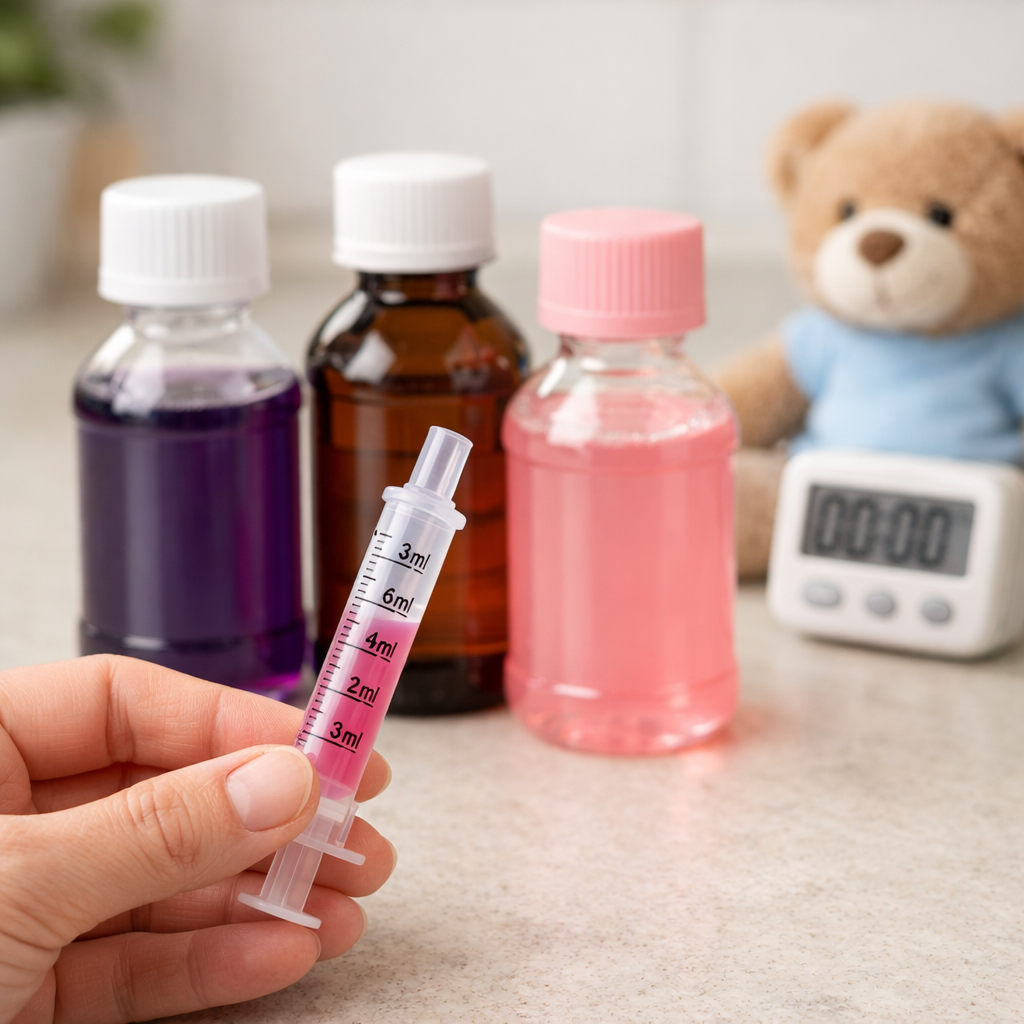
- Use only the included measuring device; never household spoons.
- Do not double doses, take doses too soon, or combine two different antihistamines without clinician advice (Cleveland Clinic antihistamine overview).
- For overdose concerns or unclear dosing, call Poison Help at 1‑800‑222‑1222.
- Example labeling: Children’s Benadryl is labeled for ages 6–11 for its standard liquid; always follow your specific product’s label.
When a first-generation antihistamine makes sense
There’s a role for diphenhydramine in short, targeted situations—think sudden urticaria/hives where rapid onset is paramount and clinician guidance is available. Balance that against well‑documented risks: sedation, impaired motor skills and cognition, and paradoxical hyperactivity in a minority of children. Also note its history of off‑label use as a sleep aid; reporting on diphenhydramine risks underscores it is not a safe or effective long‑term sleep treatment.
Gentle, long-term control for seasonal and indoor allergies
For ongoing seasonal or perennial allergies, second‑generation liquids—cetirizine, loratadine, fexofenadine—are preferred because they last longer and are much less sedating. Quick selection hints:
- School‑day alertness: favor fexofenadine or loratadine for minimal drowsiness.
- Itch‑dominant or hives: cetirizine is commonly recommended. For deeper context on picking a non‑drowsy 24‑hour children’s antihistamine, see Too Allergic’s pediatrician‑reviewed guide to non‑drowsy, 24‑hour kids’ allergy relief.
Smarter at-home allergy plan beyond antihistamines
Medicines work best alongside environment changes. Too Allergic’s nose‑first, home‑first plan:
- Choose a daily second‑generation liquid if medication is needed.
- Start a nose‑first intranasal steroid for congestion/rhinorrhea.
- Reduce in‑home allergen load.
- If symptoms persist 4–6 weeks, escalate to testing and discuss immunotherapy.
Nose-first intranasal steroids for nasal symptoms
Intranasal steroids reduce nasal inflammation to control congestion, sneezing, and runny nose. They work best with daily use and may take several days to 2 weeks for full effect. Intranasal azelastine (an antihistamine spray) is approved for seasonal allergic rhinitis in patients aged 6+, but steroid sprays are typically first‑line for nasal symptoms. Try: start daily, reassess at 2 and 4 weeks; continue if effective, otherwise add/adjust under clinician guidance. Too Allergic follows this first‑line approach to keep daytime drowsiness low.
Allergen reduction at home with HEPA and MERV
HEPA purifiers capture fine airborne particles like pollen, dust‑mite debris, and pet dander. MERV ratings on furnace filters indicate filtration efficiency; use the highest MERV your HVAC allows.
- Run a room HEPA purifier on medium‑high in the child’s bedroom overnight.
- Upgrade the HVAC filter to the highest MERV your system allows; change every 1–3 months.
- Target reservoirs: encase bedding for dust mites; damp‑dust hard surfaces weekly.
When to consider testing and immunotherapy
- IgE blood tests measure allergen‑specific antibodies to identify triggers when skin testing isn’t practical.
- Allergen immunotherapy—SCIT (shots) or SLIT (drops/tablets)—can retrain the immune system over 3–5 years to reduce symptoms and medication needs. Virtual allergy clinics can arrange telehealth consults, lab orders, e‑prescribing, and, in some states, SLIT—ask about first‑dose protocols and coverage details. Too Allergic’s prep checklists can help you organize questions for that visit.
How to choose based on your child’s age, symptoms, and routine
- Under 2 years: avoid OTC antihistamines; call your pediatrician.
- Ages 2–5 with daytime activities: prefer loratadine or fexofenadine for low drowsiness; choose cetirizine if itch/hives dominate.
- Nighttime breakthrough itching: consider clinician‑guided short‑term diphenhydramine; plan daytime non‑drowsy control. Reassess after 4–6 weeks alongside intranasal steroids and home controls; if still symptomatic, consider testing and immunotherapy.
Caregiver perspective and medical-advice disclaimer
Too Allergic’s caregiver‑led ethos comes from lived experience—managing dust‑mite, pollen, nickel, and wood‑dust allergies at home—translated into clear steps families can follow. This guide is informational and not medical advice. Always confirm dosing, age indications, interactions, and ongoing care with a licensed clinician, especially for children under 6 or with complex conditions.
Frequently asked questions
Which children’s liquid antihistamine works fastest?
Diphenhydramine typically acts within 30–60 minutes; among second‑generation options, cetirizine is usually the quickest while still lasting up to 24 hours. For a quick pick, see Too Allergic’s comparison table above.
What’s the gentlest option for long-term use?
Loratadine or fexofenadine are reliable once‑daily choices with very low drowsiness. Too Allergic generally favors these for school‑day alertness.
Is Benadryl safe for my toddler?
Avoid OTC antihistamines in children under 2; for older toddlers, discuss diphenhydramine and exact dosing with your clinician. Too Allergic also recommends confirming your product’s age labeling first.
How should I dose liquid antihistamines safely?
Follow the label, use the included dosing device, and avoid doubling doses or combining antihistamines without advice. If unsure, call Poison Help at 1‑800‑222‑1222; Too Allergic’s dosing guides can help you double‑check amounts.
When should we talk to a pediatrician or allergist?
Seek care for children under 2, severe or recurrent symptoms, or if daily needs persist beyond 4–6 weeks despite medicines and home controls. Too Allergic’s roadmap above outlines when testing and immunotherapy may help.