Children’s Antihistamines vs Nasal Sprays: Faster, Longer Relief Compared
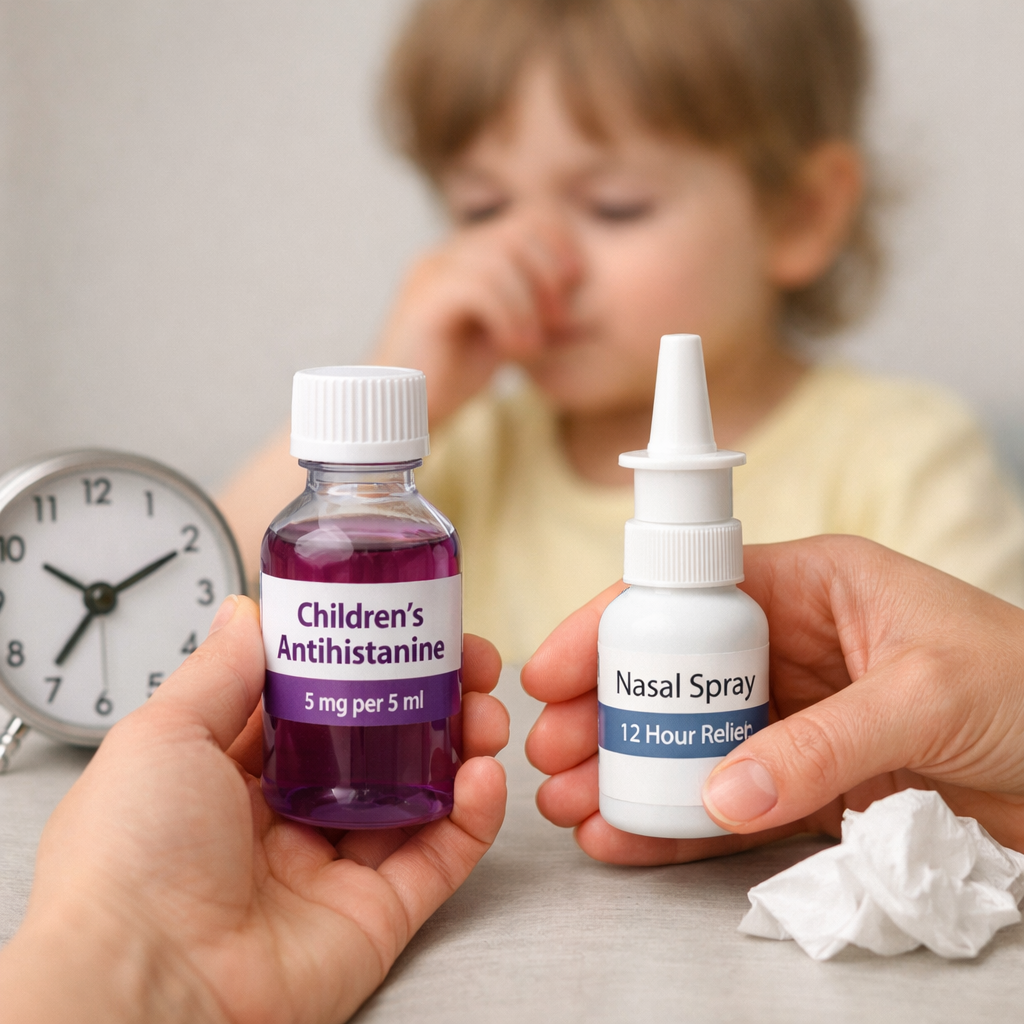
Seasonal sniffles or year‑round dust symptoms can derail school, sleep, and play. If you’re deciding between a children’s oral antihistamine and a nasal spray, here’s the short answer: non‑drowsy second‑generation antihistamines (cetirizine, loratadine, fexofenadine) cover itching, sneezing, and runny nose for about 24 hours but do little for congestion, while nasal steroid sprays control congestion best with consistent daily use. Nasal antihistamine sprays act fastest for sneezing and drip, and combination sprays can pair speed with durable control. These patterns are consistent with pediatric guidance and allergy society recommendations on pediatric allergic rhinitis management (see Norton Children’s and the American Academy of Otolaryngic Allergy). At Too Allergic, we translate this guidance into plain, actionable steps for families.
How to choose for your child’s allergies
Use this Too Allergic 4‑step chooser:
- Age check: confirm your child meets the product’s labeled age.
- Top symptom: itch/sneeze/runny nose vs stuffy nose (congestion).
- Speed: do you need relief in the next hour, or durable daily control?
- Preference: liquid/chewable vs tolerating a nasal spray.
Evidence to anchor your choice: oral antihistamines help runny nose, itch, and eyes but don’t reliably relieve congestion, while intranasal corticosteroid sprays broadly treat congestion, sneezing, itching, and rhinorrhea according to Norton Children’s pediatric guidance and allergy society materials (see Norton Children’s and the American Academy of Otolaryngic Allergy).
Quick chooser table:
| If your child’s priority is… | Consider first | Why |
|---|---|---|
| Fast relief of sneeze/itch/runny nose | Nasal antihistamine spray or cetirizine | Quick onset for sprays; cetirizine starts in ~1 hour |
| All‑day non‑drowsy school coverage | Fexofenadine or loratadine | Minimal sedation; ~24‑hour effect |
| Persistent or dominant congestion | Daily intranasal corticosteroid (INCS) | Best congestion control with consistency |
| Mixed symptoms and tough days | Combination nasal spray | Pairs fast onset with anti‑inflammatory control |
What “fast” and “lasts all day” mean
“Fast onset” means the time from dose to noticeable relief. In children, cetirizine can work in about 1 hour, fexofenadine around 2 hours, and loratadine closer to 3 hours. Nasal antihistamines act locally and quickly, while steroid nasal sprays need daily use for several days to reach fuller effect (Norton Children’s; American Academy of Otolaryngic Allergy).
“Lasts all day” means relief close to 24 hours per labeled dose. Second‑generation oral antihistamines generally provide once‑daily coverage, and Children’s Astepro (azelastine) is marketed for up to 24‑hour relief depending on dose and age indications (Norton Children’s; Children’s Astepro product label).
Single‑dose vs cumulative control:
- Single‑dose duration: oral antihistamines; nasal antihistamine sprays.
- Cumulative daily control: intranasal corticosteroids build effect over days to weeks.
Safety first and age limits
Caution: Per pediatric and FDA‑aligned guidance, avoid giving OTC decongestants or antihistamines to children under age 2. Always confirm dosing and age cutoffs on the label and with your clinician (Norton Children’s pediatric guidance).
Too Allergic follows these pediatric safety guardrails. Diphenhydramine is no longer first‑line for routine allergies due to sedation and overdose risk; choose non‑drowsy antihistamines for school days when possible (Norton Children’s pediatric guidance). Children’s Astepro dosing: ages 6–11 years, 1 spray per nostril every 12 hours (maximum 2 sprays per nostril per day); not for children under 6. Verify product labels and consult your pediatrician (Children’s Astepro product label).
Symptom targets and use cases
- Itching/sneezing/runny nose and need it fast: oral antihistamines or nasal antihistamine sprays. Expect a possible bitter taste and local irritation with nasal antihistamines (reviewed in intranasal antihistamine literature).
- Congestion dominant or persistent: intranasal corticosteroid sprays are first‑line; daily use for weeks yields best control and reduces overall nasal inflammation (allergy society guidance).
- Mixed symptoms or tough days: combination nasal sprays (antihistamine + steroid) can offer quicker onset with durable control; supportive pediatric trial data exist for this approach.
Oral antihistamines
Oral antihistamines shine for runny nose, sneezing, and itchy eyes with once‑daily convenience, but they do not reliably relieve nasal congestion. Consider liquid or chewable formats for younger kids, and time doses to avoid sedation during class (favor fexofenadine or loratadine for school).
At‑a‑glance:
| Medicine | Typical onset | Sedation notes | Duration |
|---|---|---|---|
| Cetirizine | ~1 hour | May cause drowsiness in some kids | ~24 hours |
| Loratadine | Up to ~3 hours | Usually minimal; rare drowsiness | ~24 hours |
| Fexofenadine | ~2 hours | Generally nonsedating | ~24 hours |
(Anchored to Norton Children’s pediatric guidance.)
Intranasal corticosteroid sprays
Intranasal corticosteroids (INCS) are localized anti‑inflammatory nasal sprays (e.g., fluticasone, budesonide, mometasone) that reduce lining swelling, itching, sneezing, and runny nose with minimal systemic exposure; they are a mainstay for pediatric allergic rhinitis (systematic review of intranasal corticosteroids in children; American Academy of Otolaryngic Allergy).
Evidence and expectations:
- INCS are mainstay therapy; no clear proof one INCS is superior to another (systematic pediatric review).
- Daily use for a few weeks is needed for full benefit; they broadly treat congestion plus other nasal symptoms (allergy society guidance).
- Materials for Children’s Flonase Sensimist describe multi‑pathway action on nasal inflammation (Children’s Flonase Sensimist).
Intranasal antihistamine sprays
Nasal antihistamine sprays are topical H1 blockers (e.g., azelastine, olopatadine) applied to the nose that quickly reduce nasal itch, sneezing, and rhinorrhea. Common drawbacks include bitter taste, local irritation, and potential nosebleeds with poor technique (review of intranasal antihistamines; American Academy of Otolaryngic Allergy).
Children’s Astepro specifics: a steroid‑free azelastine spray marketed for up to 24‑hour relief; ages 6–11 dose is 1 spray per nostril every 12 hours (max 2 sprays/nostril/day); not for under 6 (Children’s Astepro product label).
Technique tips to reduce side effects: aim the nozzle slightly outward away from the septum, keep the head neutral, sniff gently (don’t snort), and moisturize if dry—steps that also reduce epistaxis risk (American Academy of Otolaryngic Allergy).
Combination nasal sprays
Pediatric evidence supports dual‑action sprays when monotherapy falls short. In a randomized pediatric trial of GSP301 (olopatadine + mometasone) with 446 children ages 6–11, the combination improved reflective total nasal symptom score by −0.6 versus placebo (P=.001) over 14 days, with treatment‑emergent adverse events 12.0% vs 10.4% on placebo (GSP301 pediatric trial).
Use case: children needing both rapid onset and persistent control of congestion/inflammation. Consider when either an INCS or a nasal antihistamine alone underperforms.
Side-by-side comparison
| Option | Speed | Lasts all day | Best for | Common drawbacks | Age notes |
|---|---|---|---|---|---|
| Oral antihistamines (cetirizine, loratadine, fexofenadine) | Medium (1–3 h) | Yes (~24 h) | Itch, sneeze, runny nose | Possible drowsiness (less with fexofenadine/loratadine) | Follow label; many products approve pediatric use with age‑based dosing |
| Intranasal corticosteroids (fluticasone, budesonide, mometasone) | Slow (days to weeks) | With daily use | Congestion plus overall nasal control | Local dryness, nosebleeds if technique is poor | Check age minimums per product |
| Nasal antihistamines (azelastine, olopatadine) | Fast (minutes) | Yes (some up to 24 h) | Quick relief of sneeze/itch/runny nose | Bitter taste, irritation, possible epistaxis | Children’s Astepro: 6–11 labeled; not for <6 |
| Combination sprays (antihistamine + steroid) | Fast + durable with daily use | With daily use | Mixed symptoms and persistent congestion | Cost, availability by Rx; taste | Pediatric use varies; clinician guidance recommended |
Many pediatric options are available over the counter at pharmacies and online, often with store brands and coupons (see Walgreens kids’ nasal sprays; Target kids’ nasal sprays).
Real-world fit for families
Too Allergic favors simple, sustainable routines:
- School days: morning fexofenadine or loratadine for non‑drowsy, 24‑hour coverage; add a daily INCS if congestion persists.
- Peak pollen weeks: maintain a daily INCS for baseline control; layer a nasal antihistamine on high‑exposure days for fast breakthrough relief.
Look for FSA/HSA‑eligible labels and multi‑pack or store‑brand options to keep budget‑friendly allergy care on track.
Nickel and environmental allergies context
These medicines target environmental allergic rhinitis (dust mites, grasses, trees). They won’t address contact nickel allergy rashes; for nickel, avoidance and skin care drive control. Pair pharmacotherapy with environmental steps like dust‑mite covers and smart pollen timing. For deeper background, see Too Allergic’s parent‑focused overview of non‑drowsy children’s allergy relief.
When to try telemedicine or allergen immunotherapy
Allergen immunotherapy is a multi‑year, clinician‑guided desensitization program via shots or sublingual tablets/drops that trains the immune system to react less to specific allergens, often reducing symptoms and medication use for environmental allergies.
Use telemedicine for dosing questions, side‑effect triage, and to discuss prescription options such as ipratropium for profuse runny nose. Confirm pediatric suitability, logistics, and insurance coverage before starting, and choose a plan your family can sustain.
Our recommendation framework
This Too Allergic framework keeps choices practical and safe.
- Identify the top symptom (itch/sneeze vs congestion) and confirm age eligibility.
- Match speed vs durability: need it fast → nasal antihistamine or cetirizine; need all‑day congestion control → daily INCS; mixed and persistent → consider a combination spray with clinician input.
- Reassess after 1–2 weeks; escalate to your pediatrician/allergist if control remains suboptimal.
Safety recap: under 2—avoid decongestants/antihistamines; prefer non‑sedating options for school; teach proper spray technique to lower nosebleed risk. Track symptom scores and any sedation to fine‑tune timing and product choice.
Frequently Asked Questions
Which children’s allergy medicines work the fastest?
Too Allergic typically starts on‑demand relief with a nasal antihistamine spray or cetirizine because they act fastest for sneezing and runny nose. For congestion, daily steroid nasal sprays are more reliable though the onset is slower.
What helps congestion best if we need all-day relief?
Too Allergic generally recommends a daily intranasal corticosteroid for the most effective all‑day congestion control once it builds over several days. Some families add a nasal antihistamine for faster breakthrough relief.
Is cetirizine too sedating for school days?
Cetirizine can cause drowsiness in some kids. If sedation is a concern, Too Allergic suggests fexofenadine or loratadine and considering evening dosing if your clinician agrees.
Are nasal sprays safe for long-term daily use in kids?
Yes—Too Allergic follows pediatric guidance that daily intranasal corticosteroids are safe when used correctly. Teach proper technique and check in with your child’s clinician if nosebleeds or irritation occur.
When should we see a pediatrician or allergist?
If symptoms persist after 1–2 weeks of consistent use, affect sleep or school, or if your child is under 2, see a clinician. Too Allergic recommends earlier care for severe congestion, recurrent infections, or medication side effects.
Medical disclaimer
Too Allergic is an independent, parent‑advocate resource. Our content is for educational purposes only and is not a substitute for professional medical advice, diagnosis, or treatment. Always confirm medications, dosing, and care plans with a licensed clinician, especially for children.