
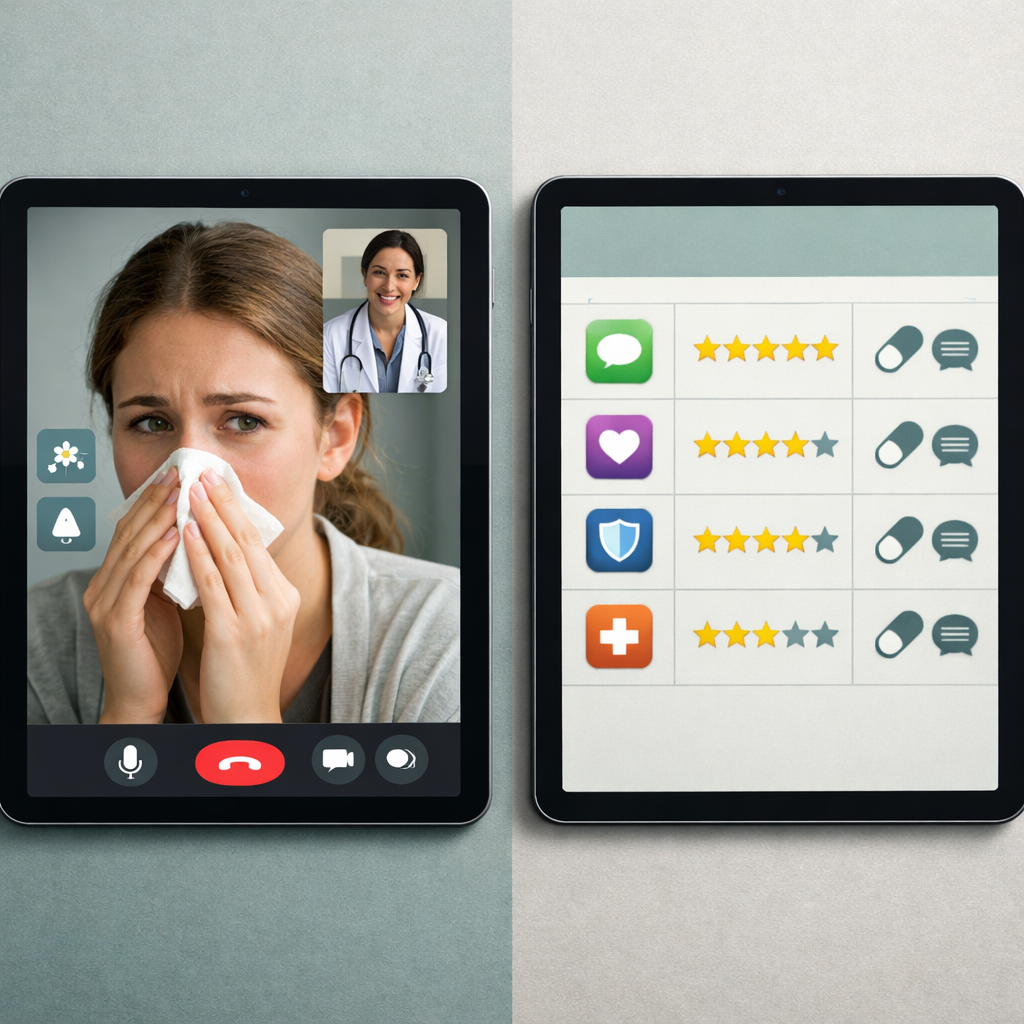
Best Telehealth Platforms for Allergy Management: Side-by-Side Comparison
Finding the best telehealth solution for allergy management comes down to speed versus continuity. If you need a fast virtual allergy visit for a seasonal flare, a direct-to-consumer (DTC) platform is usually the simplest path. If you’re planning immunotherapy or need rigorous documentation across visits, look for an integrated telehealth-plus-EHR system that supports allergy-specific workflows. Telehealth uses digital tools to deliver health information, prevention, monitoring, and medical care remotely, spanning live visits, messaging, and remote monitoring, per a U.S. telehealth overview U.S. telehealth overview. Too Allergic compares options neutrally across food, metal/nickel, pet, and environmental allergies. Educational only; not medical advice.
How to choose a telehealth platform for allergies
Start with an honest triage of your needs, then match to the right model. Too Allergic’s pick-by-need approach below reflects this trade-off.
- Define your need
- Quick advice or refill: Think first-line DTC allergy telemedicine.
- Ongoing immunotherapy, oral challenge planning, or formal allergy testing documentation: Choose a clinic-based platform with integrated EHR and billing that supports allergy logs, dosing, and observation.
- Check integration
- For long-term care, confirm EHR connectivity, billing, immunotherapy dosing logs, and vial inventory and observation tracking, ideally inside one system allergy EHR capabilities.
- Confirm access
- Verify insurance coverage, state licensing, typical wait times, after-hours options, and whether you can message your online allergy doctor between visits.
Quick definitions
- Synchronous care: Real-time video or phone; best for acute symptom review and shared decision-making U.S. telehealth overview.
- Asynchronous care: Store-and-forward messaging and photos; efficient for contact dermatitis images or routine questions U.S. telehealth overview.
- Remote patient monitoring: Home devices or diaries (e.g., peak flow for asthma telehealth) feeding data to clinicians over time U.S. telehealth overview.
Use case fit at a glance
- Seasonal allergic rhinitis refill → DTC platform.
- Mild asthma controller/inhaler renewal → DTC platform with same-day availability.
- Subcutaneous or sublingual immunotherapy tracking → Integrated telehealth+EHR with dosing and observation logs.
- Patch-test follow-up or chronic dermatitis with photos → Asynchronous messaging paired with live video as needed.
What telehealth can and cannot do for allergy care
Benefits
- Reduces travel burden, expands access for rural or mobility-limited patients, and can shorten time to care for common issues Mayo Clinic telehealth explainer.
- For selected conditions, outcomes can be comparable to in-person care; a large academic analysis found telehealth as effective as clinic visits on multiple measures Yale analysis of telehealth effectiveness.
Limits
- Remote exams can miss subtle findings; imaging/video quality and privacy practices vary across platforms U.S. telehealth overview; Mayo Clinic telehealth explainer.
- Overuse risk: a large-employer analysis cited in the U.S. telehealth overview reported potential overutilization in 88% of 1.25 million visits and an added $45 per user for some acute respiratory illnesses.
Go in person now if you have
- Suspected anaphylaxis or recent severe reaction.
- Severe or worsening asthma symptoms.
- Fever and focal signs suggesting infection that needs an exam.
- Need for skin testing, oral food challenge, or injections requiring observation.
Evaluation criteria for this comparison
Too Allergic scored platforms on what matters for allergy care:
- Access: Visit speed, insurance acceptance, state coverage, and price clarity.
- Clinical fit: Allergy testing documentation, immunotherapy scheduling/dosing/observation, refill tools, and patient portals.
- Integration: EHR and billing interoperability, APIs, and remote monitoring support telehealth platform feature and integration comparison.
- Quality and safety: Support for tracking access, appropriate referral rates, and emergency referrals, aligned with quality frameworks HEDIS telehealth quality study.
Weighted rubric
- Clinical fit: 30%
- Access: 25%
- Integration: 25%
- Cost/insurance: 20%
What is a KPI?
Key Performance Indicators are measurable signals that track whether telehealth programs deliver timely, safe, and effective care. In allergy care, common KPIs include time-to-visit, resolution without escalation, appropriate referral rates, adherence to immunotherapy schedules, and emergency referral rates HEDIS telehealth quality study. Too Allergic uses these signals when benchmarking platforms.
Teladoc
Teladoc offers broad primary and urgent care coverage with same- or next-day availability and wide commercial insurance acceptance, including through employer networks—an efficient path for a virtual allergy visit focused on rhinitis refills, inhaler renewals, or triage roundup of online allergy services. Expect costs to vary by plan and region. As a DTC platform, it may not include allergy-specific EHR modules for immunotherapy.
Best for
- Fast primary‑care–style allergy visits
- Seasonal symptoms and medication management
- Triage to in-person allergy testing when indicated
Amwell
Amwell provides live video care, generally with providers available within 24 hours and many insurance plans accepted, suitable for sinus/allergy flares, simple rashes, and guidance on OTCs versus prescriptions roundup of online allergy services. It is not built for complex immunotherapy workflows and is better for non-urgent, episodic needs than longitudinal dosing programs.
Best for
- Same‑week symptom relief and quick prescriptions
- Clarifying when to escalate to a specialist
PlushCare
PlushCare combines same-day appointments with a membership model that’s often summarized as $19.99/month or $99/year, with a first month free, and many insurers accepted roundup of online allergy services. Its continuity focus and messaging can support ongoing refills and follow-ups; verify whether your clinician can document allergy testing results inside your record if you plan future immunotherapy.
Best for
- Repeat care with easy follow-up messaging
- Patients who prefer a membership approach
MDLive
MDLive typically connects patients to a clinician within about an hour for urgent needs, with multi-specialty options including psychiatry and therapy (psychiatry may have longer waits) and broad insurance participation roundup of online allergy services. Expect limited specialty EHR features for immunotherapy; use it for quick refills and mild exacerbations.
Best for
- Rapid access for refills and mild flares
- After-hours questions that don’t require exams
Klarity Health
Klarity pairs patients with licensed, board-certified providers—sometimes within 24 hours—and advertises low-cost consults in some summaries, appealing for rapid seasonal allergy care and straightforward prescriptions roundup of online allergy services. Confirm fine-print pricing and whether your clinician can produce allergy-specific documentation.
Best for
- Speed and affordability for simple allergy issues
- Short, targeted visits with clear next steps
Sesame Care
Sesame is a direct-pay marketplace with transparent pricing, ideal for quick consults without insurance complexity and for single-issue visits like antihistamine or inhaler refills telehealth platform feature and integration comparison. The trade-off is minimal EHR or insurance workflow integration, making it less suitable for immunotherapy tracking.
Best for
- One-off refills and medication questions
- Price shoppers who don’t want to navigate benefits
SmartClinix
SmartClinix is a provider-facing telehealth platform with integrated EHR, billing, and third-party API options that reduce double data entry; pricing commonly starts around $299/month for practices telehealth platform feature and integration comparison. It fits clinics running immunotherapy programs with scheduling, injection dose tracking, observation logs, and vial inventory control via integrated modules allergy EHR capabilities.
Best for
- Allergy practices and hybrid clinics
- SCIT/SLIT programs needing dosing and observation logs
Side-by-side comparison summary
Snapshot reflects Too Allergic’s allergy-focused evaluation; confirm current details with each platform.
| Platform | Best for | Insurance | Typical availability | Integration depth | Notable allergy fit |
|---|---|---|---|---|---|
| Teladoc | Fast primary-care allergy visits, refills | Broad commercial coverage | Same-/next-day | Low (DTC; limited allergy EHR) | Rhinitis, inhaler renewals, triage |
| Amwell | Acute, non-urgent needs via live video | Many plans accepted | ~24 hours | Low (DTC) | Sinus/allergy flares, simple rashes |
| PlushCare | Ongoing refills with messaging, membership | Many plans accepted | Same-day | Low–moderate (DTC + portal) | Continuity for meds, check-ins |
| MDLive | Rapid refills, mild exacerbations | Many plans accepted | Often within ~1 hour | Low (DTC) | After-hours questions, quick prescriptions |
| Klarity | Speedy, affordable simple care | Varies | Within ~24 hours | Low (DTC) | Straightforward seasonal care |
| Sesame Care | Direct-pay, single-issue visits | Direct pay | Same-day in many areas | Low (no deep EHR) | Transparent pricing for refills |
| SmartClinix | Clinic-level immunotherapy workflows | Practice contracts | N/A (provider platform) | High (EHR, billing, APIs) | Dosing logs, vial inventory, observation tracking |
Who should pick what
Based on the rubric above, Too Allergic suggests:
- Quick refills and triage: Teladoc, Amwell, MDLive, Klarity, Sesame.
- Clinic-level immunotherapy and longitudinal workflows: SmartClinix or an allergy EHR–integrated solution.
For deeper comparisons, see Too Allergic’s in-depth ranking of top virtual allergy clinics (https://www.tooallergic.com/top-rated-virtual-allergy-clinics-expert-telehealth-care-compared-2025/).
Pricing, insurance, and total cost of care
- Memberships and per-visit: PlushCare is often summarized at $19.99/month or $99/year with a first month free, alongside insurance billing for visits roundup of online allergy services.
- Practice platforms: SmartClinix often starts near $299/month at the clinic level telehealth platform feature and integration comparison.
- DTC variability: Prices vary by region and coverage; Sesame emphasizes transparent direct-pay rates telehealth platform feature and integration comparison.
Context: Telehealth can reduce travel and time costs, but utilization may rise. A national overview reported potential overuse in 88% of 1.25 million visits and about $45 more per user for some acute respiratory illnesses U.S. telehealth overview.
Mini worksheet before you book
- Expected virtual visits per month (peak allergy season vs off-peak)
- Insurance coverage and copay/coinsurance
- Medication refill frequency and prior authorizations
- Need for specialist referrals, testing, or immunotherapy
For a planning deep-dive, see Too Allergic’s guide to subscription versus pay‑per‑visit choices (https://www.tooallergic.com/comparison-subscriptionbased-vs-paypervisit-allergy-telehealth-for-longterm-relief/).
Integration needs for allergy workflows
Must-haves for continuity
- Allergy test documentation, longitudinal immunotherapy dosing and observation tracking, allergen extract/vial inventory, and secure patient portals for follow-up and adherence allergy EHR capabilities.
- Many practices rely on cloud allergy EMRs with built-in telemedicine and portals to streamline care allergy EMR adoption trends.
What is EHR integration?
EHR integration means your telehealth platform securely exchanges patient data—medications, test results, dosing logs—with your electronic health record and billing systems via standards or APIs. Strong integration reduces errors, duplicate work, and missed steps in immunotherapy or long-term allergy management telehealth platform feature and integration comparison. Too Allergic weighs integration heavily in our scoring because it affects safety and continuity.
Checklist to compare platforms
- API/HL7/FHIR data exchange
- Billing and claims integration
- Immunotherapy modules (scheduling, dosing, observation, inventory)
- Patient portal messaging and education
- Remote monitoring readiness (e.g., peak flow data, symptom diaries)
Safety, quality, and when to go in person
Telehealth can support better preventive and chronic care performance; exposure to telehealth correlated with stronger HEDIS quality metrics in one study HEDIS telehealth quality study. Balance that with privacy and video quality constraints, and confirm platform security and consent practices before sharing images or data U.S. telehealth overview.
When to go in person
- Suspected anaphylaxis or rapidly worsening symptoms
- Poorly controlled asthma or persistent wheeze
- Skin testing, oral challenges, or injections requiring observation
- Concerns about infection or exam findings that need hands-on assessment
Suggested allergy telehealth KPIs
- Time-to-visit, resolved-on-platform rate, appropriate referral rate, emergency referral rate, adherence to immunotherapy schedule HEDIS telehealth quality study.
Recommendations by use case
- Seasonal allergic rhinitis flare or refill: Choose DTC platforms (Teladoc, Amwell, MDLive, Klarity, Sesame) for speed and broad insurance/direct-pay options.
- Pet or environmental allergy with periodic check-ins: DTC is fine for meds-only; pick integrated telehealth+EHR if adding testing or immunotherapy.
- Nickel/metal contact dermatitis with photo review: Use asynchronous messaging with clear images; escalate to dermatology/allergy in person if persistent.
- Immunotherapy (SCIT/SLIT) and long-term dosing logs: Use provider-facing platforms or specialty EHR with telehealth modules (e.g., SmartClinix or an equivalent) allergy EHR capabilities; telehealth platform feature and integration comparison.
If you’re undecided, scan Too Allergic’s side-by-side table above to match your use case to the right platform.
4-step selection flow
- Gauge severity and red flags.
- Decide DTC speed versus integrated workflow depth.
- Verify insurance or direct-pay costs.
- Check privacy practices and your plan to track KPIs.
Too Allergic’s role and medical disclaimer
Too Allergic is an information resource focused on food, metal/nickel, pet, and environmental allergies. We synthesize patient experiences and market data to compare care options and telehealth models. This content is educational and not medical advice. Always seek diagnosis and treatment from licensed professionals, and use telehealth appropriately; escalate urgently in emergencies.
Frequently asked questions
Can telehealth providers prescribe allergy medications?
Yes—after a virtual consult, licensed clinicians can e‑prescribe common allergy meds, including antihistamines and inhalers, when appropriate. Too Allergic outlines which scenarios still require in‑person care.
Is telehealth covered by insurance for allergy visits?
Many plans cover virtual allergy visits, but coverage varies by state and plan. Check your benefits and expected copays before scheduling or use Too Allergic’s pricing notes to estimate out‑of‑pocket costs.
Which allergy issues are suitable for telehealth versus in person?
Telehealth works for seasonal symptoms, refills, mild rashes, and self‑care guidance. Go in person for severe asthma, suspected anaphylaxis, skin testing, oral challenges, or supervised immunotherapy.
How should I prepare for an online allergy visit?
List symptoms, triggers, and meds; upload clear photos if relevant; and have recent home vitals or peak flow ready. Test your internet, camera, and lighting.
What privacy and data security factors should I check?
Look for clear statements on encryption, data‑sharing, and EHR integrations, and review consent forms. Too Allergic recommends avoiding public Wi‑Fi during visits and using platform security settings.