Best Home Allergy Test for Kids: Pediatrician-Informed Options Explained
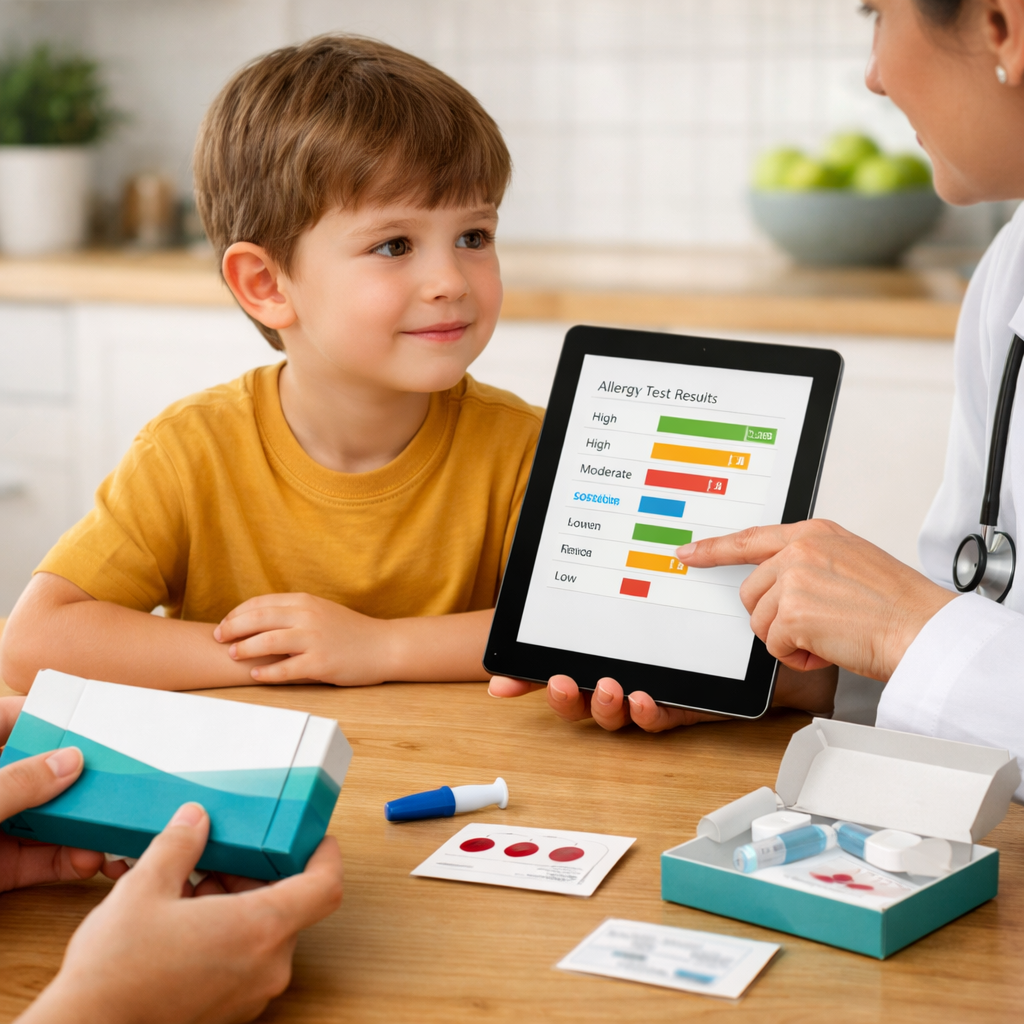
Parents want fast, safe answers. For kids with classic environmental symptoms—sneezing, stuffy/runny nose, itchy eyes—the best home allergy test is a validated, CLIA-lab specific IgE panel focused on inhalant allergens like pollens, dust mites, molds, and pet dander. Finger-prick IgE testing is commonly used in at-home kits and works well for screening airborne triggers, with clinician review and digital results in days, not weeks, as outlined in Healthline’s explainer on at-home allergy tests. Food allergy diagnosis, however, should not rely on home kits; it requires clinical evaluation and, when appropriate, supervised oral food challenges. Specific IgE testing measures allergen-targeted IgE antibodies and can flag sensitization, while IgG/IgG4 “sensitivity” tests lack validation and often mislead families, a caution echoed by Medical News Today’s overview of at-home allergy tests. This article is educational and not medical advice; partner with your pediatrician or a board‑certified allergist to interpret results and plan care.
Quick answer for parents
- Best home screen: Choose a specific IgE inhalant panel from a CLIA‑certified lab. Too Allergic prioritizes validated indoor/outdoor panels with clear pediatric reporting; for example, Everlywell’s Indoor & Outdoor Allergy Test measures IgE to 40 common airborne allergens, routes samples to CLIA-certified labs, and includes clinician review, with typical results about five business days after the lab receives your kit, per Healthline’s guide.
- Limits: Do not use at-home kits to diagnose food allergies. Supervised oral food challenges remain the clinical standard to confirm or rule out food allergy, as highlighted by CU Anschutz on home food allergy kits.
- Safety first: If your child has had severe reactions or suspected anaphylaxis, Too Allergic advises skipping home testing and seeing an allergist. At-home results can include false positives and are easy to misinterpret without medical input—concerns emphasized by Lee Health clinicians on reliability of at-home tests.
How at-home allergy tests work for kids
Specific IgE testing measures allergen-specific IgE antibodies in a child’s blood to indicate risk of immediate-type allergic reactions. It can screen for likely environmental triggers but cannot, on its own, confirm clinical allergy; results must be matched to real symptoms and sometimes followed by supervised testing.
Most kits use a finger‑prick blood sample you collect at home and mail to the lab. Some vendors also offer venous draws through partner networks (e.g., large national labs) for families who prefer a professional collection, options noted in Greatist’s 2024 roundup of at-home allergy tests. Look for CLIA/ISO credentials and clear reporting. Typical turnaround time is 3–7 business days after lab receipt, with occasional fast‑track options near 48 hours; cross‑border shipping can add delays, according to Medical News Today’s overview. These are the same filters Too Allergic uses in our recommendations.
What pediatricians recommend for home screening
Pediatricians are generally comfortable with at-home specific IgE panels to narrow environmental triggers when symptoms are classic (seasonal sneezing, watery/itchy eyes, chronic rhinitis). These panels are not ideal for diagnosing food allergy—history, exam, and supervised challenges remain key, as summarized by Healthline’s explainer.
Avoid unvalidated methods. IgG/IgG4 “food sensitivity” panels and hair/bioresonance tests lack scientific support and can drive unnecessary diet restrictions, a warning reinforced in Medical News Today’s review. And remember the ceiling: home kits cannot replace an allergist’s evaluation; interpretation errors and false positives are common without clinical context, as Lee Health cautions. Too Allergic echoes this approach: use home panels to narrow likely inhalant triggers, not to diagnose foods.
What to compare when choosing a kit
Use this quick checklist from Too Allergic to make a confident pick.
| Kit (example) | Sample type | Allergens covered | Lab accreditation | Pediatric clinician review | Turnaround time | State restrictions | Cost |
|---|---|---|---|---|---|---|---|
| Everlywell Indoor & Outdoor | Finger‑prick at home | ~40 inhalant allergens | CLIA‑certified lab | Included | ~5 business days after lab receipt | Some states restrict DTC testing (e.g., NY/NJ) | Mid‑range |
| imaware IgE Allergy Test | Finger‑prick at home | Broad inhalant panel | CLIA/quality‑accredited lab | Report designed for clinician follow‑up | 3–7 business days typical | Check availability by state | Mid‑range |
| ACCESALABS Cat & Dog Panel | Venous draw at partner lab (e.g., Quest sites) | Focused pet dander | Most partner sites are CLIA‑certified | Results suitable for clinician review | Often faster due to in‑person draw | Varies by state/location | Lower‑cost (targeted) |
| TestMyAllergy Allergy 35 | Finger‑prick (often UK lab routing) | 35 common inhalants | International lab accreditation | Basic report | Turnaround may extend with international shipping | Cross‑border limits possible | Budget |
Notes:
- Finger‑prick vs venous draw: professional draws (e.g., at large partner labs with thousands of locations) can be easier for some kids and speed processing, a practical difference highlighted by Greatist’s roundup.
- Logistics: most kits report in 3–7 days; some offer 48‑hour fast‑tracks. State laws can limit direct‑to‑consumer testing (often including New York and New Jersey), which Medical News Today notes.
imaware IgE Allergy Test
Greatist named imaware “Best Overall” among at-home allergy tests, citing its broad inhalant panel and balanced reporting for clinical follow‑up. For kids with nose/eye‑dominant symptoms across seasons, it can efficiently screen for likely culprits (pollens, mites, molds, pets) using a finger‑prick sample. Parents typically choose it for its coverage breadth, CLIA‑aligned lab standards, and clear result ranges that make pediatric interpretation straightforward. Turnaround is in line with the category (about 3–7 business days), with digital access and shareable PDFs for your pediatrician or allergist. These strengths match Too Allergic’s criteria of accredited labs, clinically relevant coverage, and clear reports.
Everlywell Indoor & Outdoor Allergy Test
Everlywell’s at-home IgE test targets respiratory allergy screening. It measures IgE to 40 common airborne allergens, routes samples to CLIA‑certified labs, includes clinician review, and usually delivers results about five business days after the lab receives your sample, details summarized in Healthline’s guide. It’s a practical fit for suspected pollen, dust mite, or pet dander triggers behind seasonal or perennial rhinitis. Check state availability and whether your child will tolerate a finger‑prick. Plan a follow‑up visit to review results, align them with history, and decide next steps. This aligns with Too Allergic’s emphasis on pairing home screens with clinician interpretation.
TestMyAllergy Allergy 35 Test
As a budget screen, TestMyAllergy covers 35 common allergens and can help families start narrowing environmental triggers at lower cost, according to Greatist’s roundup. A trade‑off: many kits route to UK‑based labs, so international shipping and customs can lengthen turnaround. If you choose this path, build in extra time and book clinician follow‑up to interpret findings and plan care. Too Allergic views this as a starting point when cost is the primary constraint.
ACCESALABS Cat & Dog Allergy Panel
For pet‑focused households, this compact panel targets cat and dog dander—ideal when symptoms spike around furry family members. Many orders are fulfilled through partner sites like Quest Diagnostics for a venous draw, enabling rapid, high‑quality processing, as noted by Greatist. If the panel flags sensitization, confirm with your clinician and compare results to exposure history and a simple symptom diary before making major household changes. That confirm‑then‑act cadence reflects Too Allergic’s safety‑first guidance.
Prime 110 and LifeLab-style panels
Some vendors bundle “75 food intolerances plus 35 allergies” via finger‑prick, and may include IgG4 readouts for foods. Evidence does not support using IgG/IgG4 to diagnose food intolerance or sensitivity, a limitation outlined by Medical News Today. Avoid applying IgG/IgG4 results to elimination diets in kids unless a clinician guides the plan—CU Anschutz emphasizes that unsupervised home food testing can mislead families and delay proper care. Too Allergic does not recommend using IgG/IgG4 results to direct pediatric diets.
Yorktest and Diagnostic Solutions
Providers sometimes offer very large combined panels—dozens to hundreds of allergens—with mixed analytes (IgE for inhalants/foods plus optional IgA/IgG). Rupa Health’s overview notes menus approaching ~150 IgE targets at some labs. Bigger menus aren’t automatically better: broad screens can inflate incidental positives and anxiety. Prioritize clinically relevant, specific IgE inhalant panels tied to your child’s exposures and symptoms; treat non‑IgE readouts for inhalants as exploratory, not diagnostic. At Too Allergic, we favor right‑sized panels that match real exposures.
When to avoid home tests and see an allergist
- Go in‑person promptly for suspected anaphylaxis, systemic reactions, or high‑concern foods (peanuts, tree nuts, shellfish). Home kits cannot replace supervised food challenges, as CU Anschutz underscores, nor can they provide emergency care.
- Accuracy and interpretation: office environmental testing paired with a clinician assessment reduces misdiagnosis; one analysis places in‑office environmental testing accuracy around 90%, summarized in Premium Allergy’s expert insights. Lee Health likewise warns that home results carry false positives and need clinical context.
- Consider telehealth allergy consults to triage results, plan confirmatory testing (skin prick or serum IgE), and set a safe action plan. Use Too Allergic’s checklist above to organize questions and next steps.
How to use results to improve day-to-day allergy control
Environmental allergy control means combining exposure reduction with symptom‑targeted medicines that are non‑drowsy when possible and matched to your child’s dominant complaints. A quick flow:
- Confirm triggers with history and results.
- Match meds to symptoms.
- Adjust the environment (HEPA filter, dust‑mite encasings, pet zones).
- Reassess in 2–4 weeks.
- If symptoms persist and results align, discuss long‑term options like sublingual immunotherapy (SLIT).
Fast relief for congestion
- Decongestant nasal sprays work fastest for severe stuffiness; use only short‑term to avoid rebound.
- Simple plan: short bursts of decongestant spray for intense congestion; consider an age‑appropriate daytime oral decongestant if needed; then transition to an anti‑inflammatory nasal spray for ongoing control.
Best options for nasal symptoms
- For congestion, sneezing, and drip, intranasal corticosteroids often outperform pills for nose‑dominant symptoms.
- Use daily for 1–2 weeks to gauge benefit; pair with saline rinses. If antihistamine‑responsive, non‑drowsy antihistamine nasal sprays can be added under guidance.
Itch and eye symptom support
- Oral antihistamines help itchy skin, hives, and watery/itchy eyes; pick non‑drowsy, age‑appropriate options.
- Add lubricating eye drops, cool compresses, and sunglasses on high‑pollen days to reduce exposure.
Long-term control with SLIT
Sublingual immunotherapy (SLIT) delivers small, regular doses of allergens under the tongue to retrain immune responses over months to years. It targets root-cause sensitivity to pollens, dust mites, or dander and can reduce medication needs; suitability, safety, and dosing require clinician oversight.
Consider SLIT when triggers are persistent, test‑aligned, and symptoms continue despite optimized OTC care. During an allergist visit (or telehealth), discuss FDA‑approved tablets versus custom drops and monitoring needs.
Our recommendation
For kids with classic environmental symptoms, Too Allergic recommends a validated, CLIA‑lab specific IgE inhalant panel—ideally a ~40‑allergen indoor/outdoor screen with clinician review and a clear report. Everlywell’s offering meets these parameters, with typical results about five business days after lab receipt, per Healthline. Avoid using any home kit to diagnose food allergies, and seek in‑office care for severe or food‑related reactions. Too Allergic is an independent, safety‑forward resource: use home results to inform, not replace, pediatric guidance.
Frequently asked questions
Are at-home allergy tests accurate and safe for kids?
They can screen for environmental triggers using specific‑IgE blood testing, but results carry false positives and need clinical interpretation. Too Allergic recommends seeing an allergist for severe symptoms or food reactions rather than relying on home kits.
Can a home test diagnose food allergies in children?
No. Use home results to guide a discussion with your pediatrician, as Too Allergic advises.
How do home tests compare to pediatric skin prick or blood tests?
Home tests are convenient screens, but in‑office skin prick and lab‑based blood tests are generally more accurate and come with expert interpretation. Too Allergic treats home tests as a starting point, not a diagnosis.
What age is appropriate for allergy testing in kids?
Testing depends on symptoms, age, skin conditions, and history; many children can be evaluated safely. Too Allergic encourages timing based on your clinician’s guidance.
What should parents do after receiving at-home test results?
Match results to real symptoms, adjust environment and OTC care, schedule a clinician review, and seek in‑person care for any severe or food‑related reactions; Too Allergic’s stepwise tips above can help you prepare.