Avoid Costly Mistakes: Choosing the Right At-Home Allergy Test
At-home allergy testing is convenient, but the wrong choice can waste money and delay real answers. The most popular kits shift by season and retailer; what matters more is choosing an at-home allergy test for IgE screening that uses a CLIA‑certified lab, reports clear per‑allergen results, and fits your symptoms and safety needs. Start with your history, not a shopping cart. Too Allergic—founded by parent advocate Agnes—provides independent, practical, non‑clinical guidance to help you narrow options and prepare for a productive visit with a clinician. Below, you’ll learn how home allergy testing works, why IgE matters, when to avoid IgG “food sensitivity” panels, and the exact steps to take from pre‑test prep to follow‑up.
Start with your symptoms and safety
Slow down before you buy. Map what you feel to when and where it happens. Log symptoms (hives, itching, sneezing, wheeze, congestion, rashes, GI changes), timing, seasonality, new products/foods, and exposures (pets, dust, pollen, metals). A simple symptom diary helps connect dots you might miss on a single test day.
Seek urgent care immediately for red‑flag symptoms such as rapidly spreading hives, swelling of the lips/tongue, trouble breathing, repetitive vomiting, or fainting. Do not rely on a kit in these scenarios; speak to a clinician first and use home kits—if appropriate—only as adjuncts to care, especially for suspected food allergy, per guidance from the American College of Allergy, Asthma & Immunology.
Pre-test checklist:
- Share your symptom diary with a clinician to rule out urgent risks and target testing.
- Confirm medications to pause or continue before sampling.
- Decide what you want to learn now (environmental screening) vs. what needs clinical testing (possible food allergy).
Understand what at-home allergy tests can and cannot do
A home allergy test is a consumer kit that lets you collect a small sample—often a finger‑prick blood drop or saliva—then mail it to a lab to analyze reactions to potential allergens. Results can provide preliminary insights and patterns but don’t replace clinical diagnosis or treatment.
Most kits use finger‑prick blood mailed to a lab; reputable options highlight CLIA certification and sometimes include physician oversight. They’re most useful for screening environmental allergens such as pollen, dust mites, and pet dander—not for diagnosing food allergies or intolerances, as summarized in this Healthline overview of at-home allergy tests.
Know the difference between allergy, sensitivity, and intolerance
Allergy (IgE‑mediated): A true immune response that can trigger rapid symptoms like hives, wheeze, swelling, vomiting, or anaphylaxis. Confirmation requires clinical history plus skin prick or serum specific IgE tests, and—in select cases—a medically supervised oral food challenge, the gold standard for food allergy, per CU Anschutz’s clinical explainer.
Sensitivity/Exposure (IgG): IgG antibodies often reflect exposure or tolerance to a food. High IgG commonly means you eat it regularly; it is not proof of allergy, as noted by Cleveland Clinic on at-home food sensitivity tests.
Intolerance: A non‑immune reaction (for example, lactose intolerance due to enzyme deficiency) that causes digestive discomfort. Testing and management differ from allergies and typically do not involve IgE.
IgE vs. IgG at a glance:
- IgE: Triggers immediate‑type allergic reactions; clinically meaningful for allergy screening and confirmation.
- IgG: Often marks exposure/tolerance; not a diagnostic marker of allergy and can mislead diet changes.
Choose tests that measure specific IgE, not IgG food sensitivity panels
Many “home allergy” kits actually measure IgG, but IgE is the antibody typically responsible for allergic reactions. Leading professional groups caution against using IgG panels to diagnose food issues because they often reflect exposure and can prompt unnecessary, restrictive diets. For suspected food reactions, keep a diary and seek clinical confirmation rather than relying on IgG results, consistent with the Cleveland Clinic perspective on IgG tests and the ACAAI’s guidance on home food kits.
Also avoid hair‑based “reaction” testing, which lacks scientific credibility and can misclassify triggers, a concern echoed in academic allergy discussions such as those summarized by CU Anschutz.
Verify lab quality, oversight, and reporting
Before you buy, vet the lab and reporting quality. Many reputable kits feature CLIA‑certified labs, optional physician review, and clear per‑allergen specific IgE units with reference ranges. Some report results about five business days after the lab receives your sample, a common timeline noted in the Healthline guide to at-home allergy tests.
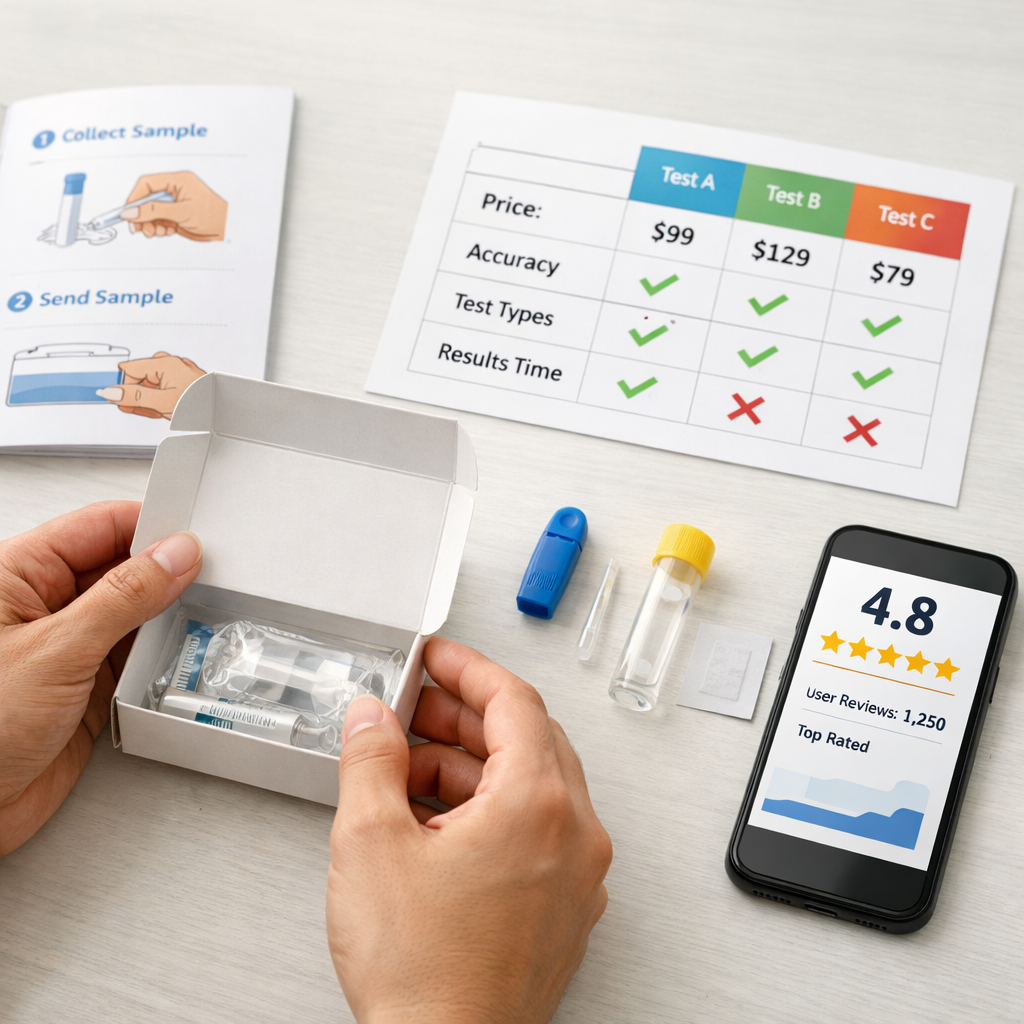
Quick vetting table:
| Certification | Sample type | Antibody measured (IgE/IgG) | Allergist consult | Turnaround | Reporting detail |
|---|---|---|---|---|---|
| Look for: CLIA‑certified lab named | Finger‑prick blood (or supervised draw if specified) | Specific IgE to individual allergens | Included or easy add‑on | ~5 business days after lab receipt | Per‑allergen values with units and reference ranges |
| Avoid: No stated certification | Hair analysis or ambiguous “bioenergetic” methods | IgG‑only “food sensitivity” panels | None/unclear | “Varies” with no estimate | Color bars only, no units or allergen list |
For brand features and reporting examples, see our independent comparison of leading at‑home blood allergy tests.
Match the test to your likely triggers
Choose a kit aligned to your history. If your symptoms follow pollen seasons, dust, or pet exposure, a specific IgE environmental panel is a logical screen; some panels assess 20–40 common indoor/outdoor allergens. Clarify collection steps—some “home” kits are finger‑prick, while others require a lab draw; saliva kits exist but may assess different markers. A practical overview of collection methods and environmental screening options appears in this consumer guide from Pinnacle Allergy.
Beyond blood tests, home dust/air sampling can flag mold, dust mites, or pet dander, helping you focus cleaning or remediation while you await clinical input.
Use results as a screening tool, not a diagnosis
A positive at‑home result shows sensitization, not necessarily clinical allergy. Don’t overhaul your diet or daily life based on IgG or screening alone. Pediatric centers and allergy divisions repeatedly warn that home kits can be misleading and should not replace professional evaluation, as highlighted by Nationwide Children’s.
Turn screening into action:
- Pair results with your symptom diary to spot true patterns.
- Avoid overreacting—don’t eliminate major foods without guidance.
- Book an allergist visit for confirmatory testing.
- Update your avoidance and medication plan with a professional.
- Re‑evaluate periodically; sensitivities and environments change.
Plan your follow up with a clinician
Schedule with a board‑certified allergist to interpret results, confirm or rule out allergy, and prevent harms from misinterpretation. Expect discussion of skin prick testing, serum specific IgE, and—when appropriate—medically supervised oral food challenges, the gold standard for food allergy confirmation, as summarized in this clinical review on at-home allergy test reliability.
Bring:
- Your kit report and raw units.
- A symptom and exposure diary.
- Questions about medications, avoidance strategies, and emergency plans.
Nickel and metal allergy considerations at home
Nickel allergy usually shows up as contact dermatitis—itchy, scaly, or blistering skin where metal touches you. While formal patch testing is done clinically, some home patch‑style approaches use small amounts of products on the skin with readings at ~48 hours; confirm findings with a clinician. For practical steps and surface screening (like dimethylglyoxime spot checks), see our guide on how to test for nickel allergy at home.
Quick audit list for hidden metal exposures:
- Jewelry and watch backs
- Keys, coins, belt buckles, and zippers
- Eyeglass frames and phone cases
- Clothing fasteners and earbuds
- Home tools and laptop edges
Switch to hypoallergenic options such as nickel‑free, titanium, or niobium pieces to reduce flares.
Food reactions and elimination diet safeguards
At‑home food sensitivity tests (IgG) are often marketed around $200 and can be misleading, pushing unnecessary restrictions without improving symptoms, according to Northwestern Medicine’s explainer on food sensitivity kits. Work with an allergist or dietitian to protect nutrition and pinpoint true triggers.
Five‑step elimination flow:
- Identify suspect foods from your diary (and reactions).
- Short‑term removal (2–4 weeks) of one food group at a time.
- Track symptoms consistently.
- Reintroduce systematically under guidance.
- Reassess with your clinician; consider oral food challenges if appropriate.
Environmental triggers and practical next steps
Specific IgE environmental panels can guide immediate, low‑risk changes while you await confirmatory testing. Focus on proven exposure reducers:
- Allergen‑proof encasements for pillows and mattresses
- HEPA vacuuming and high‑efficiency filtration
- Wash bedding weekly in hot water
- Pet‑free sleeping areas and frequent pet bathing as tolerated
- Humidity control (30–50%) to deter dust mites and mold
- Targeted cleanup informed by optional dust/air sampling
Agnes’s parent-tested tips for families
From one parent to another:
- Batch it: consolidate appointments and lab work to reduce school and work disruptions.
- Prep kids: practice finger‑prick sampling with a countdown and small reward.
- Make it visible: turn results into a family plan—label safe snacks, share classroom notes, and keep a travel kit with antihistamines.
- Keep it simple: a one‑page trigger log on the fridge beats a perfect app you never open.
For budget‑minded shopping and kid‑friendly kits, see our top at‑home allergy tests for kids and our best picks under $150.
Cost, privacy, and insurance basics
- What you pay for: collection supplies, prepaid mailer, digital portal, and sometimes an included telehealth consult. Many kits post results about five business days after the lab receives your sample.
- Payment: many are HSA/FSA‑eligible but not always reimbursed by insurance; check your plan.
- Privacy: read policies for data retention, third‑party sharing, marketing opt‑outs, and how to delete your data.
Our medical disclaimer and why it matters
Too Allergic provides researched, empathetic, non‑clinical guidance; we do not offer medical advice. Always consult licensed clinicians for diagnosis and treatment decisions. Professional allergy testing and supervised oral food challenges remain the gold standard for confirming food allergies. Bring our checklists and questions to your appointments to get the most from your visit.
Frequently asked questions
Are at-home allergy tests accurate enough to replace an allergist visit?
No—use them only as screening tools; an allergist can interpret results, confirm findings, and create a treatment plan. Too Allergic’s prep checklists help you get more from that visit.
What is the most popular at-home allergy test on the market?
Popularity changes, but the most purchased kits typically screen environmental allergens via finger‑prick and mail‑in IgE analysis. Choose based on specific IgE measurement, CLIA‑certified labs, and clear reporting; our comparison tables emphasize these factors.
Do at-home tests check IgE or IgG, and why does that matter?
Many kits measure IgG, which reflects exposure or tolerance, not true allergy. Too Allergic steers you toward specific IgE screening and clinical confirmation.
Should I change my diet based on at-home results?
No. Do not start restrictive diets based on home results alone; use our elimination flow with your clinician to confirm triggers and protect nutrition.
How long do results take, and how do I prepare for testing?
Some kits report results about five business days after lab receipt. Prepare by logging symptoms, reviewing medications with your clinician, and confirming exactly what the test measures and how results are reported; our pre‑test checklist covers the essentials.