Antihistamines vs Combination Remedies: Best Relief for Multiple Allergy Symptoms
Allergies rarely show up as just one symptom—most people juggle sneezing, itch, runny nose, and congestion at once. If you’re deciding on the best medicine for multiple allergy symptoms, a non-drowsy, second‑generation antihistamine is the safest first step for daytime control. Add a decongestant only if stuffiness or sinus pressure is front‑and‑center, and consider a nasal steroid spray for ongoing congestion. This guide compares antihistamines vs decongestant combinations, where nasal sprays fit, and how to choose based on your day, safety profile, and budget. Too Allergic distills clinician guidance and caregiver experience into clear starting steps. Use this as a practical starting point and confirm choices with your clinician—especially for children, pregnancy, or chronic conditions.
Quick answer to what is best for multiple symptoms
Most people get solid multi‑symptom allergy relief by starting with a non‑drowsy, second‑generation antihistamine like loratadine, cetirizine, or fexofenadine. These are preferred for daytime because they’re less sedating and typically last 12–24 hours, offering once‑daily convenience for school or work (TRC guidance on second‑generation options; a practical overview of class differences is here: first vs second generation antihistamines). If congestion dominates, an antihistamine plus decongestant combination can help—but evidence for broad, cold‑like symptom relief from multi‑ingredient products is mixed, so set modest expectations and use short‑term (systematic review of OTC cold medicines).
How these options work
Histamine is a chemical your body releases during an allergic reaction that triggers itching, sneezing, runny nose, and hives. Antihistamines block H1 receptors to blunt those signals across the body. Decongestants shrink swollen nasal blood vessels to ease stuffiness and pressure; the mechanisms are different, so benefits target different symptoms.
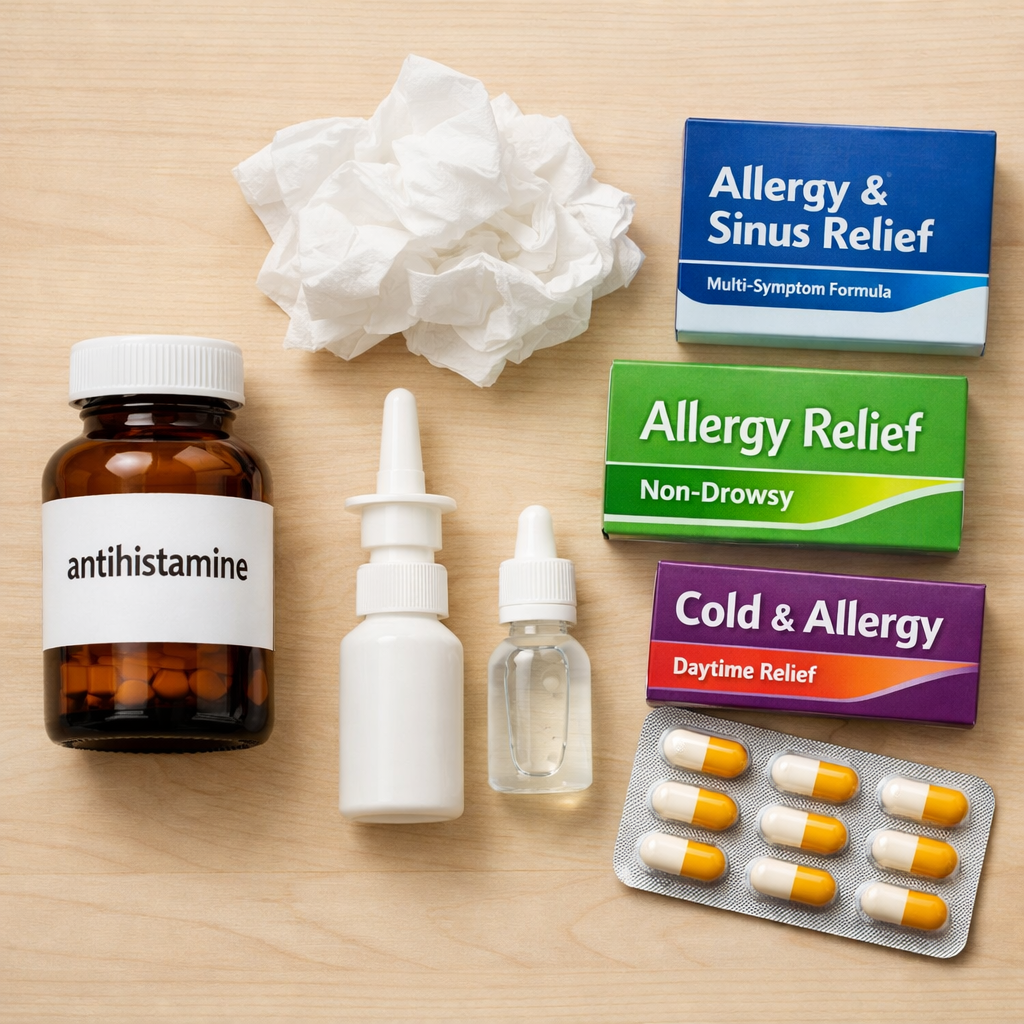
Antihistamines come as tablets, syrups, nasal sprays, eye drops, and even injectables in clinical settings (NCBI Bookshelf overview of antihistamines). First‑generation antihistamines act in about 30 minutes but commonly cause sedation, while second‑generation choices are designed to reduce sedation and typically last 12–24 hours (class comparison basics).
When to choose antihistamines
Second‑generation antihistamines are the smart default for daytime or all‑season use due to their lower sedation risk; note that cetirizine can be slightly more sedating than peers for some people (TRC second‑generation guidance). Expect onset in about 1–3 hours and duration of 12–24 hours (onset and duration overview).
Good fit:
- Sneezing, itchy eyes, throat itch, or hives without marked congestion
- Needing all‑day, non‑drowsy coverage for school or work
- Older adults who should avoid sedating first‑generation drugs when possible (TRC second‑generation guidance)
When to choose combination remedies
Consider an antihistamine plus decongestant when congestion or sinus pressure is the main complaint. Examples include Claritin‑D, Zyrtec‑D, and Allegra‑D (see a clinician’s practical take on combinations in this doctor’s guide to choosing allergy medicine). Understand that multi‑ingredient cold/allergy products show mixed benefits overall, with variable trial quality and often modest effect sizes (systematic review of OTC cold medicines).
Safety notes:
- Decongestants can raise blood pressure, worsen insomnia or jitteriness, and may interact with heart conditions—use short‑term and check with a clinician if you have cardiovascular disease, are pregnant, or have sleep issues.
Side effects, safety and interactions
- First‑generation antihistamines often cause drowsiness and anticholinergic effects (dry mouth, constipation, urinary retention) and are discouraged in adults over 65; avoid combining with benzodiazepines, opioids, or alcohol due to additive CNS depression (antihistamine safety overview; TRC cautions for older adults).
- Anticholinergic effects definition: These occur when a drug blocks acetylcholine signaling in the nervous system. In everyday terms, that can mean dry mouth, blurred vision, constipation, urinary retention, and confusion—especially in older adults. First‑generation antihistamines are more likely to cause these effects (NCBI Bookshelf overview of antihistamines).
- With combinations or higher dosing, expect possible drowsiness, nausea, fatigue, dry mouth, dizziness, or headache; monitor and stop if symptoms are concerning (scoping review on combination antihistamines).
Real‑world performance and evidence
In patients with stubborn hives (a different allergic condition but informative for refractory symptoms), a scoping review of 99 trials found that combining antihistamines was statistically superior to single agents (P<0.05), with adverse reaction rates ranging from 0% to 21% and no significant difference versus monotherapy (P>0.05) (combination antihistamines review). Studied pairs included mizolastine plus cyproheptadine, levocetirizine plus ketotifen, and loratadine plus cetirizine. Clinician surveys in allergic rhinitis report a strong preference for non‑sedating options like bilastine (88.33%) and frequent consideration of antihistamine plus montelukast for persistent symptoms, with perceived rapid onset within 24 hours (clinician perspectives on allergic rhinitis).
Cost, access and convenience
- Many second‑generation antihistamines offer once‑daily dosing with 12–24‑hour coverage, simplifying routines (class comparison basics).
- Most options are over‑the‑counter; combinations with pseudoephedrine may require ID and a pharmacy counter checkout depending on local rules.
- Pricing varies; some second‑generation agents remain low cost (e.g., bilastine around $0.84/day in comparative summaries). Compare store brands and generics for best value (TRC pricing snapshots).
Where nasal steroids, eye drops and HEPA purifiers fit
Nasal steroid sprays are often more effective than oral antihistamines for long‑term control of nasal symptoms like congestion and drip. If stuffiness persists, add or switch to an intranasal steroid as a first‑line controller (nasal steroid advantage overview). Targeted add‑ons:
- Antihistamine eye drops for itchy, watery eyes
- Intranasal antihistamine sprays for fast nasal relief (as an adjunct)
- HEPA air purifiers to reduce indoor allergen load in bedrooms and living areas
For product picks and comparisons, see the Too Allergic caregiver shortlists: expert‑chosen allergy drugs compared and doctor‑recommended daily options.
Telehealth tips for allergy care
Before your visit, confirm secure video, e‑prescribing, transparent pricing, asynchronous messaging, and a way to share an allergy action plan. Track 1–2 weeks of symptoms, triggers, timing, meds tried, and any side effects; add notes on pets, bedding, and dust‑mite covers to personalize care. Good topics for telehealth: when to add a nasal steroid, trial a different second‑generation antihistamine, or discuss antihistamine plus montelukast if symptoms persist (clinician perspectives on allergic rhinitis).
When to seek in‑person or emergency care
- See a clinician in person if symptoms persist beyond 2–4 weeks despite optimized therapy, you develop frequent nosebleeds from sprays, have signs of sinus infection (facial pain, fever, thick discolored drainage), or suspect contact dermatitis that needs testing.
- Call emergency services for anaphylaxis signs: trouble breathing, swelling of tongue or lips, widespread hives with dizziness, or fainting. If you have an epinephrine auto‑injector, carry it and know how to use it.
How to decide what to try first
Use this simple flow:
- Multi‑symptom without major congestion: start a second‑generation antihistamine once daily for 2 weeks. If drowsy, switch agents (for example, try fexofenadine instead of cetirizine) (TRC second‑generation guidance).
- Congestion dominates: add a short‑term decongestant combination or prioritize a nasal steroid for long‑term control (nasal steroid advantage overview; systematic review of OTC cold medicines).
- Inadequate control: discuss combination regimens or antihistamine plus montelukast with your clinician; review interactions and side effects (combination antihistamines review; clinician perspectives on allergic rhinitis).
For side‑by‑side picks, see the Too Allergic rankings: top non‑drowsy meds for all‑day relief and fast‑acting non‑drowsy options.
Frequently asked questions
Which antihistamine works fastest without making me sleepy?
First‑generation options can work in ~30 minutes but are sedating. For daytime, choose second‑generation options that reduce drowsiness and last 12–24 hours (onset 1–3 hours); see the Too Allergic non‑drowsy rankings to compare.
Are antihistamine plus decongestant pills better for severe congestion?
Yes, they can help when congestion or sinus pressure is front‑and‑center. Use short‑term and talk to a clinician if you have high blood pressure, heart conditions, or trouble sleeping; Too Allergic highlights common safety flags.
Can I take two antihistamines together?
Sometimes combinations help stubborn symptoms, but side‑effect risks can add up. Ask a healthcare professional before combining or increasing doses; Too Allergic guides outline common pairs to discuss.
Is it safe to use allergy medicine every day during pollen season?
Daily second‑generation antihistamines are commonly used for seasonal control. If symptoms persist after a few weeks, check in about nasal steroids or other options; the Too Allergic daily med rankings can help you choose.
Do nasal steroid sprays work better than pills for a stuffy nose?
Often yes—intranasal steroids generally outperform oral antihistamines for long‑term nasal congestion and target the nose directly. Too Allergic compares top sprays and how to use them.
Our caregiver‑led, non‑medical stance and safety reminder
Too Allergic is caregiver‑led and not a medical provider. Our comparisons are research‑informed and should be confirmed with licensed professionals—especially for children, pregnancy, chronic conditions, or multiple medications. Bring this guide, your symptom log, and any product questions (antihistamines, nasal steroids, HEPA purifiers) to your next visit. Always read labels, avoid sedating first‑generation meds if driving or operating machinery, and never mix allergy medicines with alcohol or other sedatives.