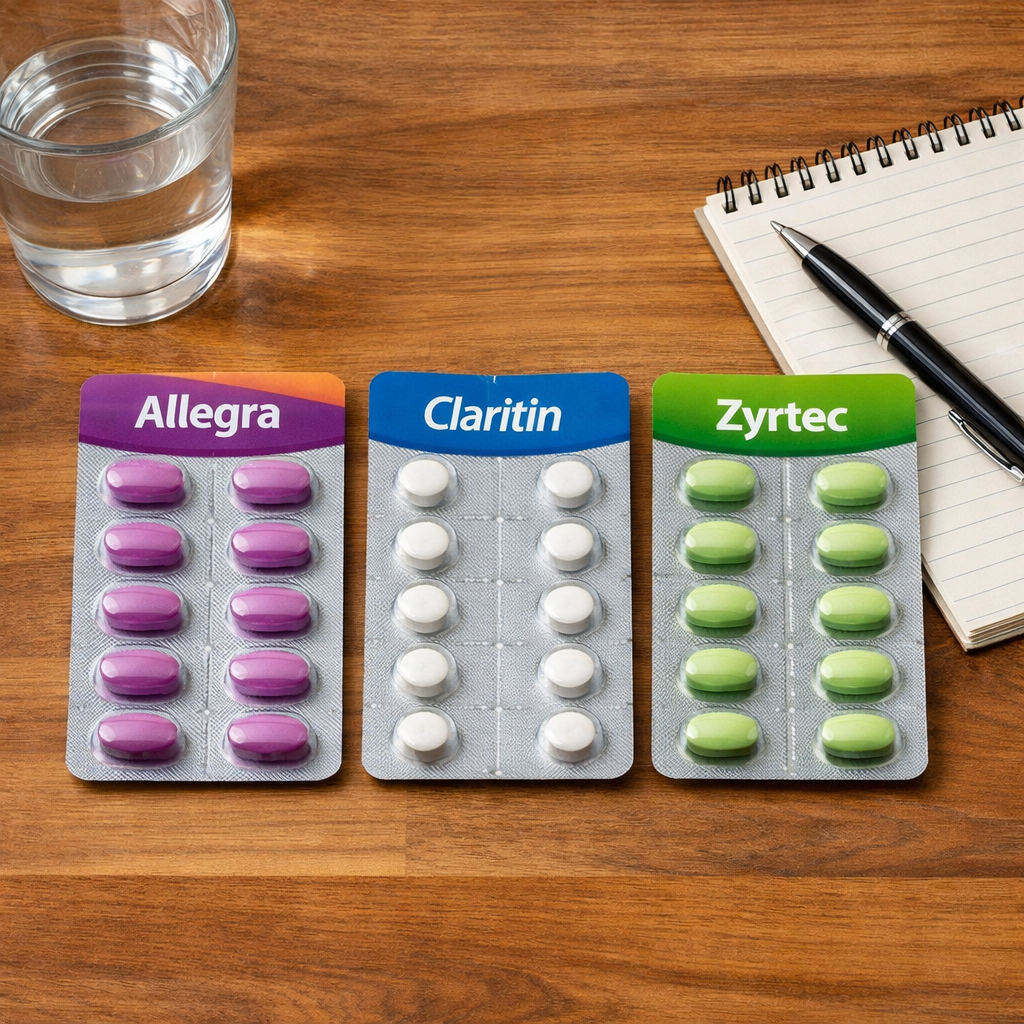
Allegra vs Claritin vs Zyrtec: Which Non-Drowsy Allergy Pill?
All three are second‑generation, over‑the‑counter antihistamines designed for daytime use—but they differ in how quickly they work and how likely they are to make you sleepy. If you want the least drowsiness, Allegra (fexofenadine) typically leads. If you need the fastest, strongest relief—especially for itching or hives—Zyrtec (cetirizine) often provides stronger relief but can cause sleepiness in more people. Claritin (loratadine) is a steady middle ground for daily control.
Summary: Best for zero‑drowsy days: Allegra; best for fastest relief: Zyrtec; balanced daily option: Claritin. This is educational, not medical advice—confirm dosing, interactions, and fit for your health with a clinician.
Too Allergic’s take and medical disclaimer
Too Allergic was founded by Agnes, a parent advocate who’s navigated metal/nickel, food, pet, and environmental allergies at home. We share research‑curated, real‑life guidance to help families make practical, budget‑savvy choices—not medical care. This article is educational only. Always verify dosing, interactions, and long‑term plans with a licensed clinician, especially for children, pregnancy, other conditions or medicines, or persistent symptoms.
How non-drowsy antihistamines work
Second-generation antihistamines (like Allegra, Claritin, Zyrtec) are OTC medicines that block histamine H1 receptors to reduce sneezing, runny nose, itchy eyes, and hives with less sedation than older drugs. Most offer once‑daily, 24‑hour allergy relief, making them convenient for daytime use, including seasonal allergic rhinitis and chronic urticaria, compared with first‑generation pills in a comparison by Verywell Health and an OHSU drug class review of antihistamines (no black box warnings for newer agents) OHSU drug class review.
Core facts:
- Allegra contains fexofenadine; Claritin contains loratadine; Zyrtec contains cetirizine Verywell Health comparison.
- These medicines act as histamine blockers to calm allergic responses Verywell Health comparison.
- They’re second‑generation, non‑sedating antihistamines commonly used for rhinitis and hives OHSU drug class review.
How to choose the best pill for your needs
Think about speed, daytime alertness, symptom profile (itch/hives versus mild congestion/sneezing), safety, and price. Then match your priority: zero drowsiness (Allegra), fastest relief/itch control (Zyrtec), or balanced daily option (Claritin).
At‑a‑glance comparison
| Medicine (generic) | Typical onset | Drowsiness risk above placebo | Duration/dosing |
|---|---|---|---|
| Allegra (fexofenadine) | ~1–2 hours | ~1%–3% | ~24 hours, once daily |
| Claritin (loratadine) | ~3 hours | ~2%–4% | ~24 hours, once daily |
| Zyrtec (cetirizine) | ~1 hour | ~3%–8% (up to ~14% in some trials) | ~24 hours, once daily |
Notes: Onset and head‑to‑head data summarized from a clinical review of 24‑hour OTC antihistamines Pharmacy Times review. Drowsiness ranges reflect consumer‑facing guidance and trial summaries Cleveland Clinic overview.
Three‑step pick:
- Need zero drowsiness for driving, exams, or shift work? Start with Allegra Pharmacy Times review.
- Need the fastest relief or stronger itch/hives control? Consider Zyrtec—and test your first dose at home Pharmacy Times review.
- Want a middle‑ground daily option? Choose Claritin for steady, low‑sedation coverage Pharmacy Times review.
For more context on daytime allergy medicine picks, see our parent‑led guide to non‑drowsy options at Too Allergic: 10 best non‑drowsy allergy medicines for all‑day relief.
Allegra
Best for people who must preserve alertness—drivers, students, aircrew—or anyone sensitive to medication‑related sleepiness. At Too Allergic, it’s our default for alertness‑critical days.
Key facts:
- Active ingredient: fexofenadine; among these three, it’s the least likely to cause drowsiness Cleveland Clinic overview.
- Onset is typically intermediate (~1–2 hours), with once‑daily dosing for most adults Pharmacy Times review.
- Available as gel caps, tablets, orally disintegrating tablets, and syrup Verywell Health comparison.
Practical tips:
- Avoid grapefruit, orange, and apple juice within several hours of dosing; they can reduce absorption and effectiveness. Take with water Network Health comparison.
- Non‑sedating antihistamines are newer agents designed to relieve allergy symptoms with minimal impact on alertness. Compared with older medicines like diphenhydramine, they cross the blood‑brain barrier less, so fewer people report sleepiness while still getting 12–24 hours of relief clinician review of antihistamines.
Claritin
Claritin is a reliable, broadly tolerated daily option for mild to moderate symptoms and routine daytime use when you want low sedation but absolute alertness isn’t mission‑critical. At Too Allergic, we view it as a dependable daily controller when zero‑drowsy isn’t essential.
Key facts:
- Active ingredient: loratadine; low sedation risk (about 2%–4% above placebo reported in studies) Cleveland Clinic overview.
- Onset is often around 3 hours; typically once daily Pharmacy Times review.
- Comes as tablets, chewables, syrup, liquid gels, and dissolvables Verywell Health comparison.
Use cases:
- Good daytime choice when a minimal‑drowsiness profile is needed but zero‑drowsy isn’t essential.
- Consider it for consistent daily prevention during high‑pollen seasons.
Zyrtec
Why some choose it: Zyrtec typically acts fastest and often provides strong relief for itching, runny nose, and hives—useful when symptoms feel intense. In our community, it’s the pick for flare days when itch dominates.
Key facts:
- Active ingredient: cetirizine; fastest onset often within about an hour Ro clinical explainer.
- Higher likelihood of drowsiness than Allegra or Claritin (about 3%–8% above placebo; up to ~14% somnolence reported in some trials) Ro clinical explainer.
- In an environmental exposure unit study, cetirizine provided about 33% greater symptom relief than fexofenadine at 21–24 hours Pharmacy Times review.
Actionable guidance:
- Test your first dose at home to gauge possible sedation before driving or operating machinery.
- Once daily is typical; available in tablets, chewables, liquid gels, syrup, and dissolvables Ro clinical explainer.
Side effects and safety considerations
- Indications: All three are used for seasonal/perennial allergic rhinitis and chronic urticaria; newer oral antihistamines carry no black box warnings in class reviews OHSU drug class review.
- Duration: Second‑generation agents last 12–24 hours versus Benadryl’s 4–6 hours; first‑generation diphenhydramine is far more sedating clinician review of antihistamines.
- Older adults can be more sensitive to side effects (falls, confusion); use the lowest effective dose and review interactions with a clinician Network Health comparison.
Common side effects:
- Drowsiness (rare with Allegra/Claritin; more common with Zyrtec), dry mouth, headache, nausea or GI upset.
- Stop and seek medical help for severe dizziness, rash or swelling, breathing trouble, or if hives last more than a few days.
Pricing, generics, and budget tips
- Generics—fexofenadine, loratadine, and cetirizine—usually provide similar relief at lower cost. Large‑count bottles often deliver the best per‑pill value.
- Example retail snapshot: 90‑count bottles have been listed around Zyrtec ~$10, Claritin ~$16, Allegra ~$20, with generics reducing cost substantially (prices vary) Network Health comparison.
Savings checklist:
- Compare unit price (cost per pill) across retailers.
- Choose generics when appropriate.
- If you tolerate a product well, buy in bulk seasonally for 24‑hour allergy relief at a lower unit cost.
- At Too Allergic, we typically start with generics when appropriate to keep costs down.
Special situations and daily-life considerations
- Zero‑drowsy days (exams, air travel, long drives): favor Allegra for an alertness‑friendly antihistamine Pharmacy Times review.
- If using Allegra, avoid fruit juices near dosing to preserve absorption; use water Network Health comparison.
- Dosing consistency: Most products are once daily—take at the same time for steady control Verywell Health comparison.
- Context: Allergic rhinitis affects roughly 10%–25% of people globally and tens of millions in the U.S., so day‑to‑day management matters OHSU drug class review.
When to see a healthcare professional
- See your clinician if symptoms persist beyond 2–4 weeks despite daily use, if you experience significant drowsiness, or if allergies interfere with school, work, or sleep. Long‑acting, non‑sedating antihistamines are generally safe for daily use, but confirm with your clinician—especially for children, older adults, pregnancy, or multiple medications Cleveland Clinic overview.
- For severe reactions (wheezing, breathing difficulty, throat or tongue swelling), seek emergency care immediately.
Alternatives beyond pills
- Intranasal steroid sprays for congestion, saline rinses, allergen avoidance (dust mites, pet dander, pollen), and improving indoor air quality.
- Benadryl (diphenhydramine) is short‑acting and highly sedating—generally not ideal for daytime control clinician review of antihistamines.
- Don’t combine oral antihistamines without clinician advice; if one agent isn’t effective after several days, try switching.
- “-D” combinations add a decongestant (often pseudoephedrine or phenylephrine). Use short term only; avoid or get medical advice first if you have high blood pressure, heart rhythm issues, glaucoma, or urinary retention.
Frequently asked questions
Which is the most effective non-drowsy allergy pill?
For strict non‑drowsy needs, Allegra is usually the top pick. If you can tolerate some sleepiness, Zyrtec often feels strongest and fastest, while Claritin is a reliable middle‑ground daily option.
Which pill is least likely to make me sleepy?
Allegra (fexofenadine) has the lowest drowsiness risk overall, followed by Claritin (loratadine). Zyrtec (cetirizine) helps many people but is more likely to cause sleepiness.
How fast do Allegra, Claritin, and Zyrtec start working?
Zyrtec often starts working within about an hour. Allegra typically kicks in within 1–2 hours, and Claritin is slower, around 3 hours for many users.
Can I switch between antihistamines if one doesn’t help?
Yes—switching to another second‑generation antihistamine is a common next step. Try one at a time for several days and check with a clinician if symptoms persist or you take other medications.
Should I use the “-D” versions with a decongestant?
Use “-D” versions short term for tough congestion and avoid long‑term daily use. If you have high blood pressure or heart risks, talk to your clinician first.