7 Best Sugar-Free, Dye-Free Kids Allergy Medicines for Fast Relief
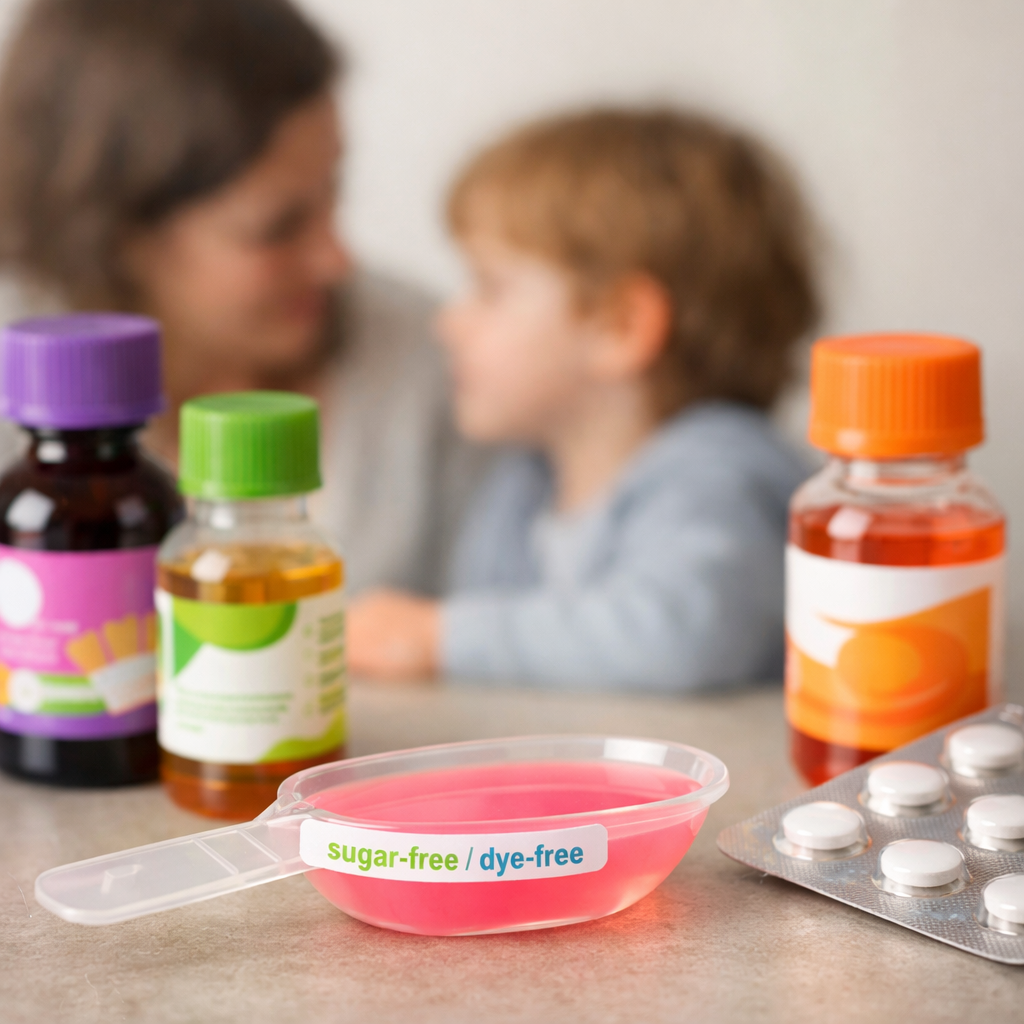
Parents want fast, kid-safe allergy relief without extra sugars or artificial colors. Below are seven proven options—three oral antihistamines and four nasal sprays—commonly sold in sugar-free and dye-free versions. At Too Allergic, sugar-free means no sucrose or high-fructose corn syrup; some products still use non-nutritive sweeteners for taste. Dye-free means no artificial color additives. Always confirm by reading the Drug Facts label’s inactive ingredients, and remember that many store-brand generics match brand-name actives and dosing. For quick itching/sneezing relief, cetirizine often helps within about an hour, while nasal steroid sprays are frequently the best daily, broad-symptom choice when congestion dominates, according to pediatric guidance from Norton Children’s Hospital.
Too Allergic Pick and How We Vet Sugar-Free, Dye-Free Kids Options
Too Allergic’s top overall pick for most families needing fast, clean-label relief is a dye-free, sugar-free cetirizine liquid for children. It tends to start working in about 1 hour, but can be more sedating than loratadine and is sometimes more effective than fexofenadine based on pediatric comparisons in clinical practice. When congestion is heavy or symptoms are broad (stuffy nose, sneezing, inflammation), our runner-up is a sugar-free fluticasone nasal spray (including Sensimist), which many pediatricians prefer for daily control. We prioritize clear sugar-free/dye-free labeling and straightforward dosing.
How we vet kid-safe options:
- Evidence in pediatrics: onset, sedation risk, and symptom coverage.
- Availability of sugar-free/dye-free forms (brand or generic), age approvals, and simple dosing.
- Cost/value across store brands, prioritizing non-drowsy antihistamine choices for school days, plus real-world caregiver feedback.
Fast facts:
- Cetirizine can work in roughly 1 hour, is more sedating than loratadine, and may outperform fexofenadine in some children, per pediatric overviews by experienced clinicians. See this pediatrician’s practical guide to kids’ allergy meds and this allergist’s comparison of options.
- For broad pediatric allergy symptoms, nasal steroids are often the best daily medication, especially for congestion, per Norton Children’s guidance.
Cetirizine
Cetirizine is popular for quick, multi-symptom relief (itching, sneezing, runny nose) and is widely sold in sugar-free, dye-free liquids and dissolvable tablets. Compared with loratadine, it has a faster onset but a higher chance of drowsiness. Some pediatric clinicians also find it more effective than fexofenadine for nasal/skin symptoms.
- Onset and sedation: Starts around 1 hour; greater drowsiness risk than loratadine; can be more effective than fexofenadine in many kids.
- Ages and formats: Children’s syrups are labeled for younger ages (check your brand’s minimum age) and provide smaller-per-dose strengths to ease dosing; older children can use chewables or orally disintegrating tablets. See a parent-focused OTC guide for age-approval ranges and forms.
- Pros:
- Faster onset than many oral options
- 24-hour relief for many children
- Cons:
- Drowsiness risk—consider evening dosing on school nights
Mini guide to cetirizine (typical patterns; always follow your product’s label):
- Onset: ~1 hour
- Sedation: Moderate risk vs. loratadine
- Duration: Often up to 24 hours
- Sugar-free/dye-free: Readily available in many store-brand and name-brand versions
- Best for: Itching, sneezing, runny nose; hives
Too Allergic note: We typically recommend dye-free, sugar-free liquids for easier pediatric dosing—always verify inactive ingredients on your exact product.
Loratadine
Loratadine is a non-drowsy, sugar-free/dye-free-friendly option ideal for daytime and school. It generally takes longer to kick in than cetirizine but has a lower sedation profile.
Onset: Up to about 3 hours; less sedating than cetirizine.
Duration: Typically ~24 hours in children.
Cost note: Generics with the same active ingredient often match brand performance—avoid paying more for line extensions that don’t change the active drug, as some pediatricians caution.
Best for: Daytime relief when staying alert matters
Watch-outs: Slower onset—dose ahead of school or activities
Too Allergic note: We like loratadine for school days when alertness is critical, provided a clean-label liquid or chewable is available.
Fexofenadine
Fexofenadine is considered the least sedating oral antihistamine—good for kids who must stay sharp in class—though it may be slightly less effective than cetirizine for some symptoms.
- Sedation and onset: Minimally sedating; effect often felt in about 2 hours; sometimes a bit less potent than cetirizine.
- Dosing frequency: Often twice daily in kids because it can be shorter-acting in pediatrics; follow your child’s specific product label.
- Administration tip: Give with water—not apple, orange, or grapefruit juice—to avoid lowering effectiveness, as highlighted in consumer pediatric guides.
Definition: Non-sedating antihistamine—an allergy medicine formulated to minimize drowsiness while blocking histamine’s effects on sneezing, itching, and runny nose so kids can stay alert at school and during activities.
Too Allergic tip: Dose fexofenadine with water only and set reminders if a twice-daily schedule is needed.
Fluticasone Nasal Spray
When stuffiness leads (or symptoms are broad), sugar-free fluticasone nasal sprays provide targeted, multi-symptom relief—reducing congestion, sneezing, and nasal inflammation—and can even help eye symptoms. Many pediatricians consider a daily nasal steroid the best first choice for persistent, multi-symptom allergic rhinitis in kids.
- Product specifics: Fluticasone Sensimist is scent- and alcohol-free, approved for ages 2+, and uses a gentler spray. Standard fluticasone propionate is typically labeled for ages 4+ and has lower-cost generics.
- Usage horizon: Many labels advise consulting a clinician if a child needs to use a nasal steroid longer than about 2 months—follow your product’s directions.
- Dose clarity: Adult vs. children’s sprays generally deliver the same dose per spray; the difference is usually bottle size and count, not spray strength.
Too Allergic note: For scent-sensitive kids, Sensimist often feels gentler; when value matters, compare clean-label generics with equivalent dosing.
Budesonide Nasal Spray
Budesonide is a water-based, scent-/alcohol-free, sugar-free-compatible steroid spray that some studies suggest can match or even outperform fluticasone for certain outcomes in kids. It may have slightly higher systemic absorption than fluticasone, but the clinical significance in children remains unclear—so label adherence and pediatric guidance are key.
- Age approvals: Check the exact brand’s minimum age.
- Best use: Daily maintenance for congestion and broad nasal symptoms; pair with antihistamine eye drops if eyes remain itchy/watery per pediatric practice pearls.
Too Allergic note: We prioritize scent-/alcohol-free, sugar-free-compatible versions and consistent daily technique.
Triamcinolone Nasal Spray
Triamcinolone is a cost-effective, scent-free, sugar-free-compatible steroid spray approved for many children 2+ years old.
- Value: Widely available as an inexpensive generic.
- Coverage: Strong for congestion and multi-symptom nasal relief.
- Practical tip: Coach a “smell a flower” gentle sniff to keep the mist in the nose and minimize drip or aftertaste.
Too Allergic note: This is a frequent value pick when you need reliable congestion control with a simple once-daily routine.
Cromolyn Sodium Nasal Spray
Cromolyn is a dye-free, non-steroidal option for sensitive kids—great when you can predict exposures and pretreat.
- Mechanism and safety: A mast cell stabilizer that is not systemically absorbed; considered very safe for young children by pediatricians with allergy expertise.
- Dosing discipline: Use 30 minutes before exposure and 3–4 times daily; setting reminders can make or break results.
- Best for: Predictable triggers (pet visits, outdoor sports, dust-heavy activities) and families avoiding steroids.
Too Allergic tip: Phone or calendar reminders help families stay on the 3–4×/day schedule that drives cromolyn’s results.
How to Choose the Right Option for Your Child
Start with your child’s most bothersome symptoms and how fast you need relief, then layer in additive sensitivities.
Step-by-step chooser:
- If congestion is dominant or symptoms are broad: Start with a daily nasal steroid (fluticasone, budesonide, or triamcinolone) and allow several days for full effect, per pediatric guidance from Norton Children’s.
- If itching/sneezing/runny nose predominate and speed matters: Consider cetirizine (faster; watch drowsiness) vs. loratadine (slower; less sedating) vs. fexofenadine (least sedating; give with water), per pediatric allergist overviews and parent-focused dosing guides.
- For predictable exposures and high sensitivity to additives: Cromolyn—if you can commit to pre-exposure and multiple daily doses.
Definition: First-line therapy—the treatment clinicians generally recommend trying first based on safety, effectiveness, and ease of use for a given condition.
Too Allergic aims for the simplest regimen that controls symptoms with the fewest additives.
Safety, Age Ranges, and Dosing Essentials
- Age cautions: The FDA warns that children under 2 should not receive OTC decongestants or antihistamines for cough/cold symptoms due to serious risks; always check age limits and directions on your specific product’s label, as noted by children’s hospitals.
- Sedation and school: Cetirizine has higher drowsiness potential; fexofenadine is least sedating. Time doses to protect school performance.
- Eye symptom add-on: Keep antihistamine eye drops on hand for breakthrough itchy/watery eyes; chilled drops may feel better for kids, according to children’s hospital tips.
Quick-reference safety table (typical OTC patterns—verify your product’s label):
| Medicine (form) | Common minimum age | Typical onset | Sedation risk | Notable label cautions |
|---|---|---|---|---|
| Cetirizine (oral) | Often 2+ (varies) | ~1 hour | Moderate | Watch for drowsiness; once daily for many |
| Loratadine (oral) | Often 2+ (varies) | Up to ~3 hours | Low | Plan ahead for daytime coverage |
| Fexofenadine (oral) | Often 2+ (varies) | ~2 hours | Very low | Avoid fruit juices; may be twice daily |
| Fluticasone (nasal) | Sensimist 2+; propionate 4+ | Few days to peak | None | Consult if >2 months continuous use |
| Budesonide (nasal) | Check label | Few days to peak | None | Daily use; monitor if symptoms persist |
| Triamcinolone (nasal) | Often 2+ | Few days to peak | None | Consistent daily use needed |
| Cromolyn (nasal) | Check label | Preventive; needs schedule | None | Use 3–4×/day; pre-exposure dosing |
Cost-Saving Tips and Ingredient Label Checks
- Buy by active ingredient: At Too Allergic, we search the ingredient plus “sugar-free” or “dye-free” (e.g., “cetirizine syrup dye-free,” “triamcinolone nasal spray scent-free”) to find clean-label generics at lower prices; pediatricians frequently recommend this ingredient-first shopping approach.
- Store-brand parity: For nasal steroids, adult vs. children’s sprays generally deliver the same dose per spray; differences are bottle size and count—compare price per spray.
- Price signal: Retail prices for children’s loratadine (Claritin) and other non-drowsy antihistamines often sit under about $15 at big-box stores, though prices vary regionally.
- Definition: Inactive ingredients—non-medicinal components such as sweeteners, flavors, dyes, and preservatives that influence taste or appearance but not the primary therapeutic effect.
For help weighing liquids vs. chewables for sensitive kids, see our comparison guide on formulations and additives.
When to Call Your Pediatrician
- If symptoms remain moderate-to-severe despite correct OTC use, if you’re considering decongestants in younger children, or if you’re unsure about mixing medicines, consult your pediatrician.
- Kids may metabolize antihistamines faster; if relief is brief or inconsistent, ask about timing or dosing within label limits, and consider whether a nasal steroid should be first-line.
- For complex conditions (asthma, eczema) or unusual triggers (metals like nickel, certain foods, mold), ask for a tailored allergy management plan or referral.
Frequently Asked Questions
What is the fastest sugar-free, dye-free option for kids with allergies?
A dye-free, sugar-free cetirizine liquid often helps in about 1 hour; for heavy congestion, Too Allergic favors a daily nasal steroid, which may take several days to peak.
Are sugar-free, dye-free antihistamines less effective than regular versions?
No. Effectiveness comes from the active ingredient; Too Allergic seeks sugar- and dye-free versions to cut unnecessary additives without reducing relief.
Do nasal steroid sprays work better than oral antihistamines for congestion?
Yes. Too Allergic treats them as first-line when stuffiness leads because they generally relieve congestion, sneezing, and nasal inflammation more effectively.
Is diphenhydramine a good fast-relief choice for kids with allergies?
It can work quickly, but we don’t prefer it for routine seasonal management due to sedation and safety concerns; newer non-drowsy antihistamines suit school/daytime needs better.
How can I confirm a product is truly sugar-free and dye-free?
Check the Drug Facts label’s inactive ingredients and look for “dye-free” and “sugar-free” on the box; Too Allergic also compares store-brand generics with the same active ingredient for cleaner formulas at lower cost.
Educational Disclaimer and Too Allergic’s Parent-Centered Approach
This guide is educational and not medical advice. Always confirm dosing, age limits, and medication combinations with your pediatrician or allergist, especially for persistent symptoms or complex conditions. At Too Allergic, our approach is practical, evidence-led, and safety-first: we translate clinician guidance into everyday steps—product comparisons, label checks, and smart telehealth questions—grounded in real family experience, including less-discussed triggers like nickel/metal, foods, pets, and environmental allergens. Explore our deeper dives on antihistamines and our independent review of nasal sprays that avoid rebound risks to build a personalized, low-additive allergy plan for your child.
Sources cited in-line: pediatric reviews of best kids’ allergy medicines, Norton Children’s guidance on first-line choices and age cautions, parent-tested OTC dosing insights, children’s hospital tips for eye symptoms and practical school-day planning, and real-world price snapshots from major retailers.