2026 guide to dye-free, sugar-free children’s allergy medicines
Parents want allergy relief that’s gentle on sensitive systems—and on the budget. Good news: there are affordable dye-free, sugar-free children’s allergy medicines in most pharmacies, including national brands and store-brand generics with the same active ingredients. This Too Allergic guide shows you how to spot clean-label kids’ antihistamines quickly, compare value, and follow labels safely. We cover how dye-free and sugar-free are defined, what changes you may see on shelves through 2026, and practical steps to avoid duplicate dosing. Information here is for general guidance only—always follow product labels and consult a licensed clinician or pharmacist with questions. Too Allergic favors simple, dye-free, sugar-free choices when feasible and teaches fast label checks to keep dosing straightforward.
What dye-free and sugar-free means for kids’ allergy meds
Dye-free means a medicine is formulated without FDA-certified synthetic color additives such as Red No. 3 or Yellow No. 5. By law, color additive names must appear on labels, so you can verify the absence of certified dyes on the inactive ingredient list (see the Food Allergy Research & Education overview on additives). For liquids, dye-free often pairs with other “clean-label” claims.
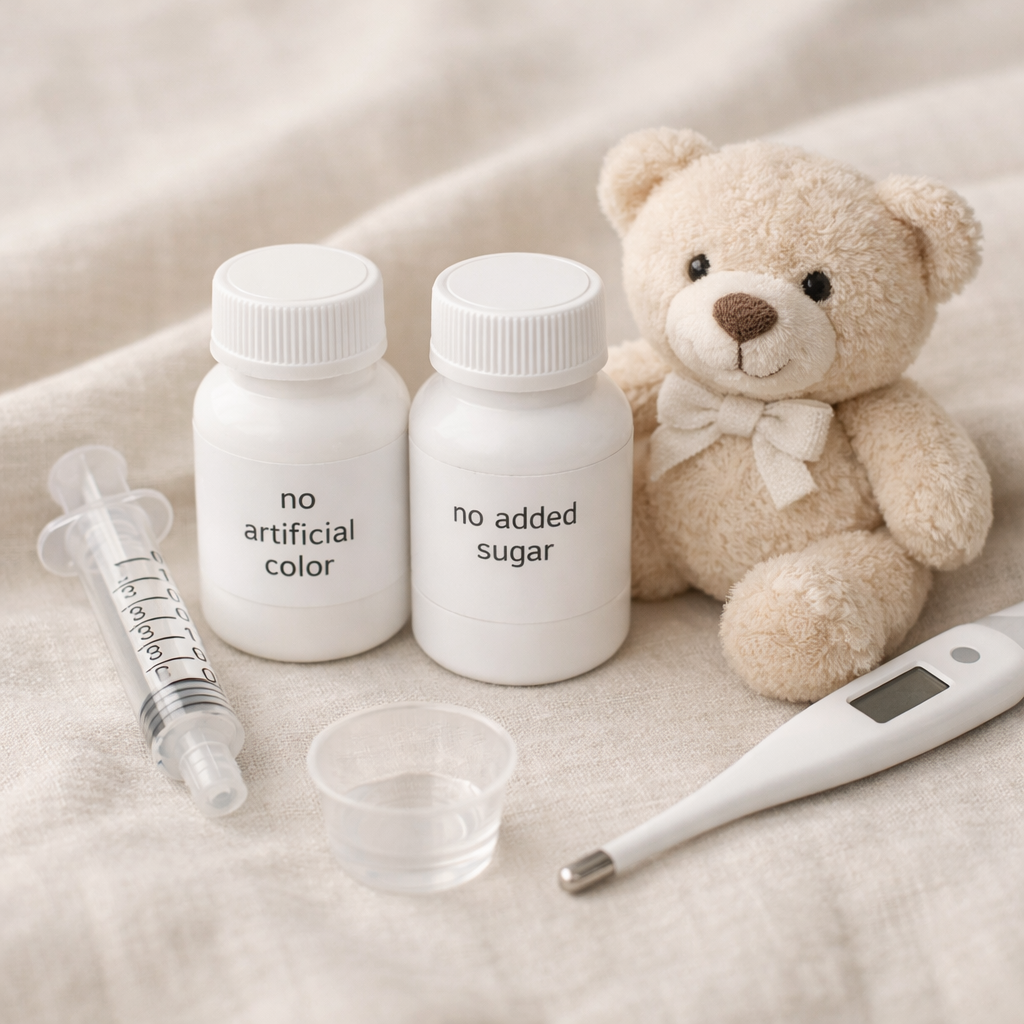
Sugar-free means the product does not include added sugars like sucrose or high fructose corn syrup. In sugar-free allergy syrups, manufacturers use alternative sweeteners to maintain taste without added sugars. This can help reduce overall sugar exposure while preserving palatability.
Dye-free: A kids’ allergy medicine without FDA-certified synthetic color additives (for example, no Red No. 40 or Yellow No. 5 listed). FDA rules require color additive names to appear on the label, so “dye-free” should be reflected by their absence. Check the inactive ingredients every time for confirmation.
Sugar-free: A liquid allergy medicine made without added sugars such as sucrose or high fructose corn syrup. Instead, it uses alternative sweeteners to keep flavor acceptable while minimizing added sugar intake—useful for children who need regular dosing during high-allergy seasons.
Examples on the label:
- Children’s Benadryl Dye-Free is labeled dye-free, alcohol-free, sugar-free, and made without parabens or high fructose corn syrup (see the Children’s Benadryl Dye-Free Allergy Liquid label).
- Children’s Zyrtec Allergy Syrup is labeled dye-free, sugar-free, alcohol-free, with 24-hour relief (see the Children’s Zyrtec Allergy Syrup label).
What to look for fast:
- No named color additives (e.g., “Red No. 40,” “Yellow No. 5”) in inactive ingredients.
- No sucrose or high fructose corn syrup listed.
- Optional: no parabens; alcohol-free callouts.
Why parents are asking about dyes and sugars
Regulators and consumers are pushing for fewer petroleum-based synthetic dyes in children’s products. An industry report on synthetic dye phase-outs notes FDA signaled an ambition to remove petroleum-based synthetic dyes by the end of 2026, with frequent concerns around Blue No. 1/2, Red No. 3/40, Yellow No. 5/6, and Green No. 3. While reactions to color additives are uncommon and often documented as single-patient reports, color additive names must appear on labels, enabling informed choices (see Food Allergy Research & Education guidance on additives).
Consumer Reports advises parents not to withhold necessary medicines due to color alone; when feasible, choose dye-free versions to minimize exposure, especially in liquid syrups where dyes are more common (see Consumer Reports advice on dye-free medicines). In parallel, over one in four American children live with allergies, and sugar reduction strategies—including in medicines—align with broader child health goals (see the White House MAHA report).
Common active ingredients in children’s allergy medicines
Antihistamines block histamine, a chemical that drives symptoms like sneezing, runny nose, itchy/watery eyes, and hives. First-generation antihistamines often cause drowsiness and last 4–6 hours, while second-generation options are usually less sedating and provide longer relief.
Comparison at a glance:
| Active ingredient | Generation | Label example (per 5 mL) | Typical duration | Sedation profile | Notes |
|---|---|---|---|---|---|
| Diphenhydramine HCl | First-generation | 12.5 mg (Children’s Benadryl Dye-Free) | About 4–6 hours | Sedating | Often used short-term or at night; follow age/dose on label (see Children’s Benadryl Dye-Free Allergy Liquid label). |
| Cetirizine HCl | Second-generation | 5 mg (Children’s Zyrtec Syrup) | Up to 24 hours | Less sedating | Once-daily “non-drowsy” option for many kids, though some may still get sleepy (see Children’s Zyrtec Allergy Syrup label). |
Age-appropriateness is product-specific. Always follow the exact age ranges and dosing on the package (details below), and ask a pediatric clinician or pharmacist if unsure.
Age ranges, dosing, and label reading basics
Examples from product labels:
- Children’s Benadryl Dye-Free: Ages 6–11 typically take 5–10 mL; ages 2–5 use only if directed by a doctor; do not use under 2 years; marked drowsiness may occur; do not use with other diphenhydramine products, including topical (see the Children’s Benadryl Dye-Free Allergy Liquid label).
- Children’s Zyrtec Syrup: For ages 2 to under 6 years, 2.5 mL once daily; do not exceed 5 mL in 24 hours (see the Children’s Zyrtec Allergy Syrup label).
Label-decoding mini-table:
| Product | Active ingredient | Labeled ages | Max daily dose | Frequency | Key warnings | Storage |
|---|---|---|---|---|---|---|
| Children’s Benadryl Dye-Free | Diphenhydramine HCl 12.5 mg/5 mL | See label; 6–11: 5–10 mL; 2–5: only if directed; under 2: do not use | See label | Typically every 4–6 hours | Marked drowsiness; avoid with other diphenhydramine (including topical) | See label |
| Children’s Zyrtec Syrup | Cetirizine HCl 5 mg/5 mL | 2–<6: 2.5 mL once daily | 5 mL/24 h for ages 2–<6 | Once daily | May cause drowsiness in some | 20°–25°C (68°–77°F) |
Check for duplicates:
- Compare the active ingredient line on every product you plan to give the same day.
- Avoid giving two products with the same active (e.g., diphenhydramine) unless a clinician directs you to.
This section is information only; follow the label and consult a licensed professional for dosing questions.
How to find dye-free, sugar-free options on the shelf
A fast 5-step scan:
- Locate the Drug Facts active ingredient panel (e.g., diphenhydramine or cetirizine).
- Scan inactive ingredients for named synthetic dyes (e.g., “Red No. 40”) and sugars/HFCS.
- Look for clean-label callouts like “dye-free,” “sugar-free,” “alcohol-free” on front/back panels (see Children’s Benadryl Dye-Free Allergy Liquid label and Children’s Zyrtec Allergy Syrup label).
- Confirm age range and dosing match your child.
- Compare duration: 4–6 hours vs 24 hours to minimize repeat dosing.
Consumer Reports notes synthetic dyes are common in liquid medications and syrups tend to carry higher dye exposure than pills or chewables (see Consumer Reports advice on dye-free medicines). When in doubt, photograph labels and ask a pharmacist to confirm. The Too Allergic checklist below condenses these steps for quick trips.
Affordable choices and where to compare prices
Cost-saving moves without compromising on dye-free, sugar-free: Too Allergic prioritizes equivalent generics when they meet the same clean-label specs.
- Compare national brands to store-brand generics that match the active ingredient, strength, dose per mL, and “dye-free/sugar-free” claims.
- Check package sizes. Children’s Benadryl Dye-Free is sold in 4 fl oz and 8 fl oz; larger sizes may lower unit cost if you’ll use them before expiration (see the Children’s Benadryl Dye-Free Allergy Liquid label).
- Use pharmacy apps, price-comparison tools, and loyalty coupons. Ask pharmacists to point you to store-brand equivalents that keep the same active but cleaner excipients.
Unit price comparison (example math):
| Product | Bottle size (mL) | Shelf price (example) | Unit price per mL (example) |
|---|---|---|---|
| Cetirizine syrup dye-free (brand) | 118 mL | $10.99 | $0.093/mL |
| Cetirizine syrup dye-free (store brand) | 150 mL | $11.49 | $0.077/mL |
Method: divide shelf price by bottle mL to compare across brands/sizes. Prices are illustrative; check your store.
When a dye-free version isn’t available
Practical alternatives:
- Ask a pharmacist whether a compounding pharmacy can prepare a dye-free version when no commercial option exists (see Consumer Reports advice on dye-free medicines).
- Consider different formats (chewables, dissolvables) that may omit dyes; always verify the inactive ingredients. FDA rules require certified color additive names on labels, aiding quick checks (see Food Allergy Research & Education guidance on additives).
Mini decision flow:
- Need relief today? Choose an available dye-free, sugar-free alternative with a suitable active and age range.
- Not urgent or out of stock? Ask the pharmacy to order a dye-free SKU or discuss compounding.
- Always confirm age/dose with a pediatric professional.
Taste, adherence, and sweetener tradeoffs
Removing synthetic dyes changes flavor, stability, and appearance; manufacturers are still solving taste-masking and supply-scale challenges through 2026 and beyond (see the industry report on synthetic dye phase-outs). Sugar-free allergy syrup reduces added sugar exposure—aligned with child-health goals—but palatability still matters for adherence (see the White House MAHA report).
Parent-tested tips:
- Chill the dose if the label allows; cooler liquids can be easier to swallow.
- Use a dosing syringe for accuracy and quick delivery.
- Offer a water sip after dosing to reduce aftertaste.
- Never exceed labeled dosing to compensate for spill or spit-out; consult a clinician if doses are uncertain.
Safety first and when to call a professional
Key label warnings to respect:
- Diphenhydramine can cause marked drowsiness; sedatives may increase this effect. Do not combine with other diphenhydramine products, including topical forms (see the Children’s Benadryl Dye-Free Allergy Liquid label).
- Not all children need to avoid dyed medications. If dye-related symptoms occur, they often resolve when the dye is discontinued (see Consumer Reports advice on dye-free medicines).
Call a professional if:
- Your child is under the labeled age or has chronic symptoms without a diagnosis.
- Symptoms worsen or persist despite labeled use.
- You suspect an additive reaction or experience unusual side effects.
- There’s accidental duplicate dosing or uncertainty about timing.
This is informational only; seek licensed medical guidance for care decisions.
Nickel allergy and everyday allergy management at home
Nickel allergy is a contact allergy to metal, not a food or drug allergy—but families navigating multiple sensitivities often prefer simpler, dye-free, sugar-free products across the board. Keeping a minimal-ingredient medicine cabinet can reduce the number of potential irritants while you work with clinicians on a personalized plan.
Practical routines:
- Store dosing tools (syringes, cups) together to prevent errors.
- Keep an allergy log to note symptoms, doses, and any suspected additive patterns.
- Coordinate with your overall avoidance strategies for metals, foods, and pets.
How this fits across metal, food, and pet allergies
Choosing dye-free children’s allergy medicine is part of the same label-reading muscle you use for Metal Allergies, Food Allergies, and Pet Allergies. Consistency helps you avoid unwanted exposures and simplify routines.
For format choices that improve adherence in sensitive kids, see Too Allergic’s guide comparing liquids and chewables: Compare liquid vs chewable allergy meds for sensitive kids.
Create a cross-category checklist:
- Medicines: verify actives, avoid duplicate dosing, prefer dye-free/sugar-free when feasible.
- Skincare: minimal fragrance/dye formulations.
- Home care: cleaning products with clear ingredient disclosures.
What’s changing in 2026 formulations
Regulatory momentum is accelerating reformulation. The industry report on synthetic dye phase-outs describes FDA’s 2026 aim to remove petroleum-based synthetic dyes, movement to revoke Citrus Red No. 2 and Orange B, and evaluation of natural blues (butterfly pea flower, gardenia). After FDA actions targeting Red Dye No. 3, products containing it saw an approximate 15% sales decline in a recent 4‑week period, signaling consumer shifts.
Expect practical challenges: flavor, color stability, and qualifying new suppliers can slow transitions even when demand is strong. As a result, you may see intermittent availability and staggered reformulations across brands and sizes in 2026. Too Allergic tracks these shifts so you can shop with confidence during transitions.
Practical shopping checklist for busy caregivers
- Choose the active ingredient: cetirizine for once-daily, less-sedating relief; diphenhydramine for short-term or nighttime use.
- Confirm labeled age range and dose for your child.
- Scan inactive ingredients for named dyes (e.g., Red No. 40, Yellow No. 5) and sugars/HFCS.
- Prefer clear “dye-free, sugar-free” callouts (see the Children’s Benadryl Dye-Free Allergy Liquid label and Children’s Zyrtec Allergy Syrup label).
- Check duration: 4–6 hours vs 24 hours.
- Avoid duplicate actives across products on the same day.
- Compare unit price per mL across brands and sizes.
- Ask pharmacists about store-brand dye-free equivalents or compounding if needed (see Consumer Reports advice on dye-free medicines).
- Photograph labels and save SKUs for quick reorders.
- Store as directed (e.g., Zyrtec 20°–25°C / 68°–77°F). Save this Too Allergic checklist on your phone to speed repeat trips.
Frequently asked questions
Are there affordable children’s allergy meds without artificial dyes or sweeteners
Yes. Many store brands and national brands offer dye-free, sugar-free liquids with the same active ingredients as popular products; use the Too Allergic checklist to compare quickly.
What ages can use these medicines safely
It depends on the product label; Too Allergic summarizes common ranges in this guide. Always follow the age and dosing instructions on the package and consult a pediatric professional.
Do dye-free or sugar-free medicines work the same
Yes. Dye-free and sugar-free describe inactive ingredients—Too Allergic focuses on clean-label options that keep the actives the same.
How do I avoid duplicate dosing across products
Check the active ingredient line on every product the same day and don’t give two with the same active unless a clinician directs you. A quick phone note (Too Allergic’s go-to) helps prevent overlap.
What if my child reacts to a dye-free product anyway
Stop the product and contact a healthcare professional. Save the package and ingredient list—Too Allergic suggests bringing them to help your clinician and pharmacist assess whether an inactive or the active caused the reaction.
Medical disclaimer and trusted resources
Too Allergic shares research-based, parent-advocate guidance for everyday decision support. This is not medical advice. Always consult licensed professionals for diagnosis, dosing, and treatment. For accurate dosing and safety, rely on product Drug Facts labels and pharmacist guidance. For additive questions and evolving regulations, see Food Allergy Research & Education guidance on additives, Consumer Reports advice on dye-free medicines, and the White House MAHA report. For specific product details, consult the Children’s Benadryl Dye-Free Allergy Liquid label and the Children’s Zyrtec Allergy Syrup label, and watch industry updates in the report on synthetic dye phase-outs.